





Victorian Tier Buffet Server
These victorian tier buffet server pieces are substantial dining room furniture designed for service, and a buyer wants one for practical display.
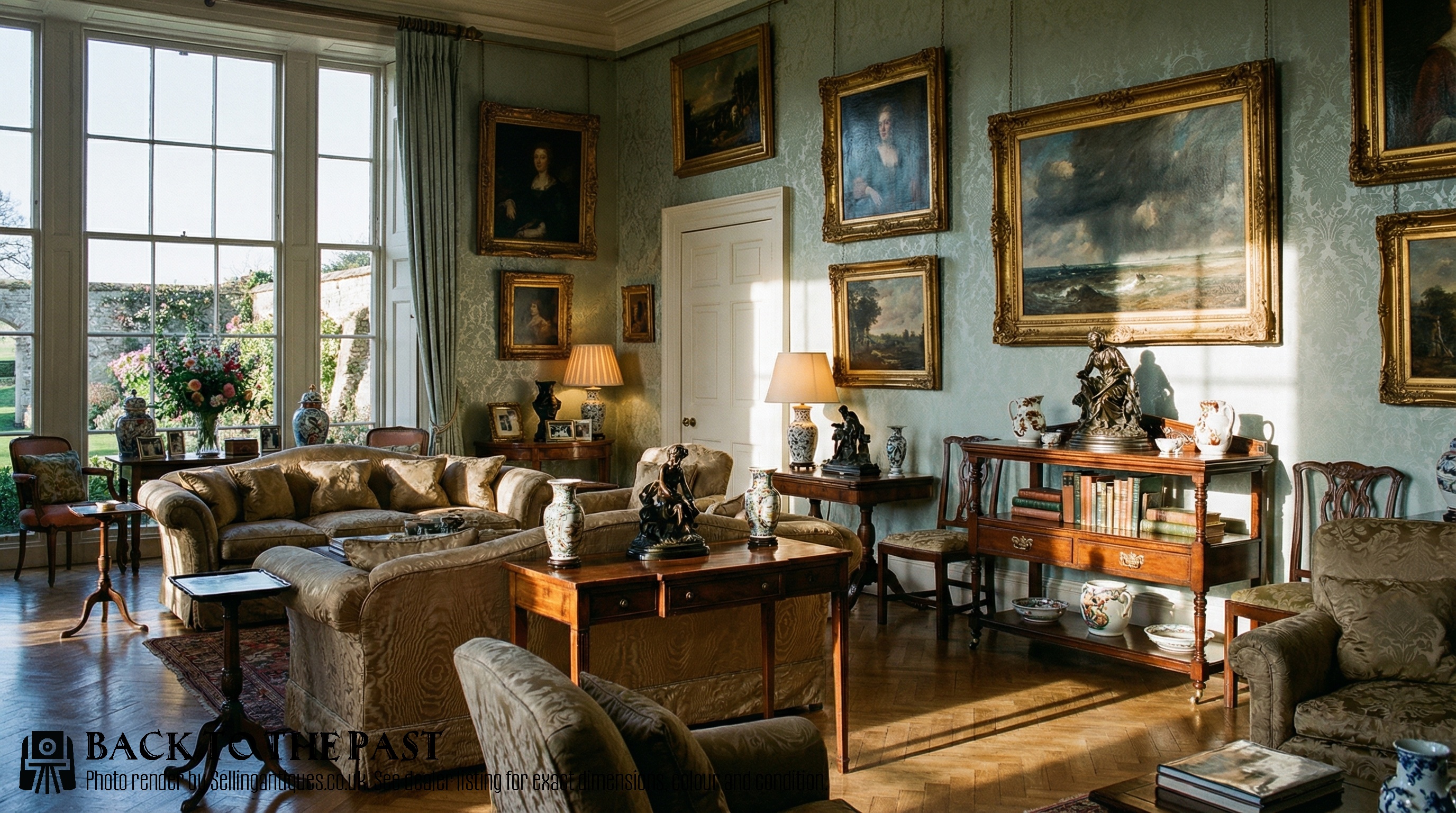
Victorian Tier Buffet Server
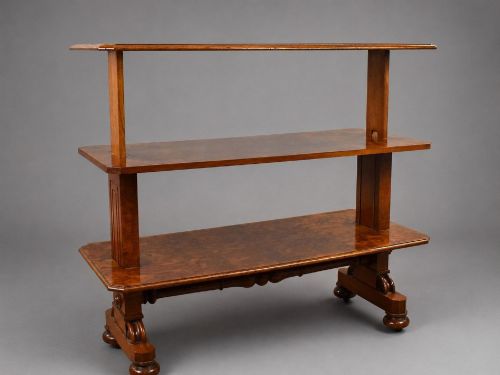
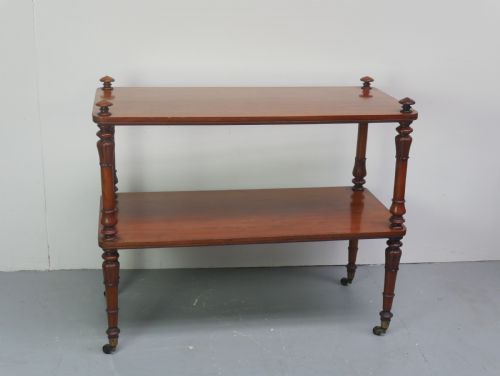
When searching for a victorian tier buffet server, buyers encounter heavy dining room furniture designed to hold dishes and silverware. The pieces on this page span the nineteenth century, including Victorian, Georgian, Regency and Edwardian eras, alongside related forms such as dumb waiters, sideboards, etageres and serving tables.
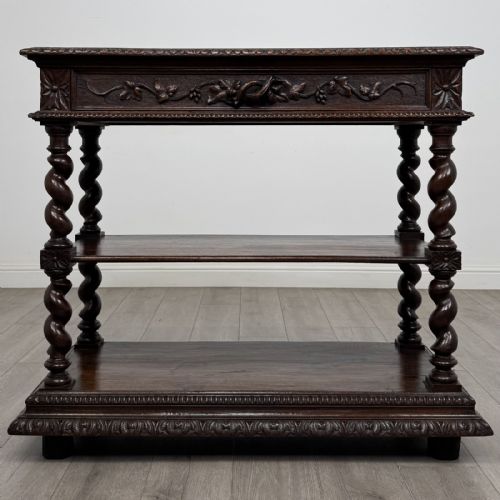
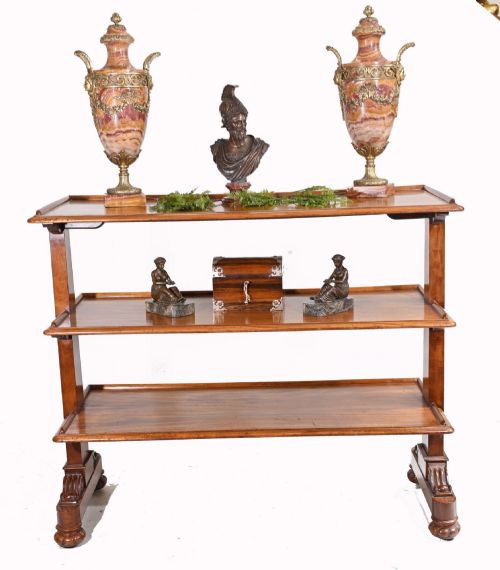
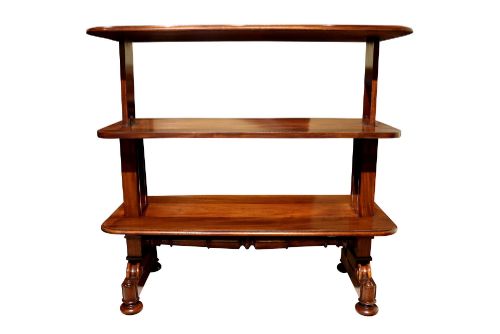
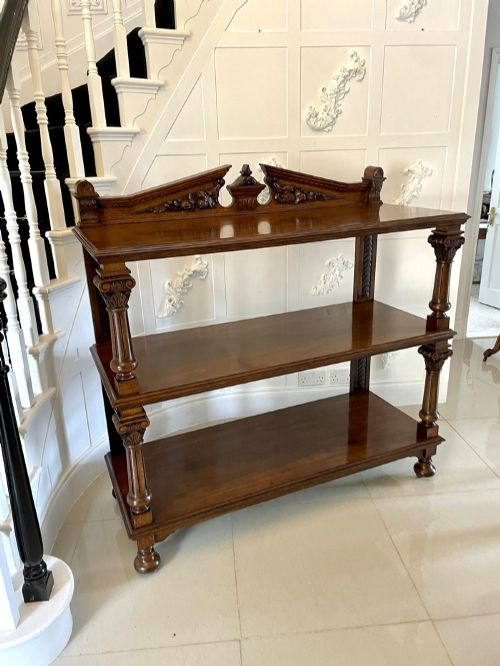
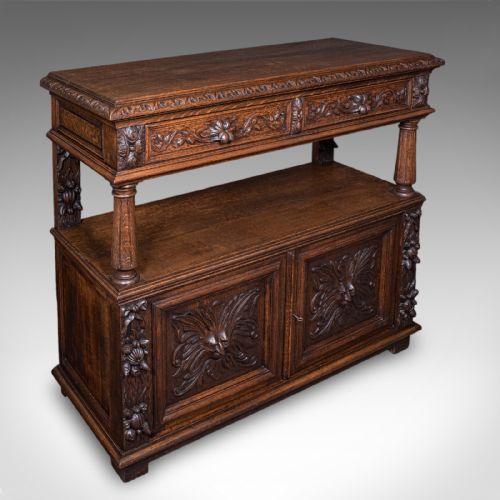
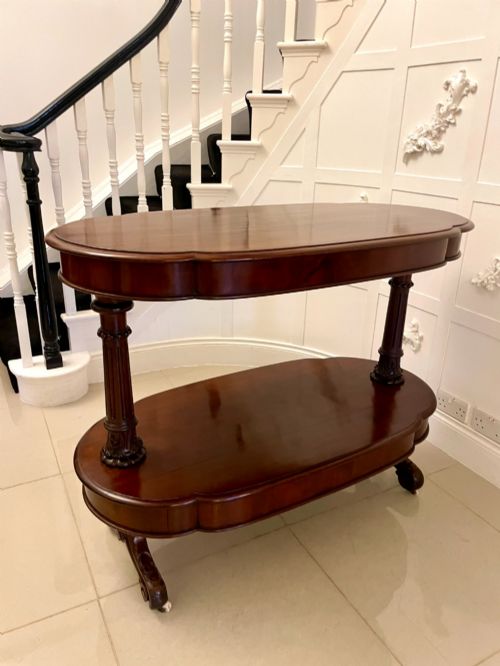
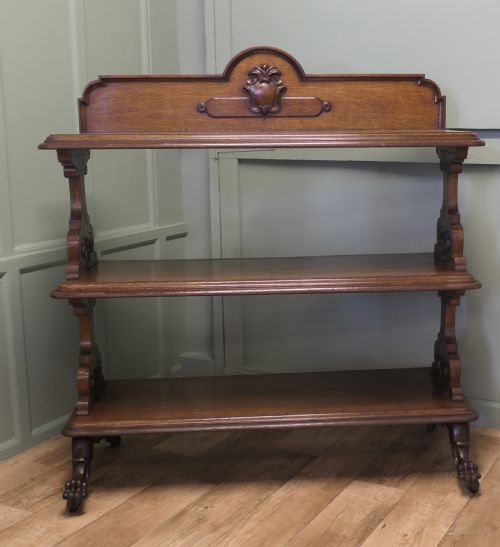
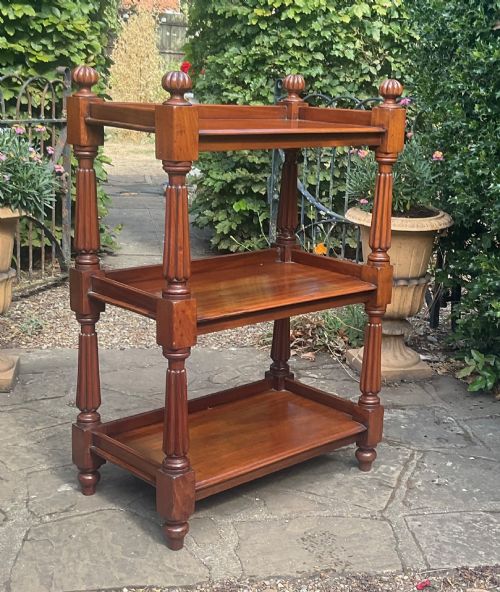
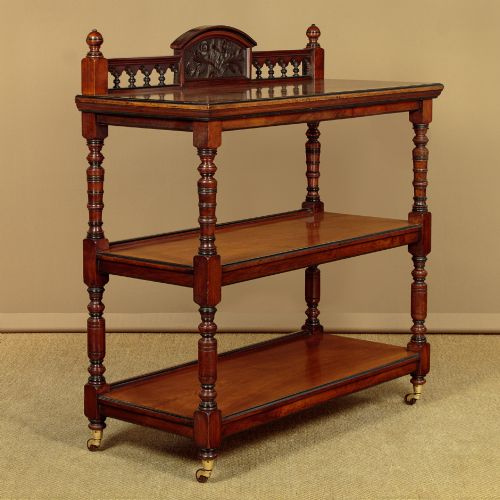
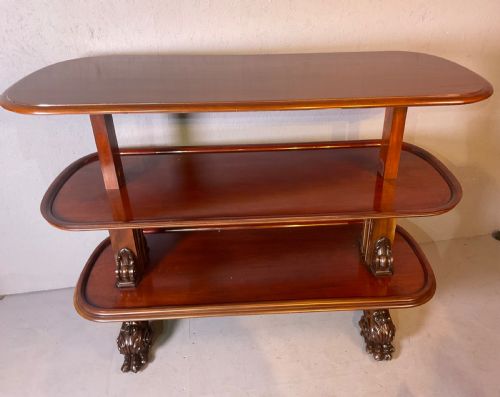
The most common forms are three-tier mahogany or oak structures featuring shelves supported by columns, sometimes with rise and fall mechanisms or revolving tiers. Oak and mahogany predominate, while walnut, burr walnut, pollard oak and ebonised wood appear across styles from Gothic Revival to the Aesthetic Movement.
Originating in English dining rooms, these servers range from small adjustable stands to large carved oak buffets with top shelves. The selection covers serving tables, consoles and tiered dumb waiters built for practical use during large meals.
How they were made
Cabinetmakers constructed these servers primarily from solid mahogany and oak, frequently employing burr walnut, pollard oak and padauk wood for decorative surfaces. These timbers were selected for their grain and strength, supporting multiple tiers of heavy shelving.
Construction involved robust joinery, brass castors for mobility, and specialised mechanisms such as rise and fall screws, telescopic columns and revolving pivots. Carved detailing includes Gothic motifs and Green Man masks on oak frameworks.
Victorian Tier Buffet Server Retail Price Guide 2026
Typical asking prices for victorian tier buffet server among the pieces listed under this phrase on Sellingantiques today, from the lower quarter to the upper quarter. They describe what is for sale here now, not the wider market.
Listings demonstrate materials including mahogany, brass, oak, walnut, ebonised wood, burr walnut, pollard oak and ceramic across the nineteenth century.
What varies in quality
Quality in a victorian tier buffet server rests on the selection of timber, such as figured pollard oak or dense mahogany, and the crispness of carved ornamentation. Pieces displaying detailed carving, such as Gothic Revival panels or Green Man motifs, show superior workshop execution.
The sophistication of the mechanical elements also dictates the standard of the piece. Smooth operation in rise and fall columns, telescopic shafts, revolving tiers and original brass castors separates standard production items from finer workshop commissions.
The Victorian Tier Buffet Server Glossary
- Dumb Waiter
- A tiered serving stand with multiple shelves used for holding food and tableware without requiring servants. These tables often feature revolving or adjustable tiers.
- Buffet
- A sideboard or serving table designed for displaying and serving food in a dining room. Victorian examples frequently incorporate multiple tiers and backboards.
- Etagere
- A piece of furniture consisting of a set of open shelves for displaying small objects or serving items. They appear in walnut and mahogany across nineteenth-century interiors.
- Rise and Fall
- A mechanical mechanism allowing specific tiers of a server or dumb waiter to be adjusted vertically. This permits the height of the shelf to be altered as needed.
- Pollard Oak
- Oak timber taken from pollarded trees, yielding a distinctive clustered knot pattern used for decorative veneer. It is found on high-status Victorian sideboards and servers.
Victorian Tier Buffet Server: Frequently Asked Questions
What is a tier buffet server?
A tier buffet server is a multi-shelved dining room piece designed to hold dishes, serving platters and silverware.
These items date predominantly from the nineteenth century and provide surface area for dining service.
How did people use dumb waiters?
Dumb waiters held extra plates, food and glassware during meals to reduce the need for attending servants.
Diners could reach for items placed on the revolving or tiered shelves independently.
What woods were used for servers?
Cabinetmakers utilised mahogany and oak as the primary timbers for structural strength and durability.
Finer examples incorporate decorative veneers like burr walnut, pollard oak and ebonised wood.
How do I identify a Gothic Revival piece?
Gothic Revival pieces feature heavy carved ornamentation, pointed arch motifs and dark oak construction.
These designs reflect medieval architectural influences popular during the Victorian period.