

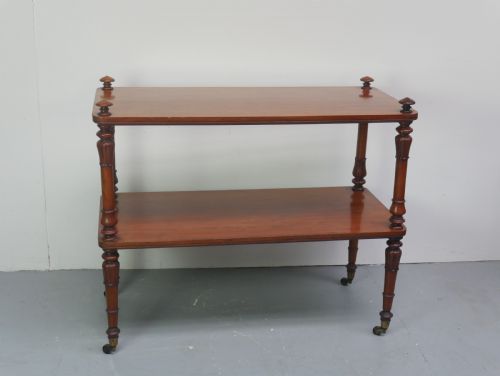
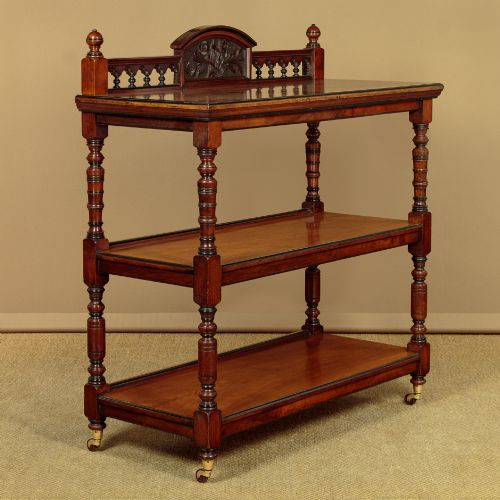


Victorian Dinner Wagon
A victorian dinner wagon brings heavy timber service to the dining room, offering sturdy tiers for transporting heavy dishes between kitchen and table.
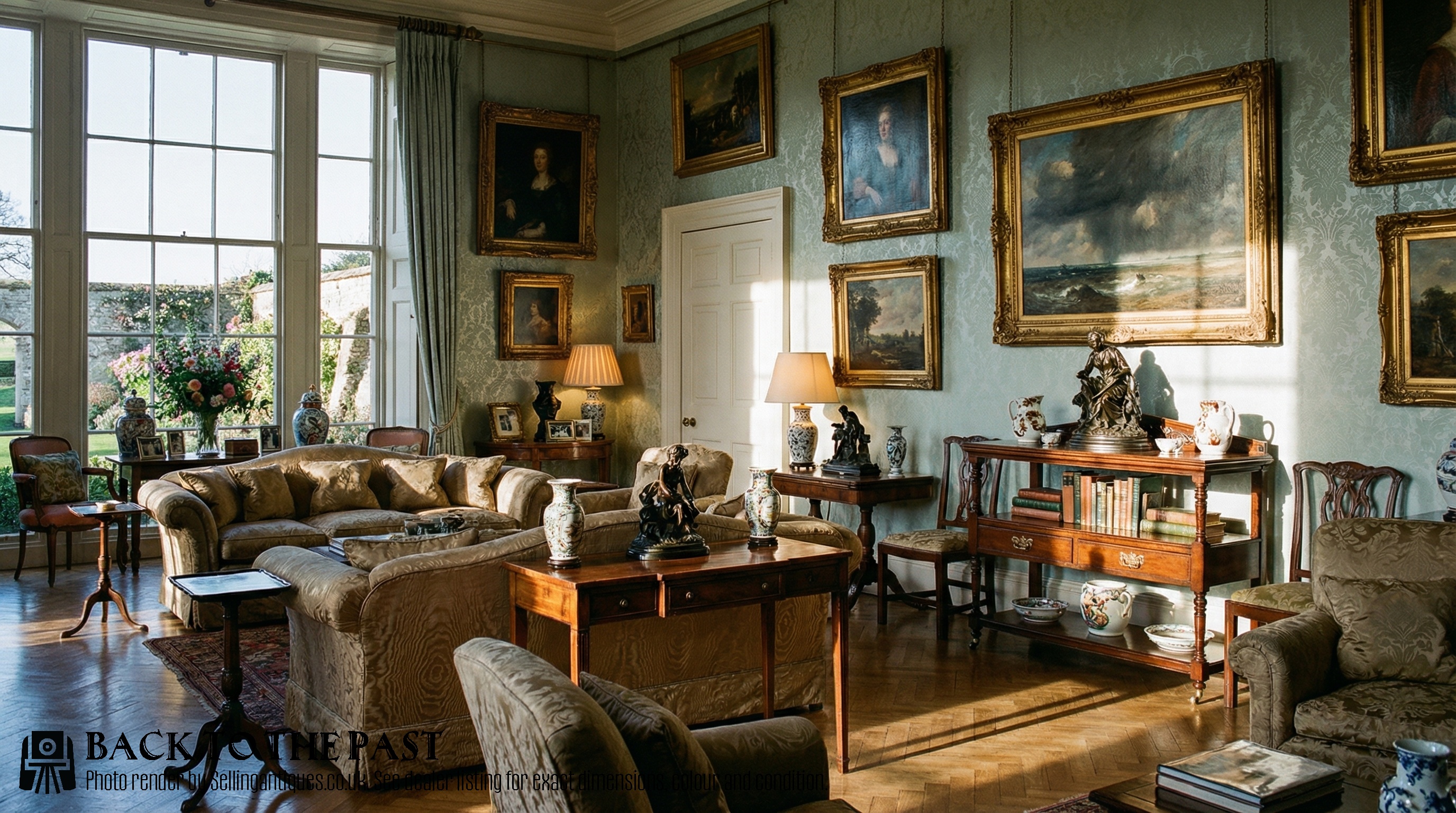
Victorian Dinner Wagon
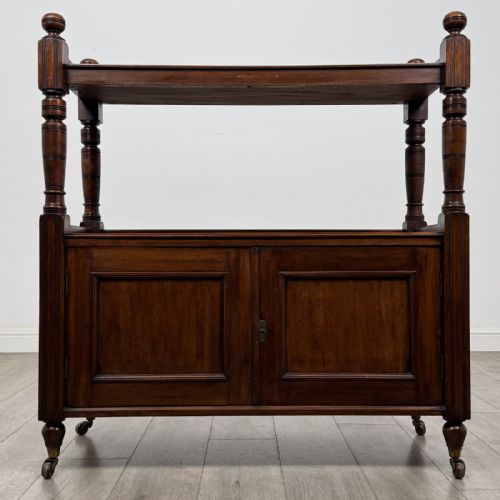
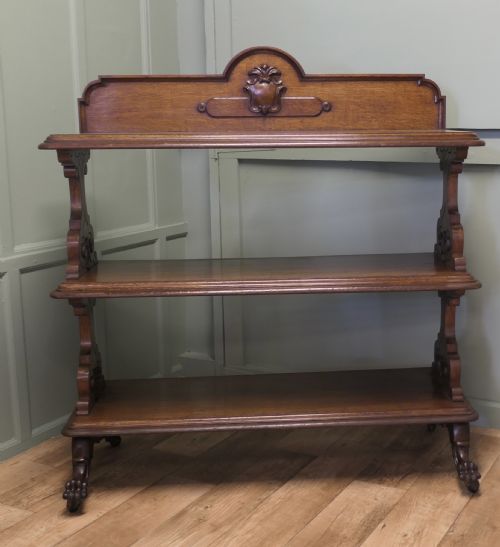
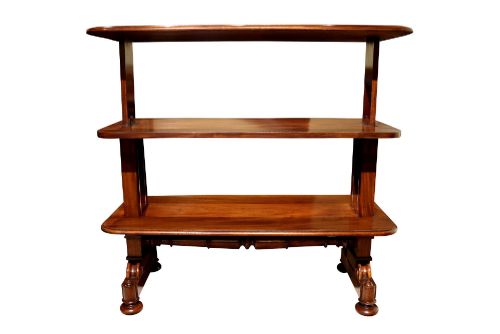
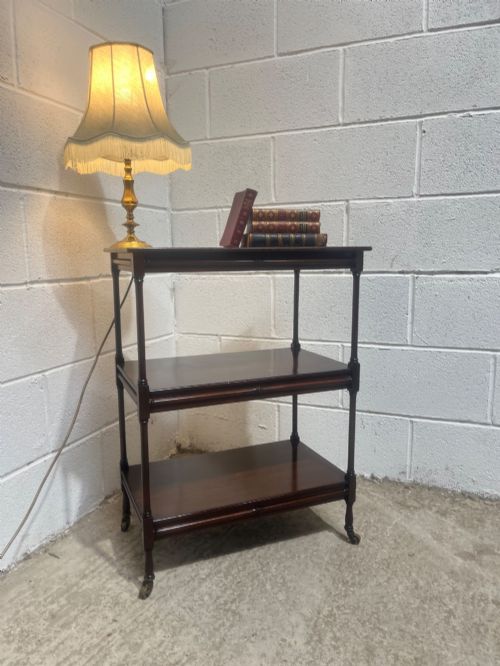
A victorian dinner wagon is a robust serving piece designed for the formal dining room, built to hold heavy dishes, silver and wine. When searching for a victorian dinner wagon, buyers encounter substantial multi-tiered serving tables and dumb waiters intended to ease the labour of hospitality. These pieces provide wide shelves or cabinets mounted on castors, allowing household staff to wheel or carry courses easily.
The versions most commonly met on this page span the nineteenth century, including pieces from the William IV era through to the late Victorian period. Mahogany forms the backbone of these listings, alongside walnut, oak, and pollard oak, often configured into three tiers or fitted with raised cabinets. Alongside standard buffets, the selection includes specialised dumb waiters and serving tables that share the same functional heritage.
How they were made
Makers constructed these serving pieces using dense hardwoods, predominantly mahogany and walnut, selected for their structural strength and rich grain. Timber framing supported multiple heavy tiers, often reinforced with carved uprights or turned columns to bear the weight of ceramics and silver. Selected examples utilise pollard oak for distinct visual figuring, while others incorporate brass hardware and original castors for mobility.
Construction techniques focused on utility and durability under heavy daily use in busy domestic settings. Joinery methods included robust framing for three-tier shelving units and fitted cabinets, paired with carved ornamentation characteristic of Victorian and Aesthetic Movement workshops.
Victorian Dinner Wagon Retail Price Guide 2026
Typical asking prices for victorian dinner wagon among the pieces listed under this phrase on Sellingantiques today, from the lower quarter to the upper quarter. They describe what is for sale here now, not the wider market.
Original castors on these heavy pieces reveal centuries of polishing wax caught in tiny brass wheels.
What varies in quality
The standard of a victorian dinner wagon rests upon the selection of timber and the depth of carving on the uprights and friezes. Superior examples display carefully matched grain across wide mahogany boards and retain their original brass castors beneath sturdy legs. Plainly constructed utility pieces contrast with elaborately carved workshop productions that feature panelled cabinet doors and secondary woods of high grade.
Proportion and structural integrity distinguish the finer pieces from simpler utility items. Well-balanced tiers with secure vertical supports ensure the furniture functions smoothly as a serving table while maintaining the formal appearance expected in a nineteenth-century dining room.
The Victorian Dinner Wagon Glossary
- Dumb waiter
- A multi-tiered piece of dining room furniture used for holding food and tableware without the need for immediate servant attendance. These items typically feature graduated shelves supported by turned pillars.
- Castor
- A small wheel mounted on a swivel assembly attached to the base of the furniture leg. Original brass castors allow heavy timber serving pieces to move smoothly across floor surfaces.
- Aesthetic Movement
- A late nineteenth-century design style emphasising visual refinement and simplicity over heavy historic ornamentation. Furniture from this movement often highlights natural wood grains and subtle artistic carving.
- Pollard oak
- Timber taken from trees that have been pollarded, producing a dense, highly figured grain pattern prized for decorative cabinet panels. This material appears on select serving boards to add visual texture.
- William IV
- The architectural and decorative style spanning the 1830s, bridging Regency forms and early Victorian mass production. Pieces from this period often display bold scrolling supports and substantial timber sections.
Victorian Dinner Wagon: Frequently Asked Questions
What is a dinner wagon used for?
These pieces served as mobile storage and staging surfaces in the dining room during large meals. They held heavy serving dishes, carafes of wine, and extra plates close to the dining table.
Servants used the shelves to clear courses or bring out fresh dishes without returning constantly to the kitchen. The addition of castors meant heavy timber could be wheeled across carpets and floorboards.
How many tiers do they have?
Most examples featured in the listings are constructed with three distinct horizontal tiers. These open shelves provided graduated space for different sizes of serving platters and tableware.
Some variants combined these open shelves with a small enclosed cabinet section in the lower or middle portions. This allowed silver or linens to be stored securely away from dust.
Where were they placed in a room?
Dinner wagons stood against dining room walls when not actively in use during a meal service. During dinner, they were positioned near the main table for easy access by staff.
Because they were fitted with castors, operators could reposition them easily to suit the layout of the room and the flow of service. Their substantial height ensured dishes remained at a convenient level for lifting.
How do I care for mahogany tiers?
Maintenance requires regular dusting with a soft, dry cloth to prevent grit from settling into the timber grain. Avoid using modern silicone polishes that can build up a hazy residue over the antique finish.
Keeping the wood away from direct heat sources and strong sunlight preserves the natural colour of the mahogany. Occasional application of traditional beeswax helps nourish the dry surface of older timber.