





Antique Walnut Tier Server
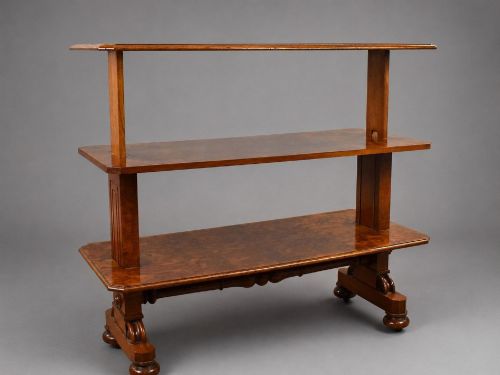
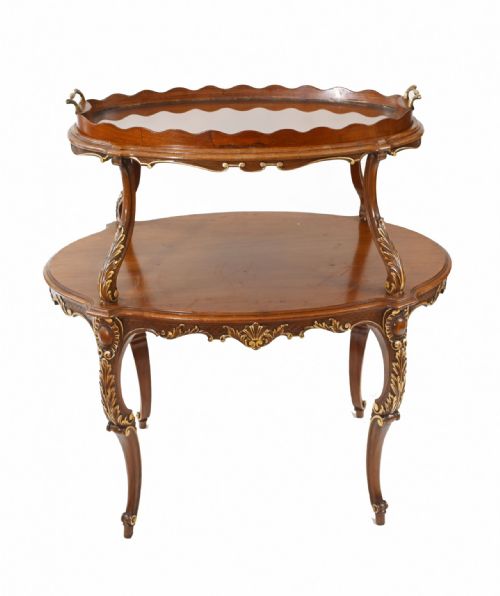
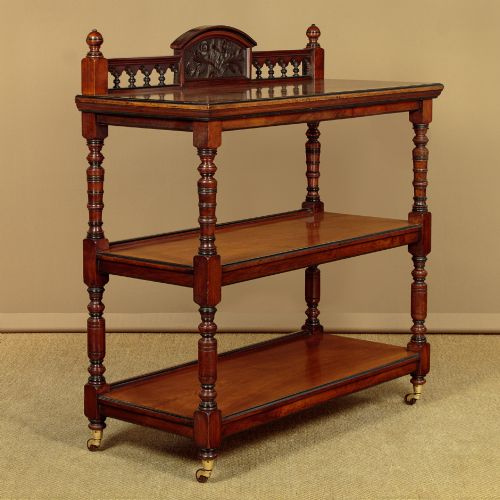
An antique walnut tier server brings layered timber and practical surface space into a room, offering multiple tiers for display or service.
Antique Walnut Tier Server
An antique walnut tier server is a multi-level piece of furniture designed for serving, display, or storage, encompassing forms such as dumbwaiters, buffets, and etagere tables. These items emerge from periods including the Victorian era, the Edwardian period, and the 1930s, reflecting diverse design movements like Aesthetic Movement, Gothic Revival, and Art Deco.
The most common versions met on this page are Victorian burr walnut dumbwaiters and buffets, alongside later 1930s metamorphic serving trolleys and tiered tables. English and French origins appear frequently among the pieces, often featuring two or three tiers constructed to hold food, drinks, or decorative objects.
Forms vary from fully adjustable telescopic dumbwaiters to static servers, music cabinets, and French sideboard servers. Each variation adapts the basic concept of stacked timber platforms to the specific dining and entertaining habits of its decade.
Materials and construction
Cabinetmakers utilised solid walnut and decorative burr walnut veneers over secondary timbers to construct the frames and tiers of these servers. Burr walnut provides distinct, swirling grain patterns across the primary surfaces, catching the light on flat shelves and carved panels.
Metal components such as brass fittings, hinges, and castors support the mechanical movement found in telescopic dumbwaiters and metamorphic serving trolleys. Additional materials like marble, glass, giltwood, and ebonised wood appear on specific revival and Art Deco examples to accent the timber structures.
Antique Walnut Tier Server Retail Price Guide 2026
Typical asking prices for walnut tier server among the pieces listed under this phrase on Sellingantiques today, from the lower quarter to the upper quarter. They describe what is for sale here now, not the wider market.
Listings feature walnut, burr walnut, and ebonised wood across Victorian, Edwardian, 1880, 1930, and 19th Century periods.
Distinctions in quality
The choice of timber grain defines much of the visual merit, with finely figured burr walnut commanding attention through its rich patterning compared to plain walnut boards. Carving depth and precision also separate standard production from superior examples, particularly on Gothic Revival and French Renaissance pieces where crisp relief work matters.
Mechanical complexity and the smoothness of adjustable tiers or folding mechanisms mark the standard of engineering in pieces like telescopic dumbwaiters and metamorphic trolleys. Original brass hardware, sound joints, and intact secondary materials preserve the integrity of the piece.
The Antique Walnut Tier Server Glossary
- Burr walnut
- A veneer sliced from the gnarly growths of a walnut tree, prized for its intricate, swirling grain patterns. It provides a highly decorative surface on tabletops and tier edges.
- Dumbwaiter
- A piece of tiered furniture used for holding food and tableware without the need for an attendant servant. Telescopic versions allow the tiers to adjust in height.
- Etagere
- A piece of furniture consisting of a set of open shelves for displaying small objects or serving. These structures often utilise multiple tiers supported by slender columns.
- Metamorphic
- Describing furniture that transforms from one form into another, such as a serving trolley that expands or alters its tier configuration. This engineering showcases clever joinery and metal fittings.
Antique Walnut Tier Server: Frequently Asked Questions
What is a tier server used for?
These pieces function as multi-level surfaces designed to hold serving dishes, drinks, or decorative items during entertaining. The stacked platforms maximise display space while maintaining a compact footprint in a room.
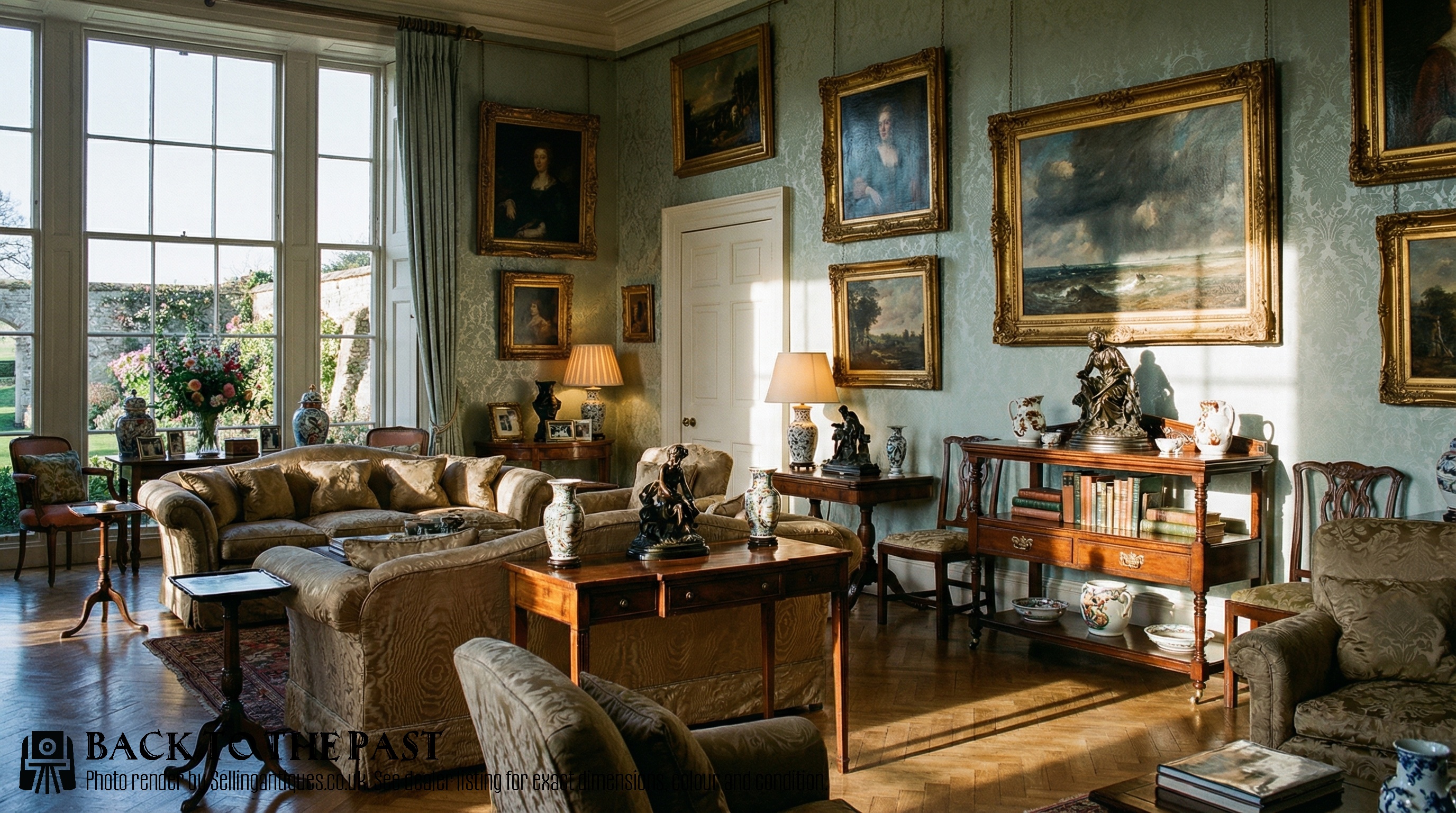
Historically, dumbwaiters and buffets stood beside dining tables to assist hosts during meals without requiring constant staff. Today, they serve equally well as cocktail stations, plant stands, or occasional display tables in living spaces.
How do I date a walnut tier server?
Dating relies on observing the combination of stylistic revival motifs, timber treatment, and construction methods present in the piece. Victorian and 1880s examples often display heavy carving or burr walnut veneers, while 1930s pieces lean towards Art Deco lines and metamorphic metal actions.
Examining the secondary woods, screw types, and castor styles helps confirm the era of manufacture. Comparing the object type against documented Victorian, Edwardian, and mid-century design patterns narrows the production window further.
Are these servers difficult to maintain?
Maintaining walnut tier servers requires standard care appropriate for antique wooden furniture, keeping them away from direct heat sources and strong sunlight. Regular dusting with a soft cloth preserves the finish of the polished timber surfaces.
For pieces with brass fittings or moving telescopic parts, occasional gentle cleaning of the metal helps maintain smooth operation. Avoiding excess moisture on the wood ensures the veneer remains secure over time.
How do I tell different styles apart?
Style identification depends on specific decorative details, such as the geometric shapes of Art Deco or the deep relief carvings of Gothic Revival. Aesthetic Movement pieces often feature simpler lines, whereas French Renaissance Revival servers display ornate scrolling and prominent cornices.
Looking at the silhouette and edge profiles of the tiers reveals whether a piece leans toward Victorian mass or 1930s streamlining. Each design movement applied distinct proportions and ornamentation to the basic tiered server form.