


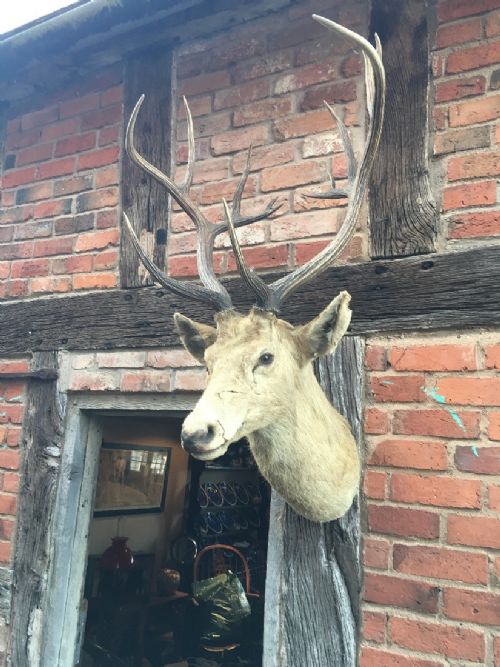
Victorian Taxidermy Deer
Victorian taxidermy deer bring the dramatic spirit of the nineteenth-century Highland sporting estate straight into a modern interior.
Victorian Taxidermy Deer
Victorian taxidermy deer encompass an array of mounts and functional furnishings created during the nineteenth century and the early decades of the twentieth. Pieces range from grand stag heads mounted on carved oak shields to inventive domestic items utilising antlers and hooves.
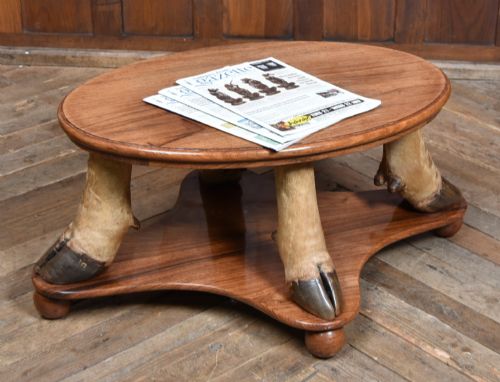
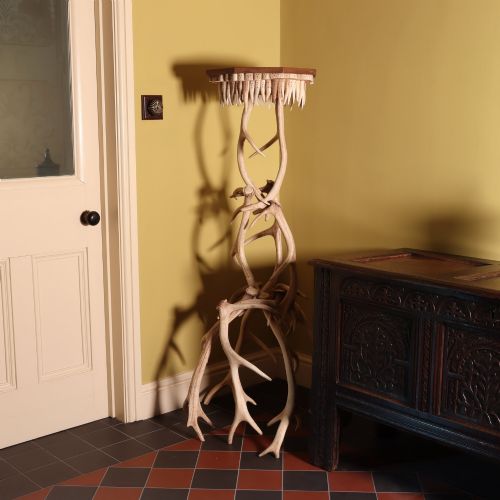
The selections available here lean heavily into traditional Scottish Highland aesthetics and rustic lodge forms. Buyers frequently encounter antler torchieres, coffee tables, wall racks, and hoof table lamps alongside classic taxidermy wall mounts.
Origins stretch across British and continental workshops, including French hunting lodge pieces. Dates span from the mid-nineteenth century through the Edwardian era and into the nineteen-thirties.
How they were made
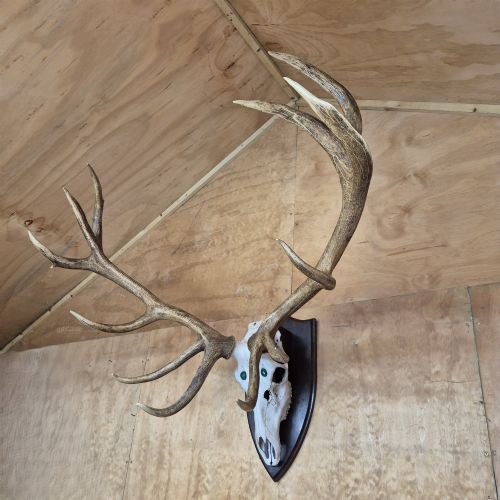
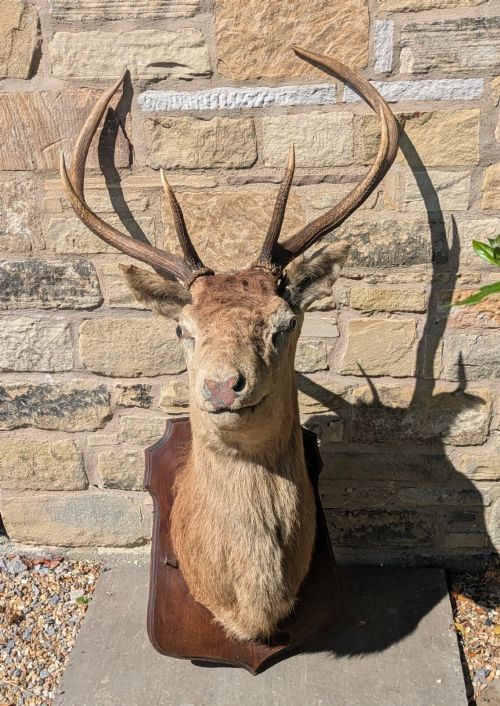
Taxidermy mounts combine preserved hide and natural antlers with structural wood forms. Carved oak shields provide robust backing for wall-mounted stags and roebucks.
A deer's hoof finds a second career holding your evening correspondence as a charming Victorian inkstand.
What varies in quality
Quality rests in the anatomical accuracy of the taxidermy work and the symmetry of the antlers. A twelve-point Royal set displays superior maturity compared to smaller roebuck specimens.
The craftsmanship of the supporting woodwork dictates overall distinction. Deeply carved oak shields and cleverly constructed antler furniture demonstrate a higher tier of period artistry.
The Victorian Taxidermy Deer Glossary
- Taxidermy mount
- The preserved and mounted skin of an animal combined with a supportive form. These pieces serve as striking wall displays.
- Shield
- A shaped wooden board, frequently carved from oak, used as a backing plate for mounting animal heads. It protects the wall and frames the specimen.
- Torchiere
- A tall stand or floor lamp designed to hold a light source. Antler versions utilise natural points and branches for the vertical shaft.
- Royal
- A designation for a red deer stag whose antlers possess twelve distinct points. This traditional term denotes a fine and mature trophy.
- Hoof
- The foot of the deer utilised in the construction of smaller decorative and functional items. These appear mounted on lamps and inkstands.
Victorian Taxidermy Deer: Frequently Asked Questions
Are these pieces from the Victorian period?
The pieces span from the nineteenth century through the Edwardian era and into the nineteen-thirties. Styles reflect Victorian, Edwardian, and Highland traditional aesthetics.
Examine the construction of the wooden shields and mounting techniques to help determine the era. Many pieces carry the distinct aesthetic of nineteenth-century Scottish sporting lodges.
How do I care for antique taxidermy?
Keep mounted specimens away from direct sunlight and strong heat sources to prevent the hide and hair from drying out. Gentle dusting with a soft brush maintains the condition of the fur.
Avoid using liquid cleaners or chemical sprays on the taxidermy work. Stable indoor humidity levels protect both the organic materials and the wooden elements.
What is a Royal set of antlers?
A Royal set refers specifically to red deer antlers featuring twelve distinct points on a single head. This configuration represents a mature and highly prized sporting trophy.
Collectors prize these larger configurations for their impressive visual scale. They frequently appear mounted on carved shields or integrated into substantial wall racks.