

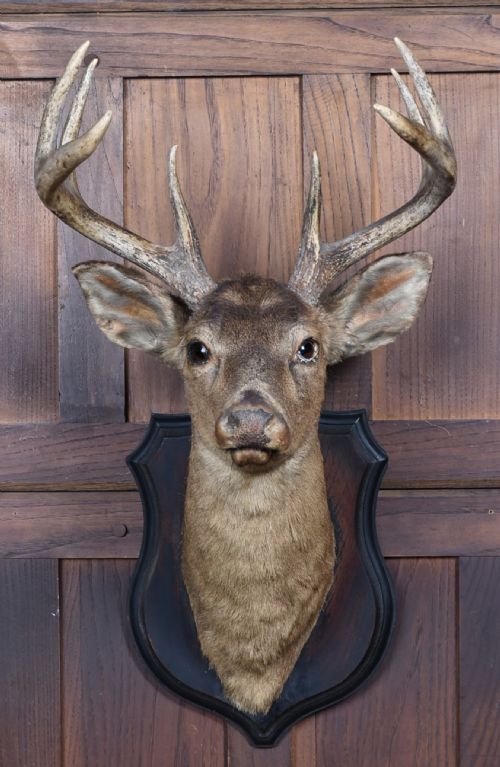


Antique Deer Taxidermy
Antique deer taxidermy brings the majesty of the wilderness indoors, offering striking wall mounts and practical furnishings crafted from natural hides, bone, and antler.
Antique Deer Taxidermy
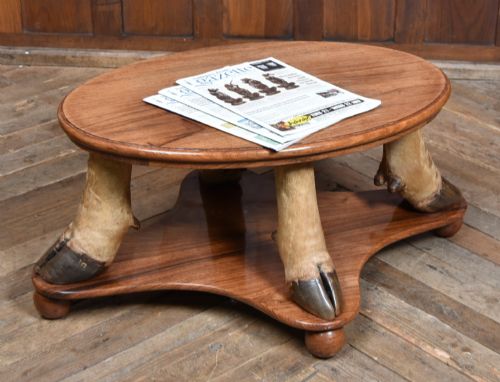
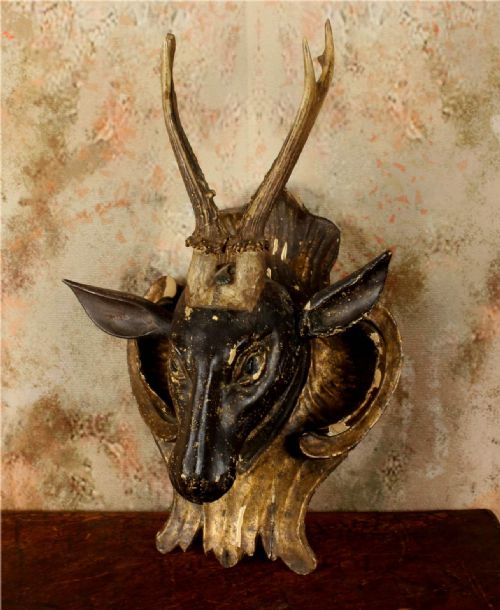
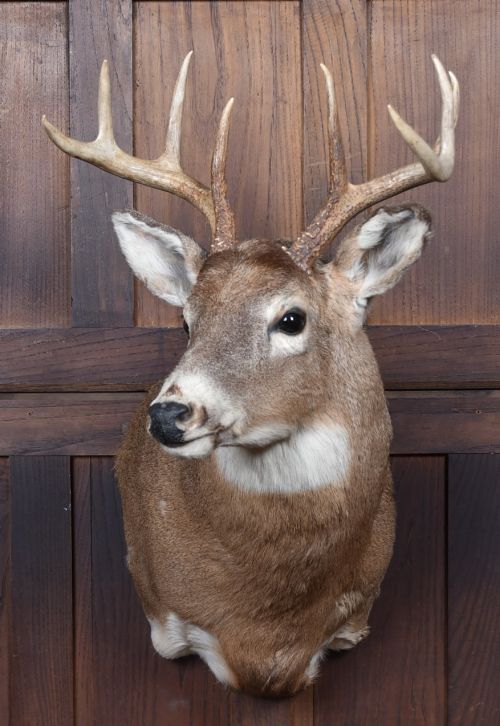
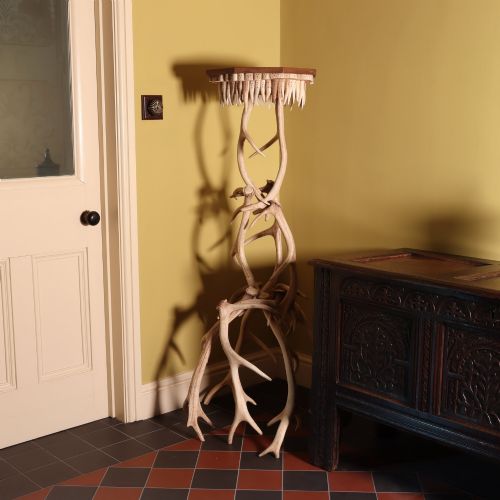
When you search for antique deer taxidermy, you encounter a specialised range of preserved animal specimens, horn mounts, and carved wooden interpretations spanning the nineteenth and twentieth centuries. These pieces encompass everything from grand stags' heads and roe bucks to functional hall racks, table lamps, and wall sculptures.
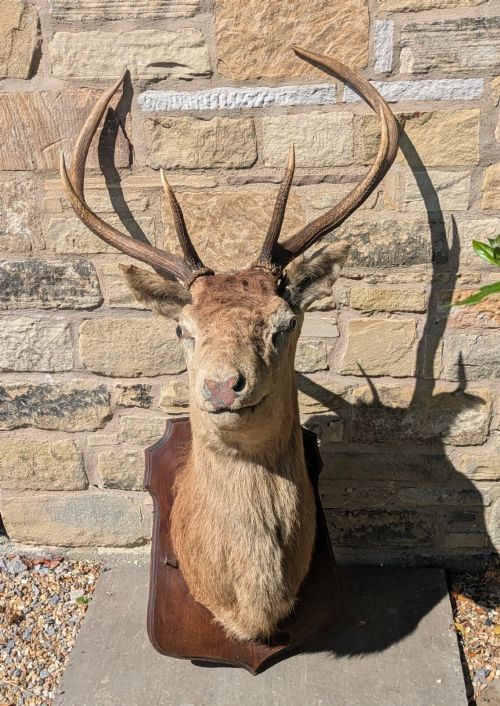
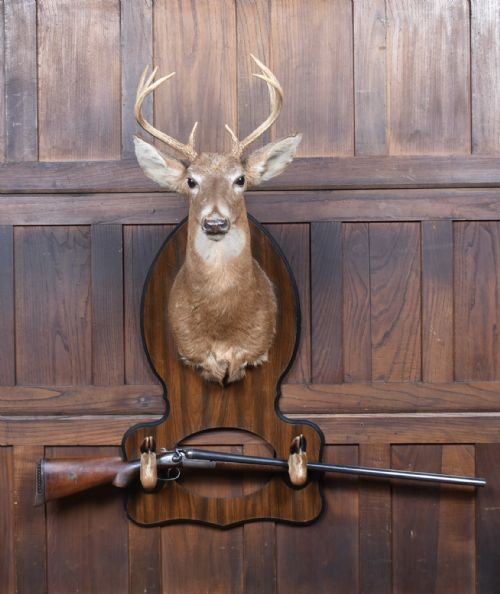
You are most likely to meet traditional Victorian and Black Forest wall mounts, often set upon carved oak shields or wooden panels. These range from substantial red deer antlers and stags to smaller white-tailed and roe deer specimens reflecting highland hunting lodge aesthetics.
How antique deer taxidermy was made
Taxidermists combined preserved animal hide, bone, and natural antlers with carved wood backing shields and oak supports. The process required mounting real pelts over carved forms while securing natural antlers to robust skulls or wooden mounts.
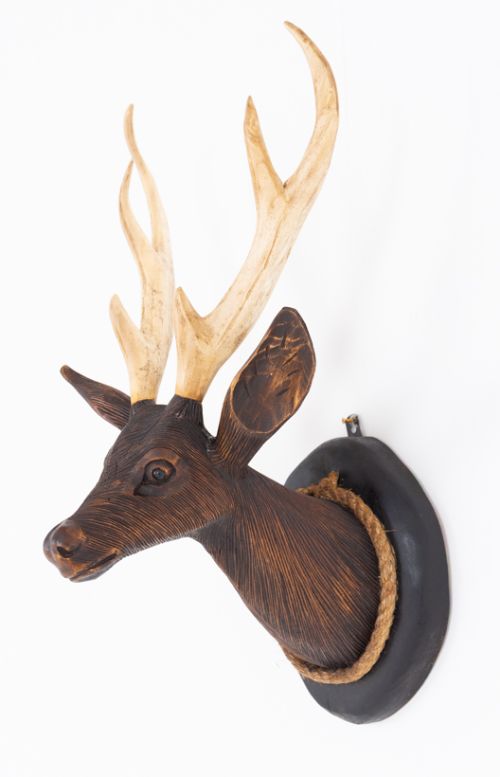
Carved wood pieces utilised oak, pine, and specialist timber to create foliate shields, decorative wall racks, and Black Forest style sculptures. Artisans shaped glass eyes and polished bone or horn to complete the lifelike presentation of each animal.
What varies in quality in antique deer taxidermy
The anatomical proportion and lifelike expression of the taxidermy mount determine its visual success. Skilled taxidermists captured the natural alertness and musculature of the stag or roe deer, whereas lesser examples lack structural balance.
The quality of the supporting woodwork and carving distinguishes standard pieces from exceptional examples. Intricately carved oak shields, detailed Black Forest foliage, and sturdy mounting hardware indicate superior craftsmanship.
The Antique Deer Taxidermy Glossary
- Taxidermy
- The art of preserving, preparing, and mounting animal skins for display. Historic mounts often utilised plaster, tow, and wire armatures inside natural pelts.
- Shield
- A wooden mounting board shaped like a heraldic shield. Taxidermy heads and antler sets are bolted directly to these wooden plaques for wall hanging.
- Torchiere
- A tall standing lamp or floor lamp designed to direct light upwards. Antler versions incorporate natural horn into the standard upright structure.
- Hall rack
- A functional piece of furniture fitted with pegs or hooks for coats and hats. Antique versions frequently integrate deer antlers and carved oak.
Antique Deer Taxidermy: Frequently Asked Questions
How should I clean antique taxidermy?
Maintenance involves gentle dusting with a soft, dry brush or a feather duster to remove surface particles without disturbing the hair or hide. Avoid using water, chemical sprays, or household detergents on historic pelts and mounted specimens.
Keep pieces away from direct sunlight and strong heat sources to prevent the natural hide, bone, and wooden shields from drying out and cracking.
What is a royal set of antlers?
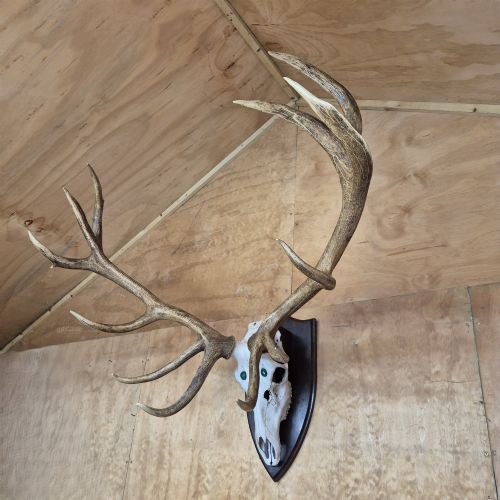
A royal designation refers to a set of red deer antlers possessing twelve distinct points on the crown. This traditional terminology reflects classic hunting classification standards used during the nineteenth and twentieth centuries.
Such substantial antler sets are typically mounted on carved wooden shields or displayed independently as significant wall sculptures.
How do I identify Black Forest taxidermy?
Black Forest pieces are characterised by dark, richly carved wooden elements featuring deep leaf motifs, naturalistic branches, and animals. The woodwork is normally executed in solid oak or walnut with a distinctively rustic aesthetic.
These items frequently combine carved deer heads or mounted skulls with functional elements like umbrella stands, coat racks, and wall brackets.