
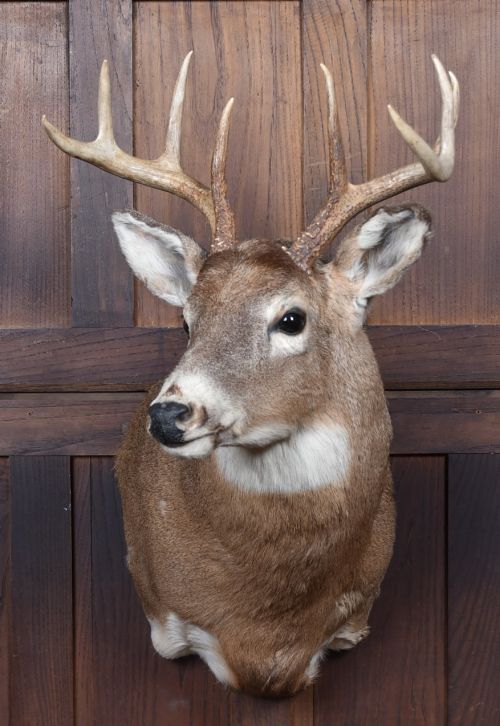
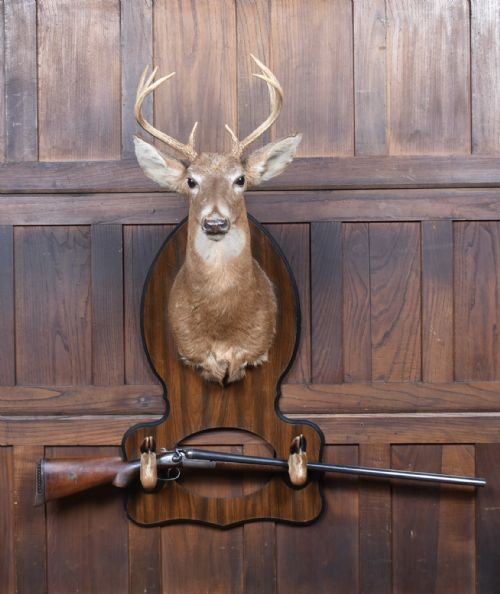

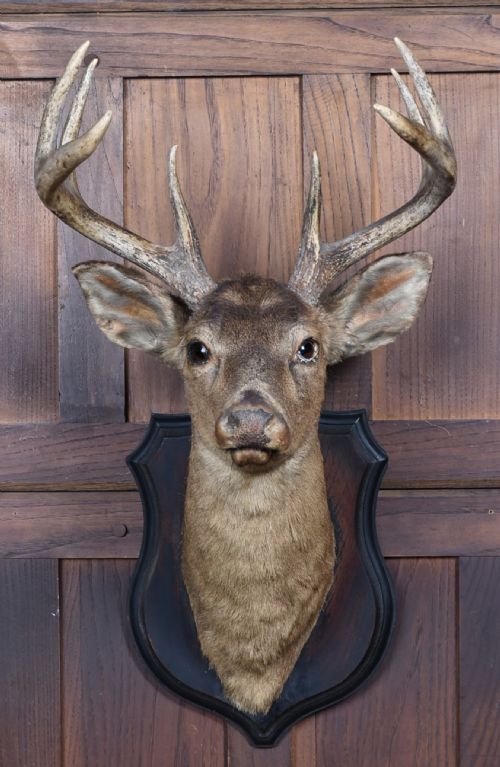


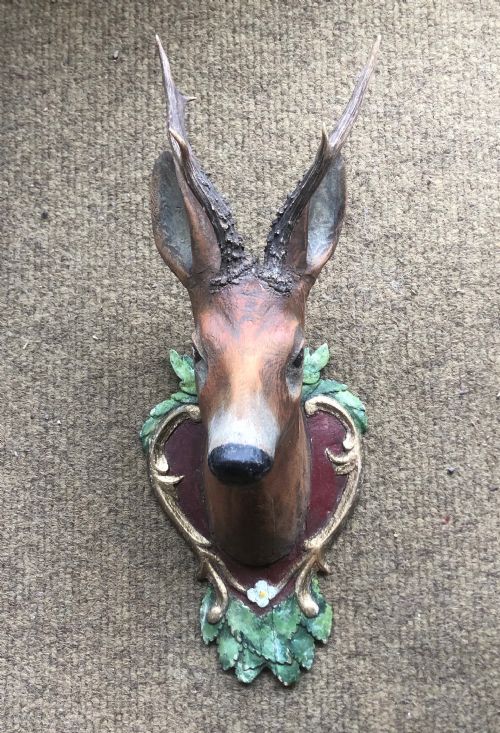
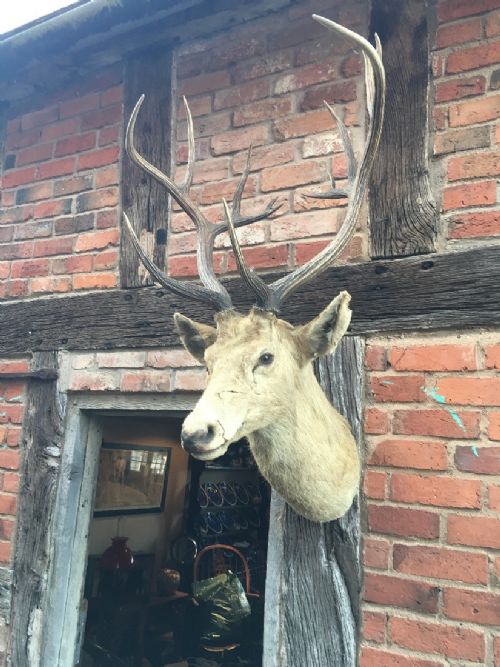
Mounted Deer Antlers
Mounted deer antlers bring the character of the Victorian country house and Highland lodge straight into the room.
Mounted Deer Antlers
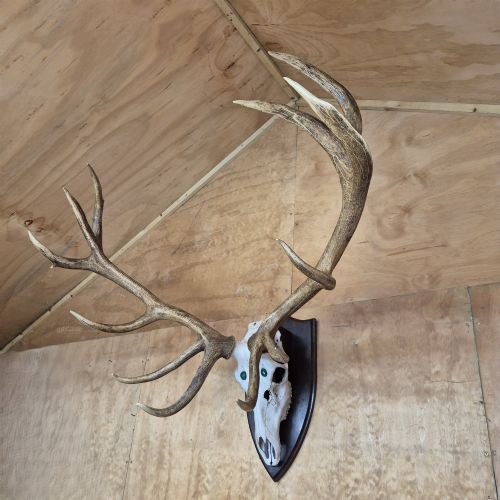
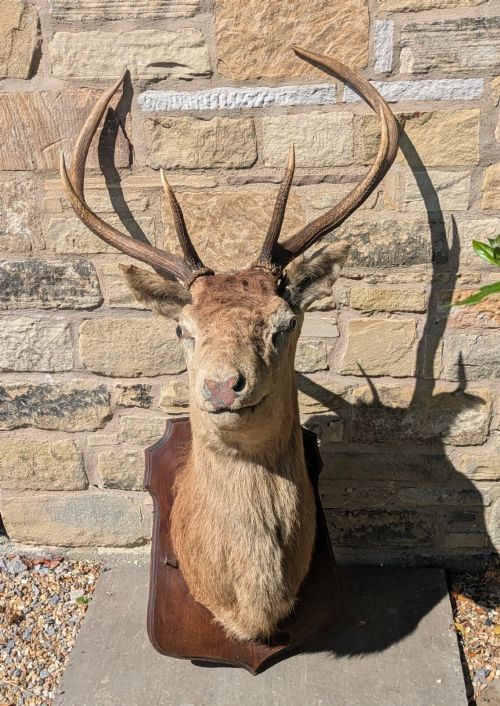
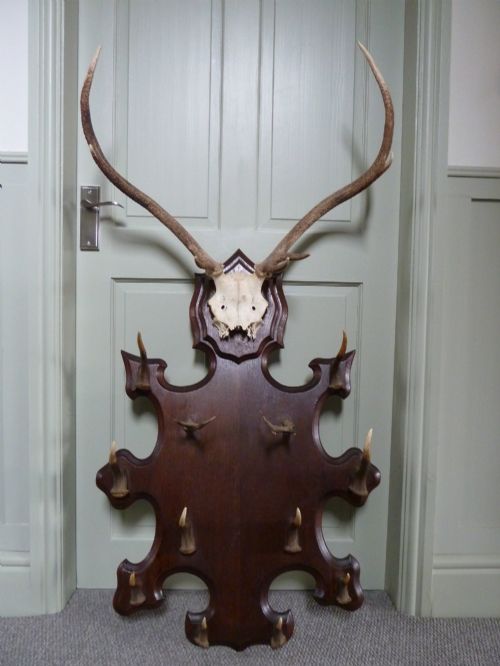
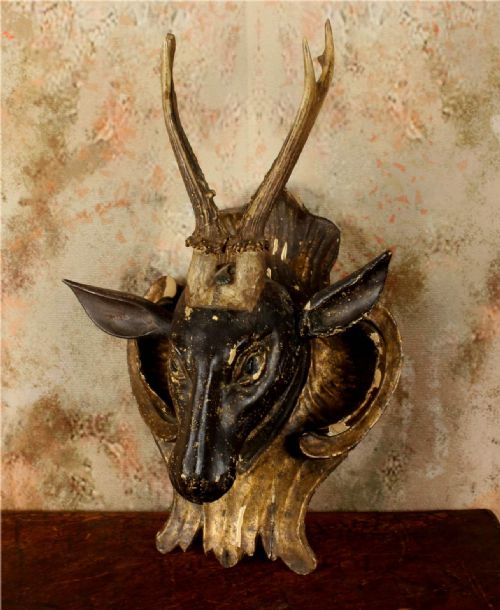
When you search for mounted deer antlers, you are looking at taxidermy mounts, wall sculptures, and trophy displays that capture rural history. These pieces range from simple horn sets on wooden shields to full stag heads and functional hallstands.
You are most likely to meet 19th century examples and 1920s pieces on this page. They appear in styles such as Victorian, Edwardian, Highland Traditional, and Folk Art, reflecting both formal country houses and rustic lodges.
Materials and Construction
Makers utilised natural materials including antler, bone, hide, and various woods. Oak appears frequently for mounting shields, wall plaques, and desk stands.
Taxidermists and craftsmen shaped these items using traditional methods, often carving the wooden shields by hand or combining horn with glass and painted elements.
Listings feature 19th century and 20th century periods, utilising materials like oak, bone, glass, and hide across various taxidermy forms.
Assessing Quality
The distinction between ordinary and superior pieces lies in the symmetry and point count of the antlers, alongside the depth of the carving on the wooden mount. A royal set or a well-balanced stag head demonstrates greater taxidermy skill.
Condition and proportion dictate the overall presence of the object. Pieces that retain their original hide, intact bone structure, and secure mounting stand apart from heavily restored or mismatched assemblies.
The Mounted Deer Antlers Glossary
- Shield
- A carved wooden plaque, often made of oak, used as a backing board to display antlers or taxidermy heads securely on a wall.
- Taxidermy
- The art of preserving and mounting animal skins and horns to create a lifelike representation of the creature for display.
- Point
- An individual branch or tine on a deer antler, counted to describe the size and maturity of the trophy.
- Hallstand
- A functional piece of furniture incorporating hooks or brackets made from horn and wood for hanging coats and hats.
Mounted Deer Antlers: Frequently Asked Questions
How do I hang mounted deer antlers securely?
These pieces require heavy-duty fixings screwed directly into wall studs or masonry because the combination of solid wood and bone is surprisingly heavy. Ensure the bracket or wire on the back matches the weight of the specific shield.
Position the mount at eye level so the scale of the antlers balances the surrounding room furniture without crowding the wall space.
What is the difference between a taxidermy head and a horn mount?
A taxidermy head includes preserved skin, hair, and sometimes glass eyes mounted over a form to recreate the live animal's appearance. These require more space and dominate a room.
By contrast, a horn mount displays only the cranium plate and antlers attached to a wooden shield, offering a cleaner, more geometric silhouette on the wall.
How should I clean and maintain antique antlers?
Dust the antlers gently with a soft, dry brush or a microfiber cloth to remove surface particles without damaging the natural bone material. Avoid using water, liquid cleaners, or polishes which can discolour or degrade the old bone and hide.
Keep the mount away from direct sunlight and strong heat sources to prevent the wood from splitting and the bone from drying out.
How do I identify a Victorian piece?
Victorian pieces often feature dark, heavily carved oak shields and dramatic taxidermy work associated with Highland hunting lodges. The construction methods, such as hand-cut screws and aged backing papers, point to 19th-century workshop practices.
Documentation or stylistic clues like Folk Art paintwork and Black Forest carving styles also help confirm this period.