


Antler Wall Taxidermy
These antler wall taxidermy pieces bring dramatic natural form and historical sporting character straight into a room.
Antler Wall Taxidermy
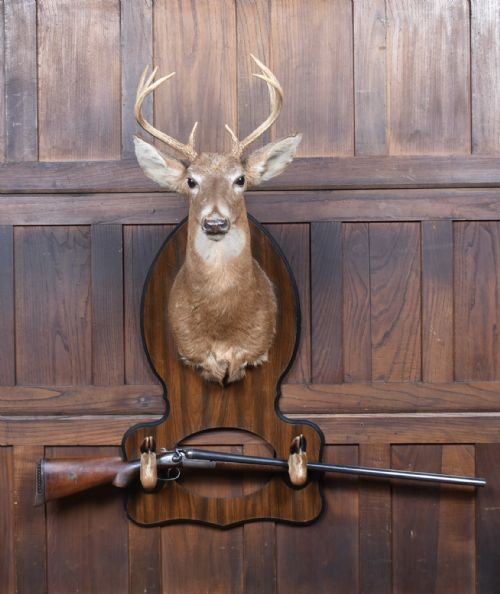
When you search for antler wall taxidermy, you encounter historical mounts and sculptural displays designed to hang directly on a wall. The selections here span the Victorian, Edwardian, and twentieth-century periods, showcasing various deer species and horned animals.
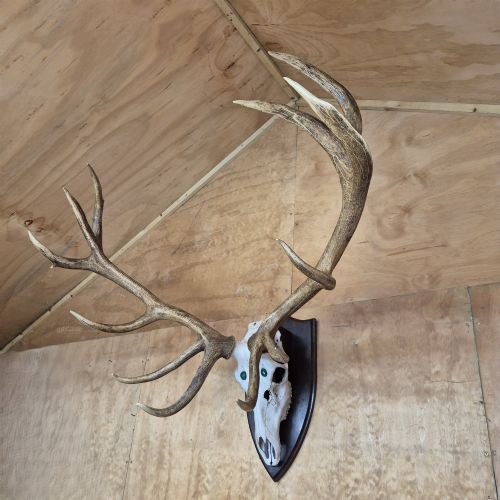
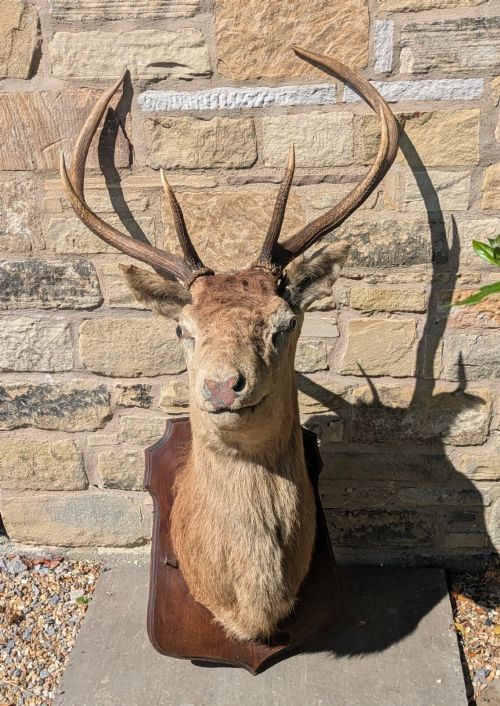
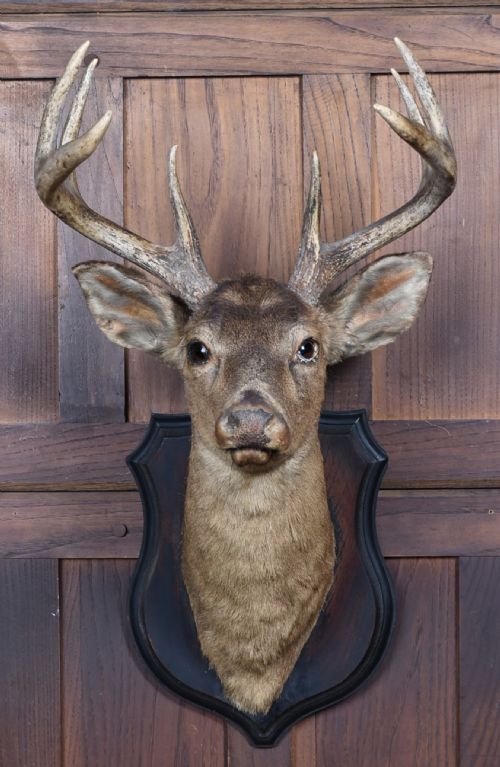
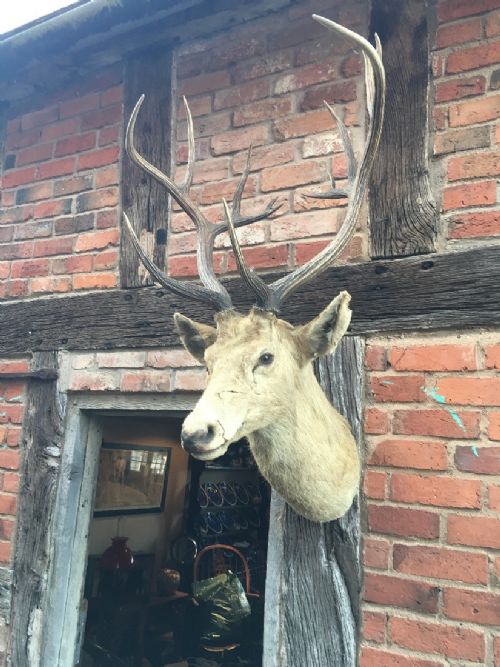
The most common forms you will meet on this page are stag heads and mounted antlers secured to carved wooden shields or skull plates. These pieces reflect Highland hunting lodge and traditional rustic aesthetics originating from the nineteenth and early twentieth centuries.
How they were made
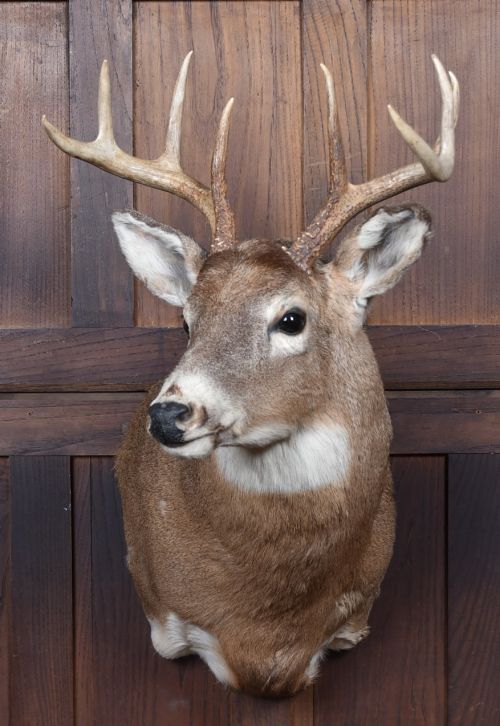
Maker techniques rely heavily on mounting natural antlers and animal heads onto carved wooden shields, often utilising oak. Taxidermists preserved the original bone, hair, and natural hide alongside the antlers to create lifelike wall mounts.
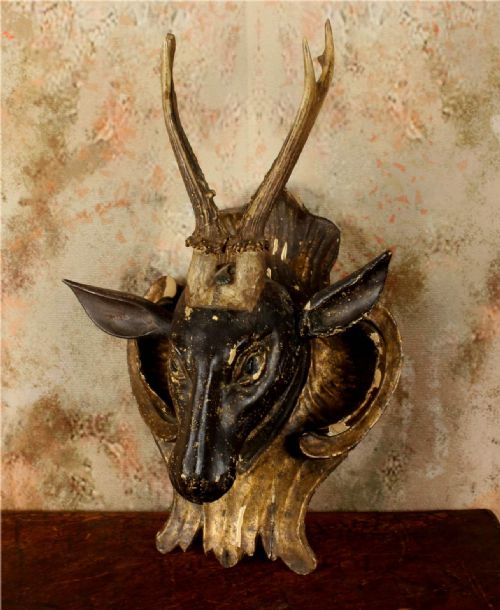
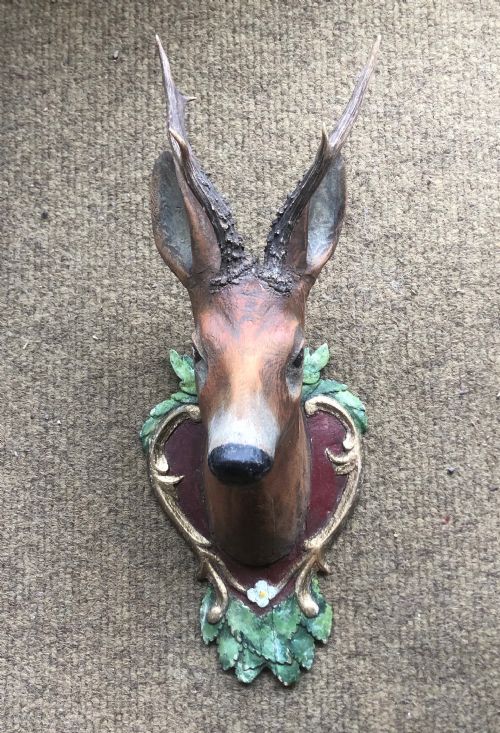
Certain folk art pieces incorporate hand-carved wood and painted details to replicate or complement the natural horn and bone. Glass is occasionally integrated into the taxidermy work for realistic eyes.
A Swedish folk art deer brings a painted expression to the wall alongside traditional hunting trophies.
What varies in quality
Quality differences lie in the scale and symmetry of the antler points, such as twelve-point sets compared to smaller roebuck or whitetail mounts. The artistic execution of the taxidermy and the intricacy of the carved wooden shield also define the upper tier of pieces.
The historical depth and condition of the natural hide, bone, and paintwork dictate the distinction between standard decorative items and finer naturalist specimens from the nineteenth century.
The Antler Wall Taxidermy Glossary
- Shield
- A carved wooden backing board, frequently made of oak, upon which the skull or antlers are mounted for wall hanging.
- Taxidermy
- The art of preparing, stuffing, and mounting the skins or remains of animals with lifelike effect.
- Point
- An individual branch or tine on an antler, used to measure the size and maturity of the trophy.
- Folk art
- Utilitarian or decorative objects made by self-taught individuals, often featuring carved wood or painted surfaces.
Antler Wall Taxidermy: Frequently Asked Questions
What periods do these pieces come from?
The listings span from the nineteenth century through the Edwardian era up to the 1930s. Victorian examples frequently lean towards natural history and traditional hunting lodge aesthetics.
Later pieces from the 1920s and 1930s maintain similar mounting traditions on carved wood shields.
How do I clean historical taxidermy?
Dust the hair, hide, and antlers gently using a soft, dry brush or a feather duster. Avoid using water, chemical sprays, or cleaning agents on the natural materials.
Keep the mount away from direct sunlight and damp environments to protect the antique hide and wood.
What is the difference between a stag and a roebuck mount?
Stag mounts are substantially larger, featuring sprawling antlers with multiple points, often displayed on prominent wooden shields. Roebuck mounts are smaller in scale with compact antlers.
Waterbuck and ram horns offer alternative horned variations beyond standard deer species.