



Stag Head Taxidermy
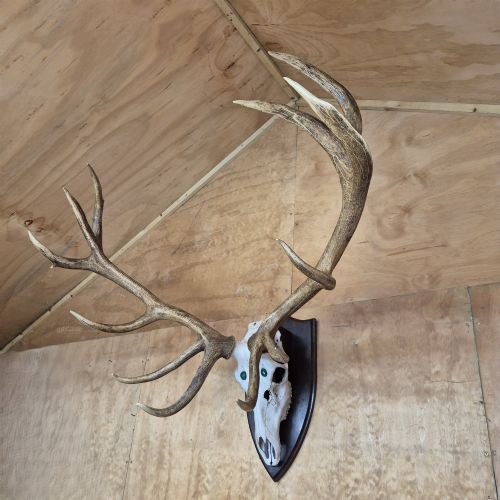
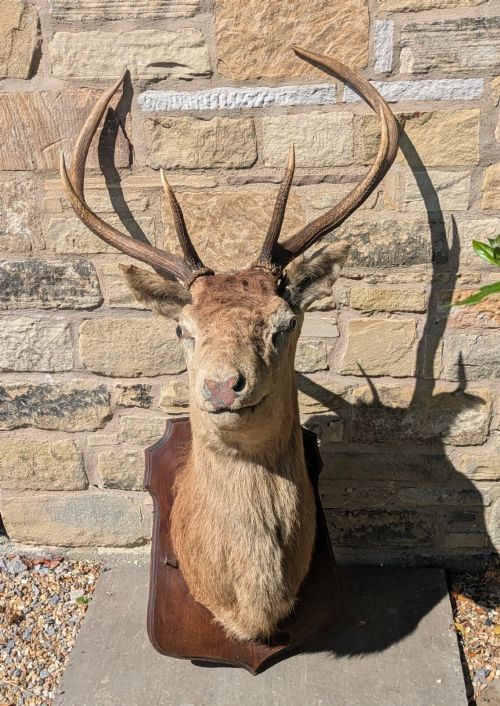
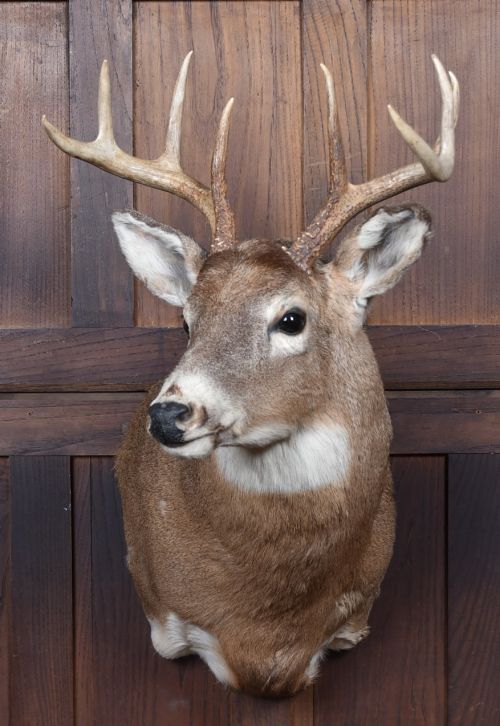
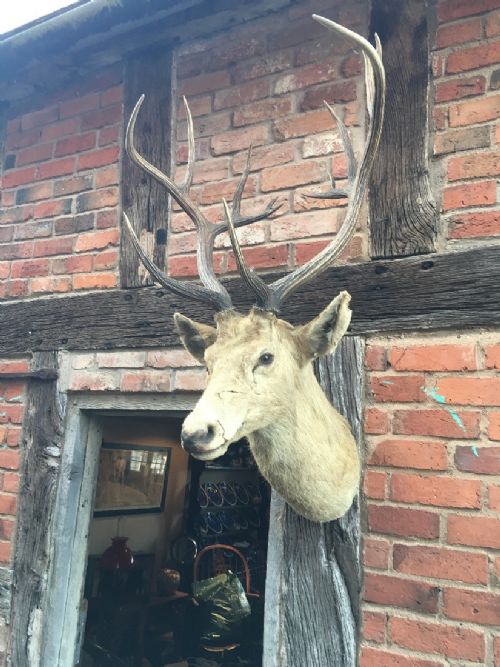
Stag head taxidermy brings the scale and character of the nineteenth and early twentieth century shoot straight to the wall.
Stag Head Taxidermy
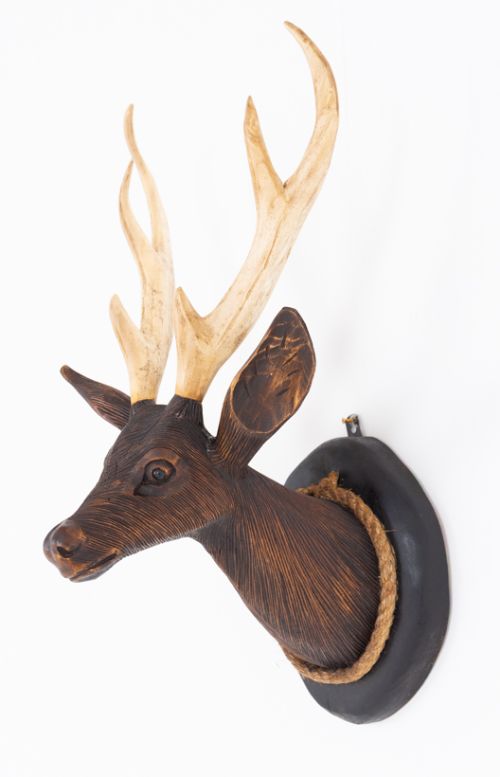
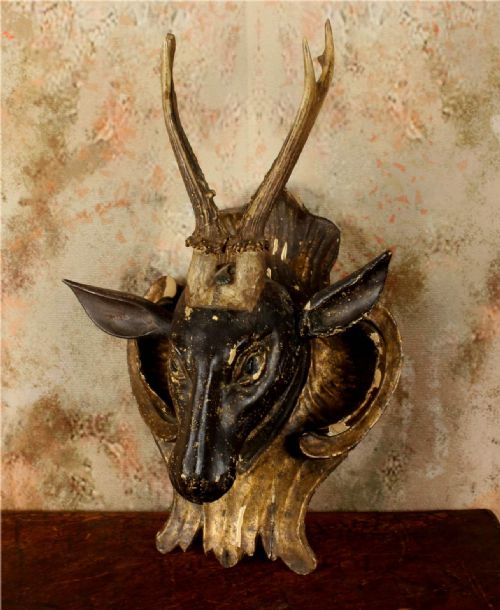
Originating largely from British, French, Swedish, and German traditions, these works appear in styles such as Victorian sporting, Highland traditional, and Black Forest carved wood. Alongside classic shoulder mounts and horn displays, related objects include carved wood folk art trophies and oak inkstands. They serve as direct links to historic hunting lodges and country houses.
How they were made
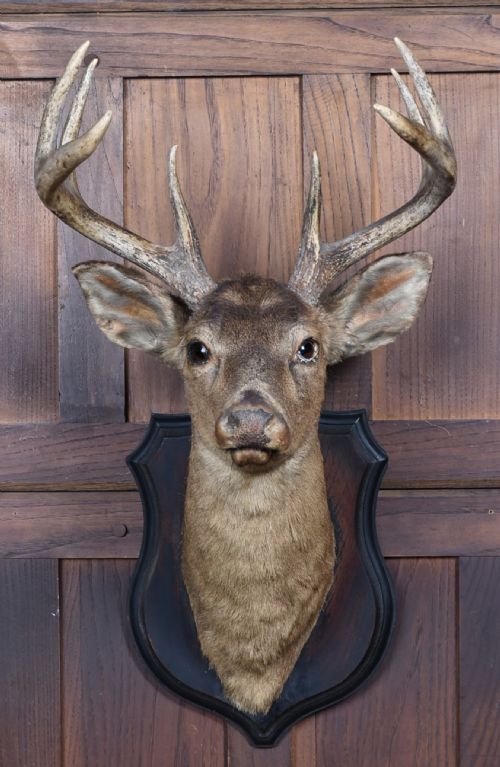
The construction of these pieces relies on natural materials such as bone, antler, hide, and taxidermy skin mounted upon wooden shields or backings. Oak and carved wood provide structural support for the wall mounts, often shaped with foliage or traditional shield contours. Glass is occasionally utilised in taxidermy eyes to restore a lifelike gaze to the animal.
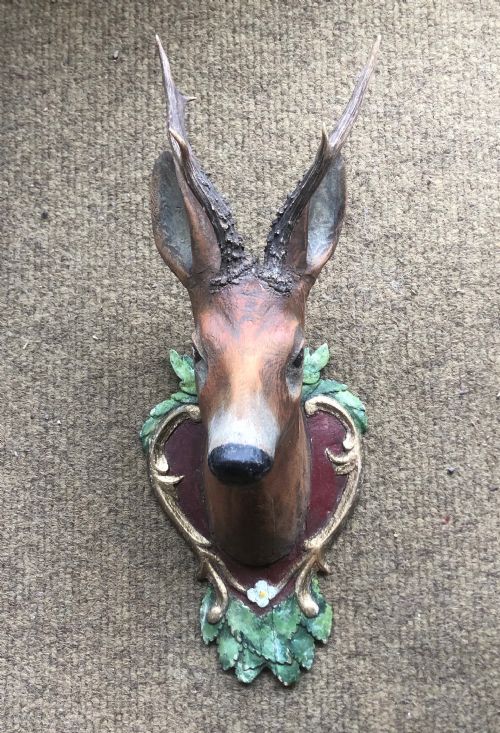
Artisans combined traditional taxidermy preservation techniques with woodcarving skills, particularly evident in Black Forest and folk art pieces. Antlers were cleaned, polished, and secured to carved wooden plaques, while hides were dressed and fitted over formers. Paint was sometimes applied to wooden shields or carved deer heads to enhance decorative details.
Even an inkstand can grow antlers when a nineteenth-century maker decides your desk needs a small mounted deer head.
What varies in quality
The distinction between ordinary and exceptional examples rests upon the symmetry and point count of the antlers, such as a twelve-point Royal set or a ten-point trophy. Taxidermy skill determines the natural expression and tension of the hide, while the depth and execution of the woodcarving define the merit of shields and Black Forest style pieces. Superior specimens maintain intact, well-conditioned hair and securely mounted antlers without looseness at the join.
Provenance and craftsmanship elevate certain pieces, such as those originating from established taxidermy houses or specific regional folk art traditions. The integration between the animal remains and the carved wooden mount dictates the overall visual harmony. Pieces showing expert anatomical proportion and careful preservation command greater attention.
Deyrolle of Paris
The Stag Head Taxidermy Glossary
- Royal
- A term used to describe red deer antlers with twelve or more points. This denotes a mature and impressive stag.
- Shield
- The wooden plaque or backing upon which taxidermy heads and antlers are mounted for wall display. They are frequently carved with oak leaf motifs.
- Black Forest
- A nineteenth-century carving style originating in the mountainous regions of central Europe. It is characterised by deeply carved, naturalistic woodland animals and foliage.
- Point
- An individual branch or tine on a deer's antler. Counting these points is traditional for assessing the size of the trophy.
- Shoulder mount
- A taxidermy preparation that includes the head, neck, and part of the shoulders of the animal. It creates a three-dimensional presence on the wall.
Stag Head Taxidermy: Frequently Asked Questions
How should I clean taxidermy hair?
Gentle dusting with a soft brush or a low-suction vacuum attachment helps maintain the hide.
Avoid using water, chemical cleaners, or direct sunlight, which can dry out and damage historical pelts.
What does a ten-point stag mean?
A ten-point designation refers to the total count of distinct tines on the antlers. This indicates the age and maturity of the deer when harvested.
Higher point counts, such as twelve-point Royal sets, were especially prized in nineteenth-century sporting lodges.
Are these mounts from the Victorian period?
Many examples date from the nineteenth century, including Victorian and Edwardian periods, alongside early twentieth-century pieces. Stylistic clues like oak shield carvings and taxidermy methods help differentiate the eras.
Records from makers and traditional hunting lodge aesthetics further clarify their age and origin.