

Victorian Table Oil Lamp
A victorian table oil lamp brings heavy brass, bright glass and steady height to a room, offering both period weight and warm domestic light.

Victorian Table Oil Lamp
A victorian table oil lamp is a domestic lighting piece designed to sit on a desk, sideboard or table, combining a heavy base with a burner and a decorative glass or ceramic shade. The pieces gathered here date primarily from the nineteenth century into the early twentieth century, spanning Victorian and Edwardian periods.
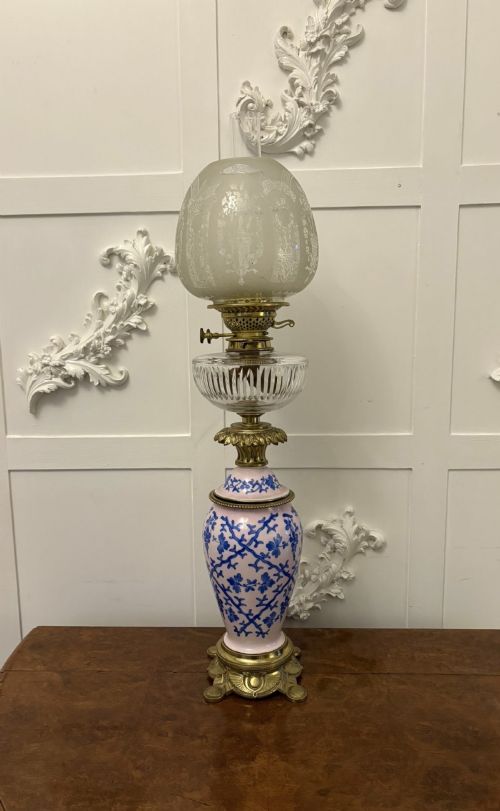
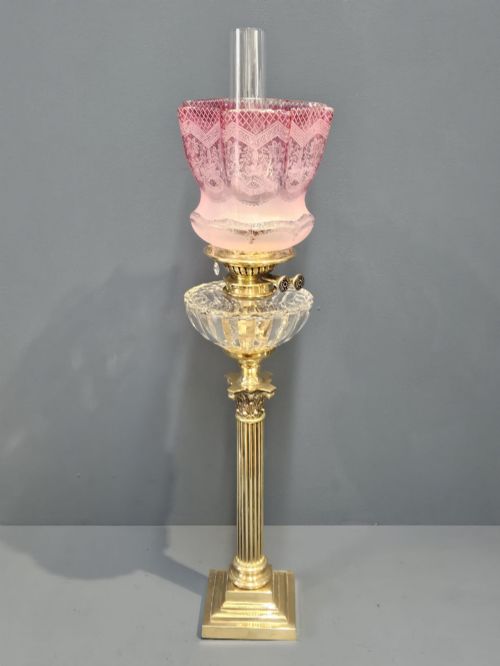
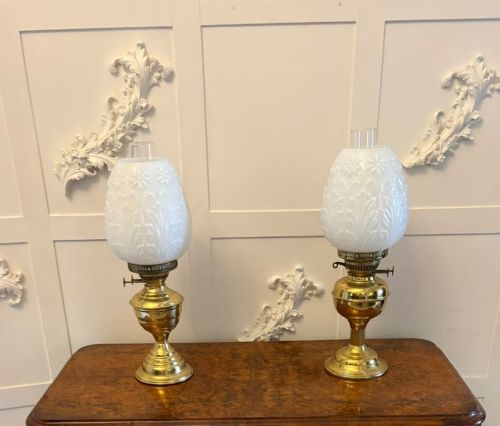
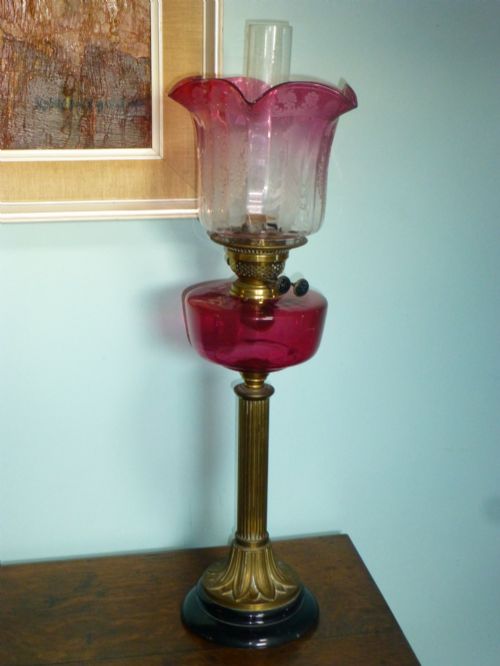
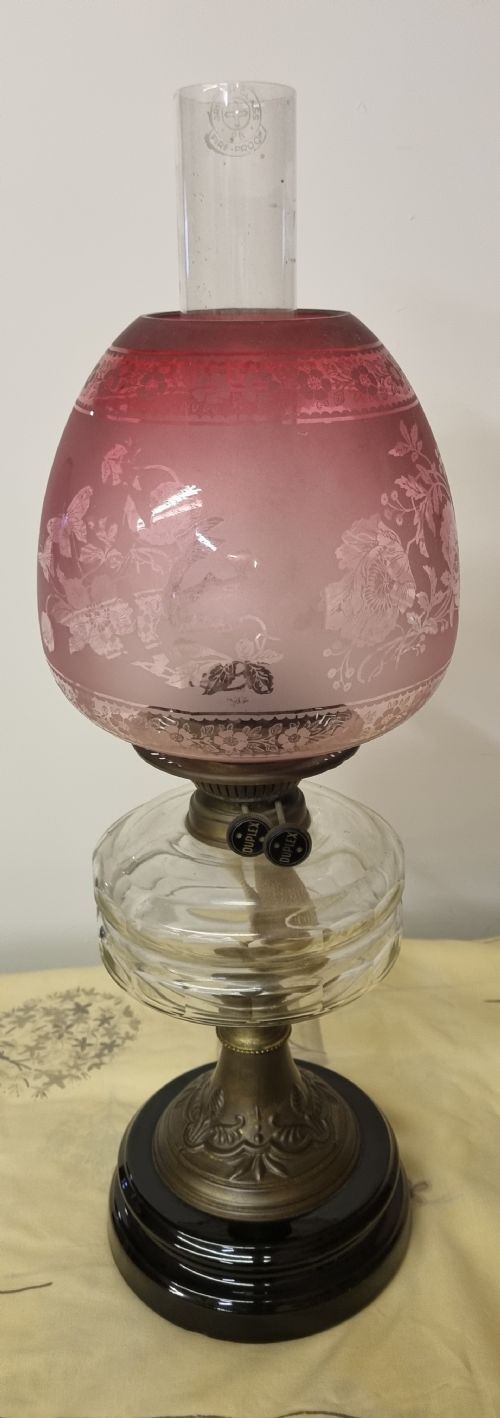
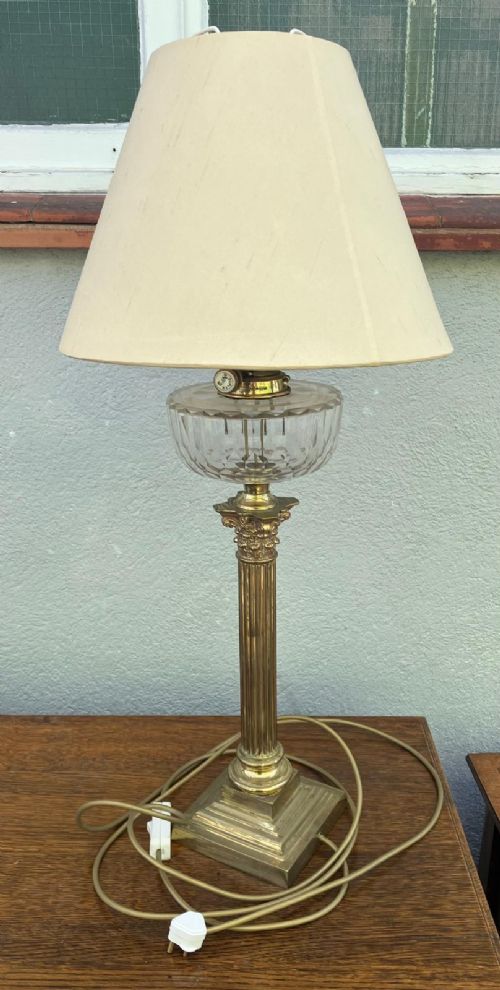
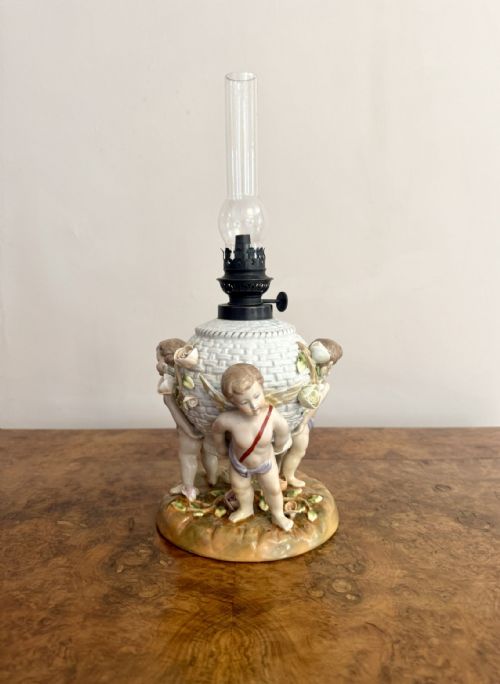
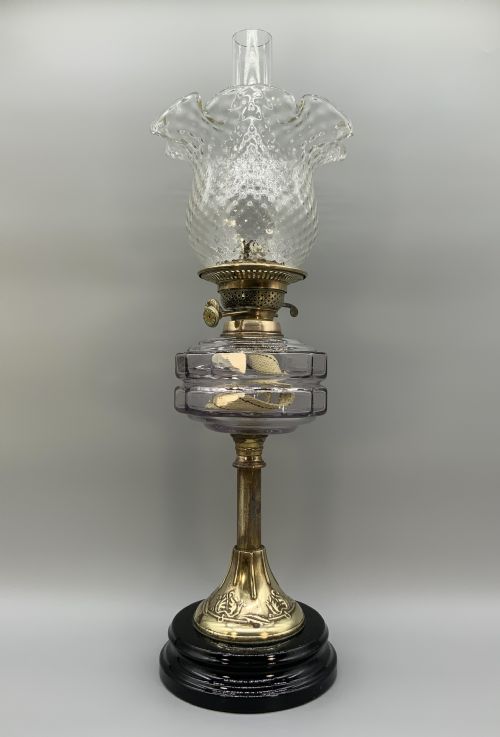
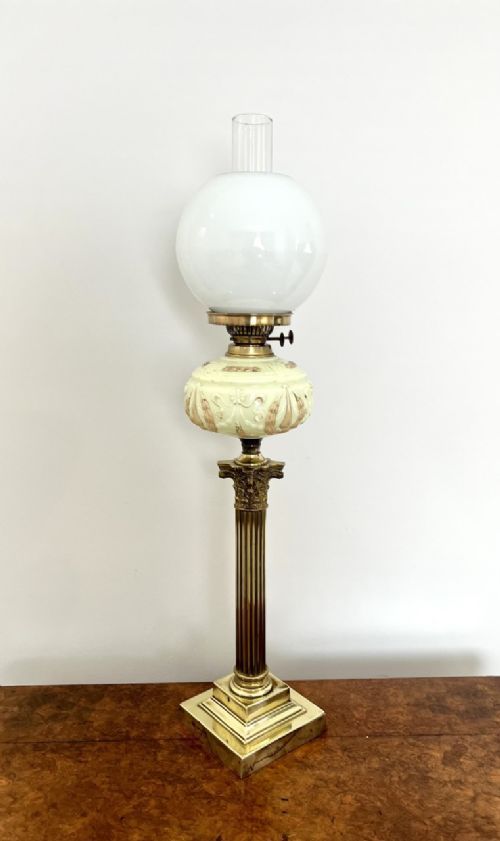
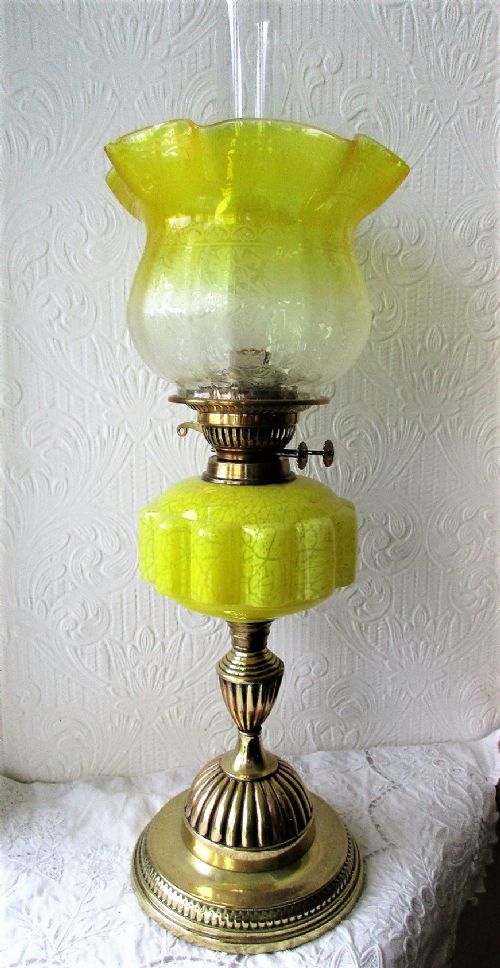
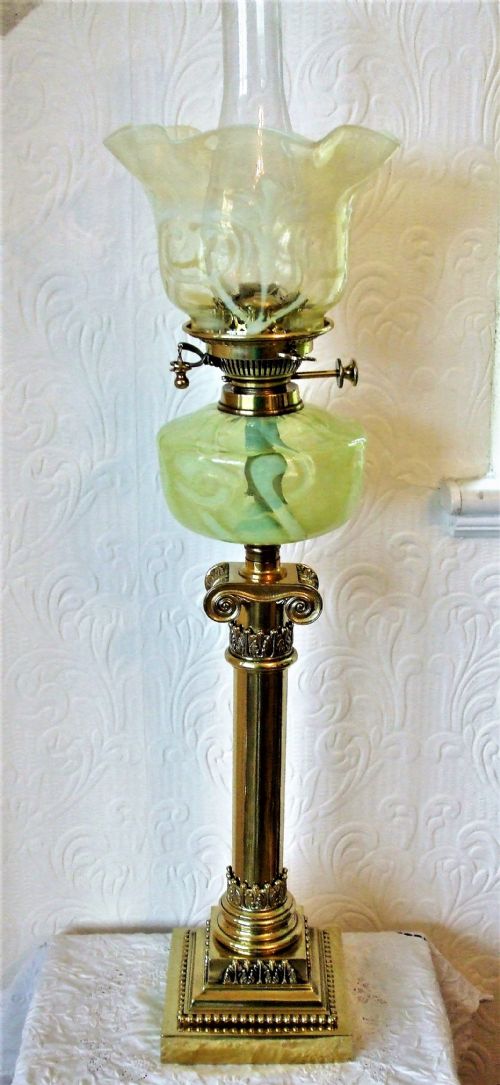
The most common examples encountered on this page pair a polished brass column with a glass font and a coloured shade. Variations include figural ceramic bodies, student lamps with metal reflectors, and tall duplex burners designed to throw more light.
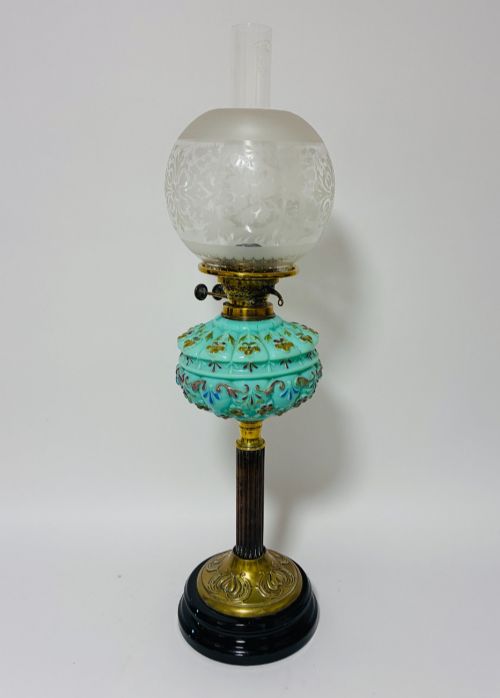
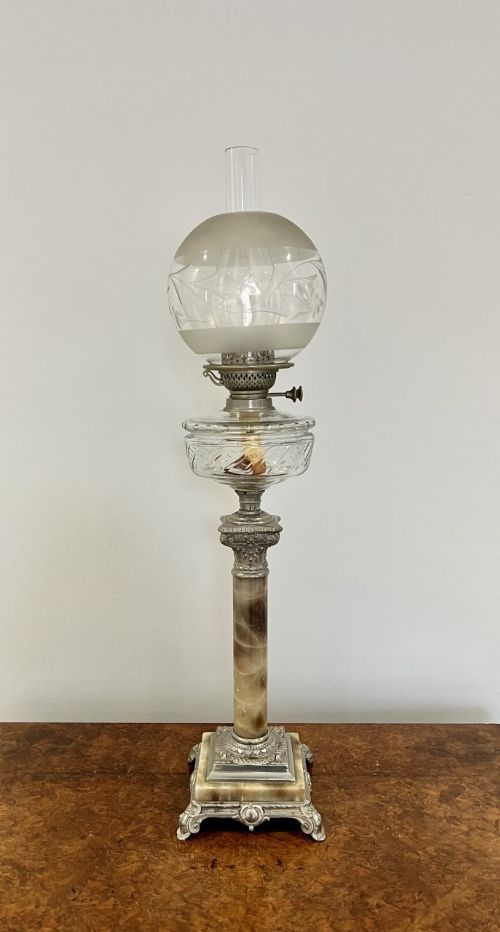
Makers and inventors left their mark on burners and collars, whilst local glasshouses and potteries supplied fonts and shades in cranberry, opaline and cut crystal. Collectors find everything from simple brass desk lamps to large, ornate porcelain and gilt centrepieces.
Materials and construction
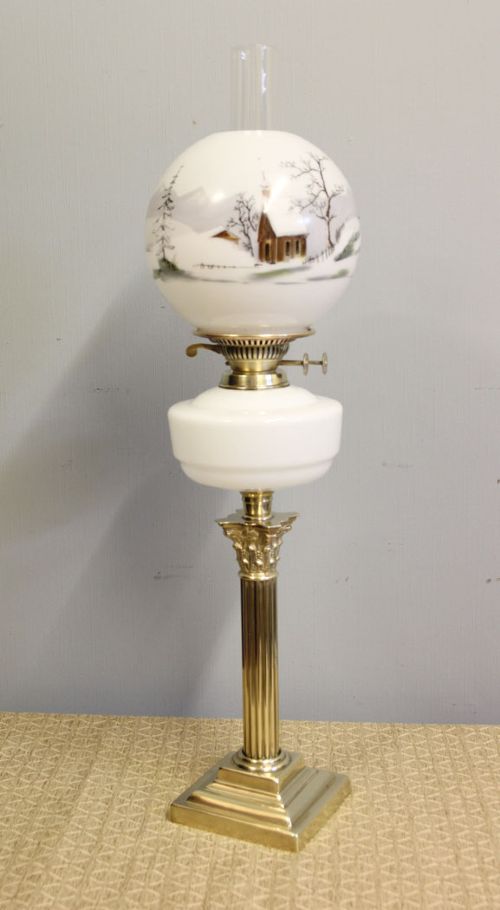
Brass forms the structural backbone of these pieces, shaped into fluted Corinthian and Ionic columns or cast into heavy, stepped bases. Manufacturers paired this metal with glass fonts, hand-blown shades and ceramic bodies glazed in soft pastels or rich colours.
Techniques combined metal casting and turning with glass moulding, etching and hand-painting. Burner mechanisms required precision engineering from firms who patented double-wick systems and adjustable galleries to control the flame.
Listed items span the nineteenth century into the early twentieth century, incorporating Victorian, Edwardian and Art Nouveau design movements.
Judging the standard
Quality rests in the weight of the metal casting, the clarity of the cut glass and the artistry of the painted or hand-blown shade. Superior examples retain original matching components from the burner to the shade, rather than later replacements assembled from mismatched parts.
Maker signatures stamped into brass galleries, burner knobs or ceramic bases separate standard production pieces from workshop highlights. The presence of specialised mechanisms, complex duplex burners and crisp relief detailing marks the upper tier of the range.
Hinks·Taylor Tunnicliff·Sitzendorf·Wild and Wessel·Braham·Mc Gary
The Victorian Table Oil Lamp Glossary
- Font
- The oil reservoir of the lamp, typically made of glass, ceramic or metal. It sits atop the column and feeds fuel to the burner.
- Duplex burner
- A mechanism utilising two flat wicks placed side by side to produce a significantly brighter flame than a single wick. These systems often bear maker stamps.
- Corinthian column
- An architectural column style popular for lamp bases, featuring ornate acanthus leaf capitals. It reflects the neoclassical revival tastes of the period.
- Opaline glass
- An opaque or translucent pale glass used for shades and fonts. It diffuses light softly across a room.
Victorian Table Oil Lamp: Frequently Asked Questions
What is a duplex oil lamp?
A duplex oil lamp uses a double-wick burner system designed to provide increased illumination compared to standard single-wick models.
These burners were patented and manufactured by prominent firms, appearing frequently on larger Victorian table lamps.
How do I identify a Victorian oil lamp?
Victorian oil lamps are identified through period materials such as heavy brass, cranberry glass and hand-painted porcelain, alongside architectural column forms.
Many examples include manufacturer stamps on the burner mechanisms or collars, pointing to nineteenth-century production.
Can these lamps still burn oil?
While these pieces were originally manufactured to burn paraffin or other lamp oils, modern owners often display them as decorative objects or convert them safely for electrical use.
Retaining the original mechanical components preserves the historical integrity of the piece.
What are cranberry glass shades?
Cranberry glass shades are made from glass coloured with gold chloride, yielding a rich pinkish-red hue when lit.
They were blown or moulded into tulip and ruffled shapes to sit atop nineteenth-century brass columns.