
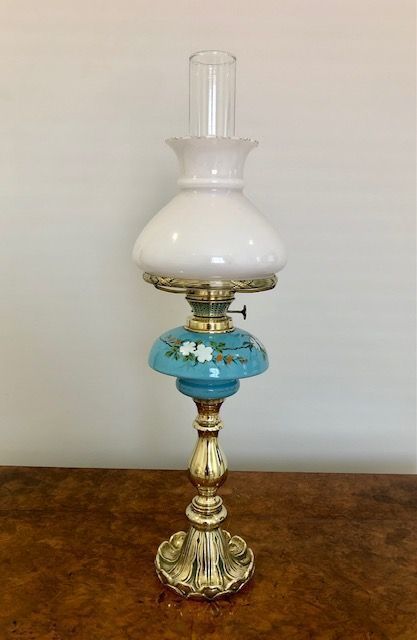
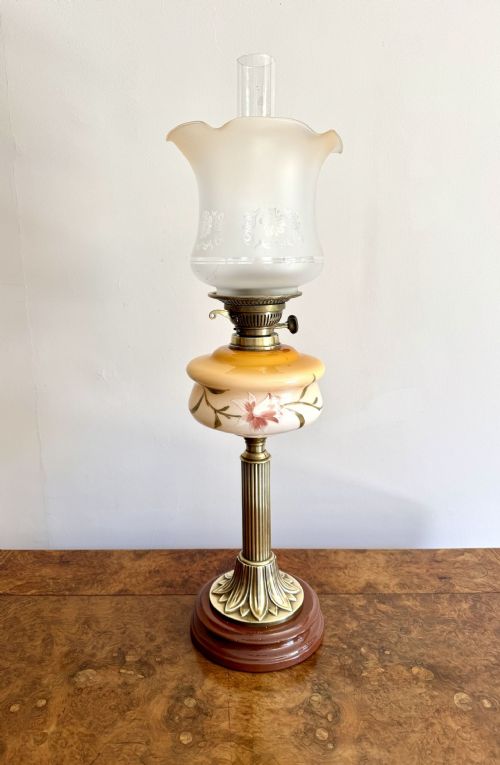


Traditional Hurricane Oil Lamp
These traditional hurricane oil lamp pieces bring brass and glass together from the Victorian and Edwardian eras, offering functional period lighting for the home.
Traditional Hurricane Oil Lamp
Traditional hurricane oil lamp items are period lighting fixtures that combine metal bases with glass reservoirs and shades, designed to shield the flame from draughts. When you search for a traditional hurricane oil lamp, you are examining domestic lighting from the nineteenth and early twentieth centuries.
The versions most commonly met on this page date from the Victorian and Edwardian periods, typically around 1870 to 1900. These lamps originate from British workshops and feature robust metal construction paired with decorative glass components.
What varies in quality
Quality differences in these lighting pieces often lie in the weight and refinement of the brass casting, where heavier metals and crisper detailing distinguish better examples. Simpler plated versions sit at the more utilitarian end of the scale compared to substantial cast brass bodies.
The variety and execution of the glass components also dictate the standing of a piece, particularly where coloured or opaline glass shades are involved. Better items feature well-proportioned shades that complement the scale of the metal base rather than appearing mismatched.
Some Victorian lamps carry scars from hurried evening refuelling by candlelight long before electric switches existed.
The Traditional Hurricane Oil Lamp Glossary
- Victorian
- Belonging to the reign of Queen Victoria during the nineteenth century. This era produced many of the heavy brass lighting fixtures seen today.
- Edwardian
- Pertaining to the period from 1901 to 1910, following the Victorian age. Lamps from this time often show lighter proportions while retaining traditional brass and glass materials.
- Opaline Glass
- An opaque or translucent pale glass used frequently for lamp shades. It softens the glare of the flame and provides a milky appearance.
- Paraffin Lamp
- A domestic lighting device that burns paraffin oil for illumination. These pieces require specific burners and wicks to function correctly.
Traditional Hurricane Oil Lamp: Frequently Asked Questions
How do I date an oil lamp?
Dating relies on examining the materials, construction methods, and stylistic cues present in the metal and glass. Victorian pieces often display heavier cast brass forms, whereas Edwardian examples can appear slightly more refined.
Maker's marks on the burner mechanisms or base weights also help narrow down the period of production. Comparing the shade style with the base design confirms whether the components belong together from the same era.
Can I still use an antique oil lamp?
Many of these pieces remain structurally suitable for use with modern lamp oil or paraffin if the burner and wick are in good working order. Checking the condition of the fuel reservoir is essential before adding any liquid.
Buyers often choose to wire them for electricity to enjoy the aesthetic without handling fuel. Professional conversion preserves the original appearance while meeting modern safety standards for daily home lighting.
What fuels did these lamps burn?
These lamps were primarily designed to burn paraffin or standard lamp oil available during the nineteenth century. The burner mechanism controls the flame height via a wick immersed in the fuel reservoir.
Different burners required specific oil weights to ensure a steady flame without excessive smoke. The glass chimney draws air upwards to feed the flame and keep it stable.
How do I clean brass lamp bases?
Cleaning brass requires a gentle cloth and mild soapy water to remove dust and surface grime without damaging the metal. Avoid harsh chemical polishes that strip away the aged patina built up over decades.
Preserving the natural surface honours the age of the piece. Glass components can be washed separately in warm water and dried thoroughly before reassembly.