



Glass Chimney Table Lamp
A glass chimney table lamp brings period warmth to a room, combining a clear glass flue with a sturdy metal or ceramic reservoir.
Glass Chimney Table Lamp
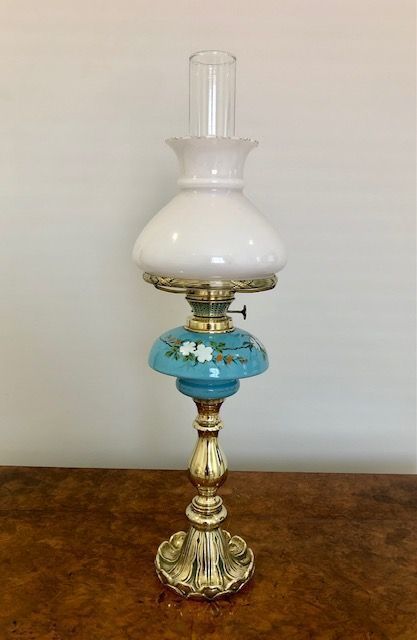
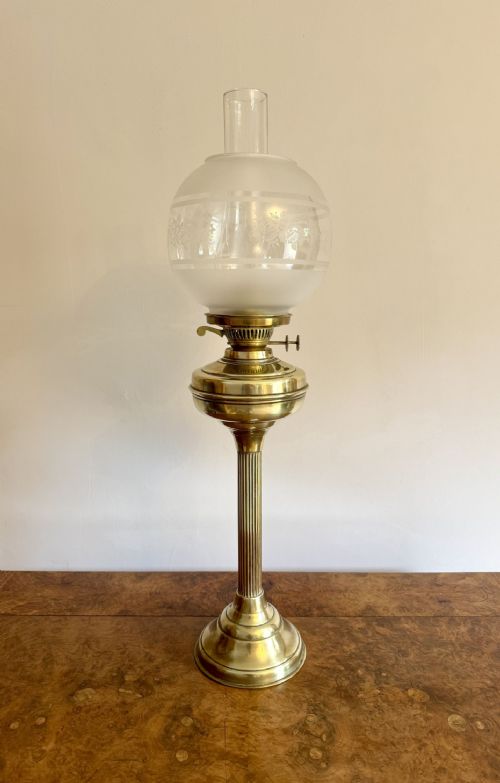
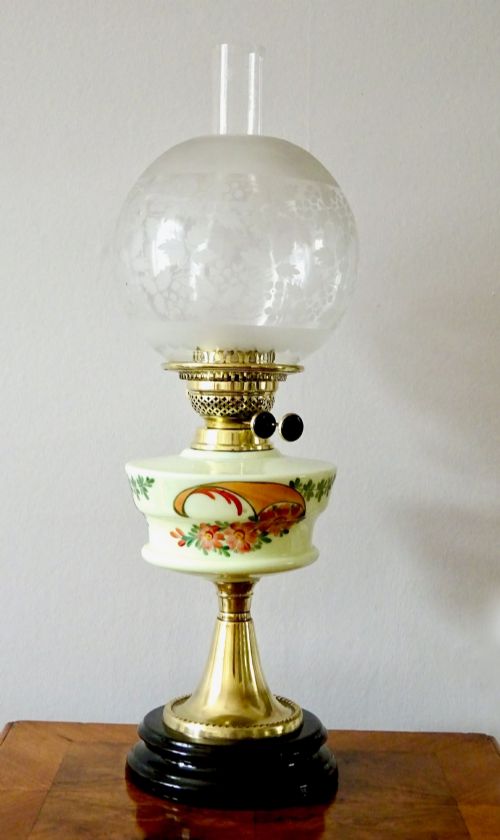
A glass chimney table lamp is a functional lighting piece rooted in nineteenth and early twentieth-century domestic life. When you search for a glass chimney table lamp, you encounter tall oil and paraffin burning fixtures designed to sit safely on desks, side tables and mantelpieces. The most common examples on this page date from the Victorian and Edwardian eras, pairing heavy metal bases with decorative shades.
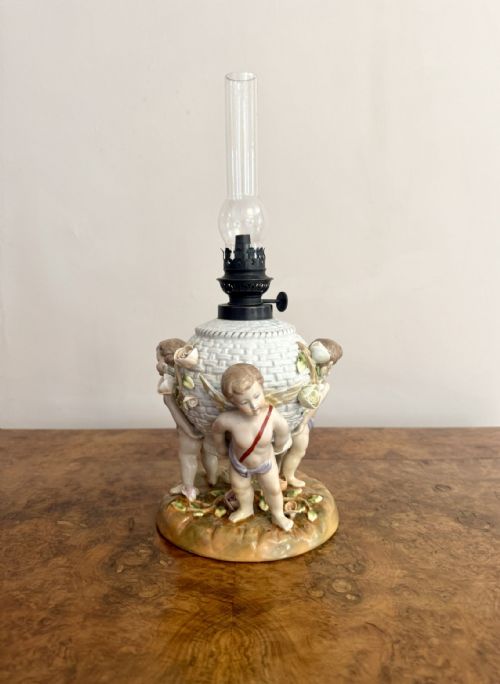
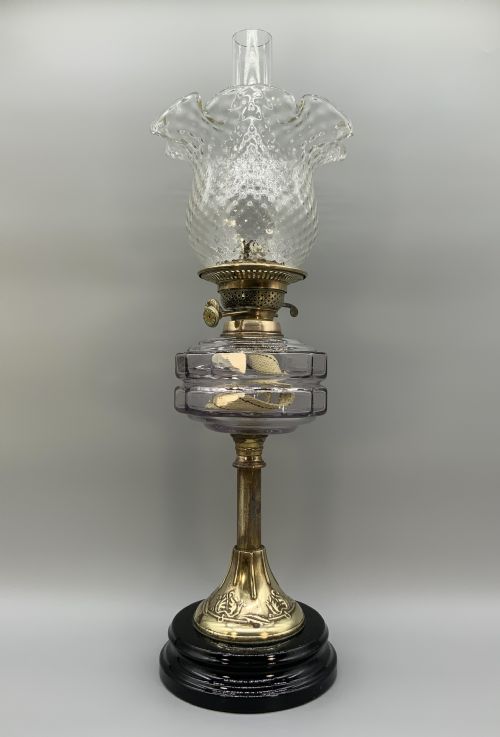
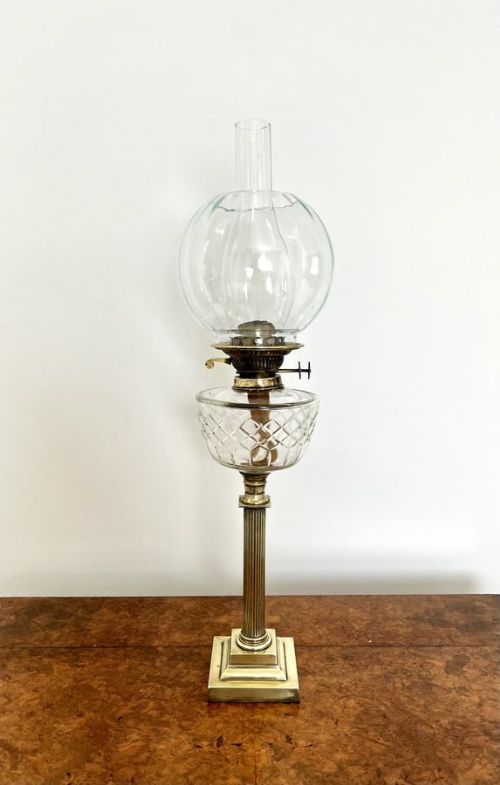
Makers often combined brass columns with ceramic reservoirs, or utilised hand-blown opaline and cut glass for the upper sections. You will find items ranging from plain brass candlesticks fitted with simple chimneys to elaborate twin-burning table lamps featuring terrestrial globe shades. These pieces represent a period when portable domestic lighting required both mechanical reliability and ornamental flair.
What varies in quality
The distinction between standard domestic lighting and high-end parlour pieces rests upon the weight of the metal castings and the intricacy of the glasswork. Superior examples exhibit heavy, solid brass bases, crisp hand-cut detailing on crystal fonts, and finely painted porcelain bodies rather than simple transfer prints. The integration of the burner mechanism with the ceramic or glass reservoir also shows the care taken by manufacturers.
Artistic ambition sets certain pieces apart, particularly those bearing the influence of the Art Nouveau movement or specific pottery works. Lamps that retain matching hand-blown shades and original chimneys represent a higher tier of preservation compared to those assembled from mixed period components.
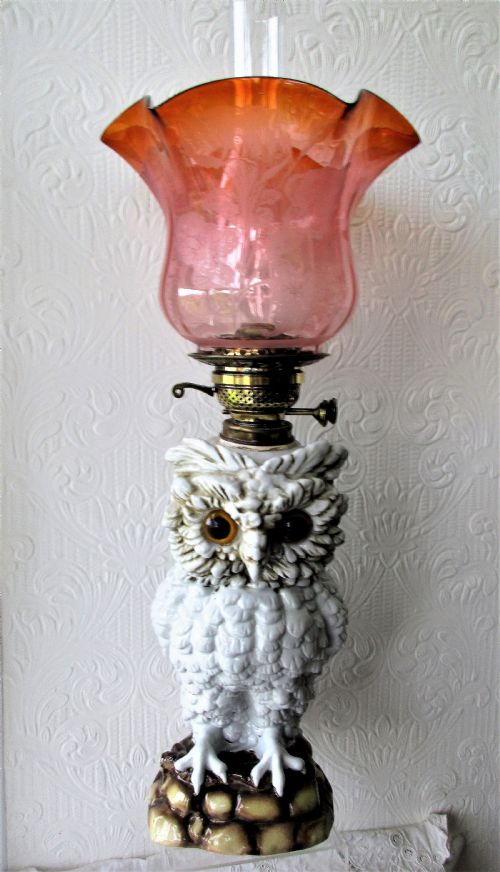
Several Victorian lamps take the watchful form of ceramic owls, bringing a solemn feathered gaze to nineteenth-century mantelpieces.
Sitzendorf·Messengers·Harrods
The Glass Chimney Table Lamp Glossary
- Chimney
- A tall, narrow glass tube placed over the burner to stabilise the flame and draw up oxygen. It protects the surrounding room from smoke while ensuring a steady light output.
- Opaline glass
- An opaque, milky-white glass often tinted in soft pastels, popular in Victorian lighting design. It diffuses the glare of the internal light source evenly.
- Font
- The oil reservoir section of the lamp, typically situated above the main base and below the burner. It can be formed from brass, glass, or decorated porcelain.
- Cranberry glass
- A rich pink or red transparent glass produced by adding gold chloride to the molten mixture. It was frequently used for Victorian lamp shades to cast a warm glow.
Glass Chimney Table Lamp: Frequently Asked Questions
How do I clean an opaline shade?
Wash glass shades gently in warm water using a mild, non-abrasive detergent. Avoid submerging metal collar mounts or painted ceramic sections to prevent damage to adhesives and pigments.
Dry the glass thoroughly with a soft lint-free cloth to restore clarity. Take extra care with hand-painted porcelain or silver-plated parts, using only dry dusters where finishes appear delicate.
Can these lamps be converted to electricity?
Many collectors prefer to keep these pieces in their original un-converted state to preserve historical integrity. However, professional electricians can often route a discreet cord through the internal column without drilling the main body.
Ensure any conversion relies on removable components so the original burner and collar remain unaltered. This allows the lamp to return to its initial form at a later date.
How do I date a Victorian brass lamp?
Examine the construction methods of the brass base and the threading on the burner mechanism. Machine-cut threads and heavy cast metal components typically point towards the later nineteenth century.
Stylistic cues such as floral ceramic inserts or flowing Art Nouveau lines help narrow the production period between the eighteen-eighties and nineteen-tens. Maker marks stamped onto the brass thumb wheels also provide clues to the manufacturer.