


19th Century Oil Burner
A 19th century oil burner is a decorative period lighting fixture designed to burn paraffin or colza oil, prized for its ornate Victorian craftsmanship.
19th Century Oil Burner
A 19th century oil burner encompasses domestic lighting fixtures created across the Victorian era, ranging from simple table lamps to elaborate figural designs. Buyers searching this phrase encounter examples created for illumination that now function primarily as decorative centrepieces.
Origins span English, Italian, and American workshops, with Grand Tour influences appearing alongside domestic Victorian styles. These pieces demonstrate the transition from utilitarian lighting to ornate interior decoration during the nineteenth century.
Materials and construction methods
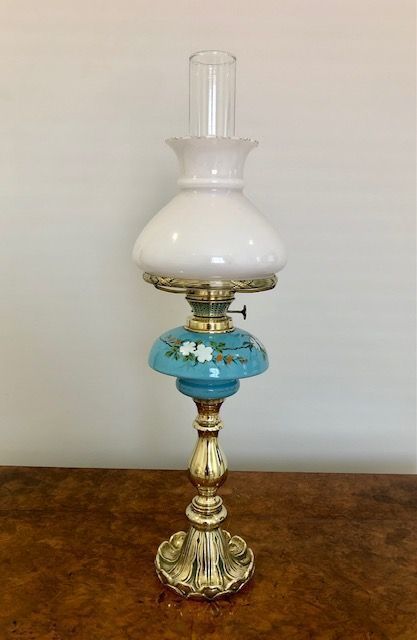
Metalworking techniques dominate the construction of these pieces, utilising cast brass, patinated bronze, and ormolu. Artisans shaped, embossed, and chased these metals to create structural bases and decorative mounts.
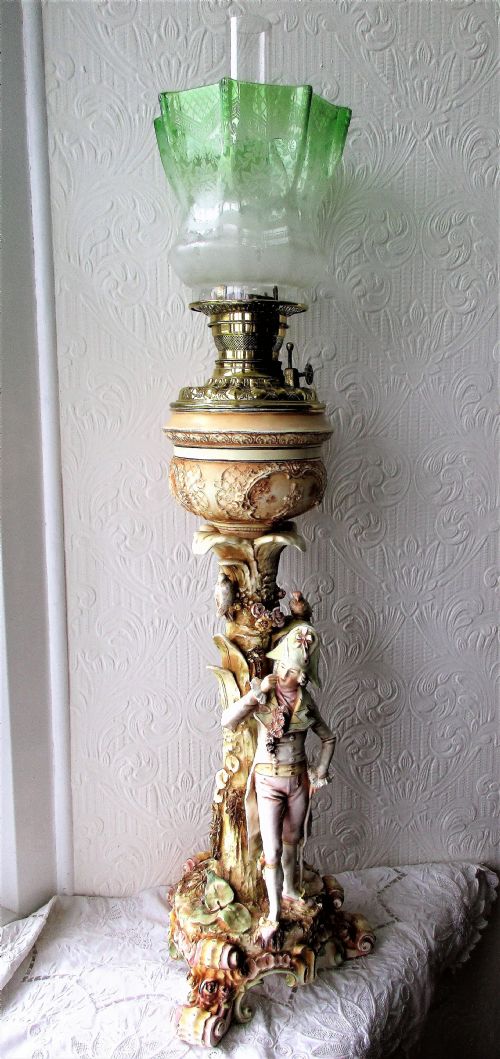
Glass production forms a vital component, featuring cranberry glass, opaline glass, and crystal with applied gilt decoration. These coloured and tinted glass reservoirs and shades were blown and manipulated to catch the ambient light of the room.
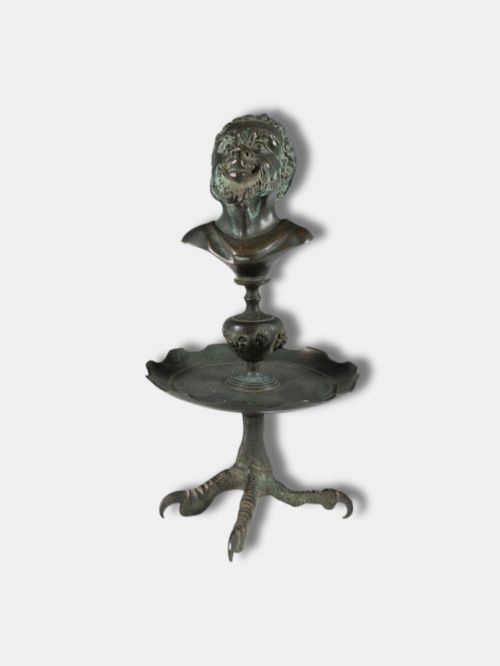
Victorian households illuminated their parlours with porcelain owls and eagles' claws holding bronze oil reservoirs.
The spectrum of execution
The choice and handling of the glass element distinguish the better productions. Rich cranberry and layered opaline glass with hand-applied gilt decoration indicate higher workshop standards compared to plain or uniformly moulded alternatives.
Wild And Wessel
The 19th Century Oil Burner Glossary
- Peg oil lamp
- A small oil lamp featuring a metal spigot or peg on the underside designed to fit directly into the candle socket of a larger candelabrum or candlestick.
- Cranberry glass
- A rich red-pink transparent glass created by adding gold chloride to the molten batch, widely utilised for Victorian lamp reservoirs and shades.
- Ormolu
- Gilded bronze, produced by applying a finely ground high-carat gold-mercury amalgam to a bronze object and heating it to vaporise the mercury, leaving a durable golden finish.
- Lucerna
- An Italian oil lamp design, typically cast in brass or bronze, referencing ancient Roman lamp forms with multiple spouts and suspension picks.
19th Century Oil Burner: Frequently Asked Questions
Can I convert an oil lamp to electricity?
Many collectors choose to convert these lamps for modern interior use by running a discreet electrical cord up through the central collar. This modification provides ambient room lighting while preserving the antique exterior appearance of the brass or glass base.
Professional rewiring protects the historic fabric of the lamp without altering the visible metalwork or glass reservoirs. It is advisable to retain the original burner components alongside the lamp even after conversion.
Where should I display an oil lamp?
These lamps suit placement on sturdy sideboards, mantels, or entrance tables where their coloured glass shades and metal bases catch natural light. Position them away from heavy household traffic to protect delicate glass components from accidental knocks.
Pairing a cranberry glass or opaline lamp with dark wooden furniture creates a strong visual contrast. Ensure the display surface is level to support the weight of cast brass and bronze foundations safely.
How do I date a Victorian oil lamp?
Dating relies on examining the burner mechanism patents, the manufacturing style of the brass casting, and the composition of the glass shade. Mid-century pieces often feature heavier bronze work, while later nineteenth-century examples frequently incorporate delicate opaline or cranberry glass.
Maker stamps on the brass thumbwheels or burner galleries provide precise chronological markers. Comparing the decorative motifs, such as classical revival figures or Grand Tour themes, helps narrow the decade of production.