
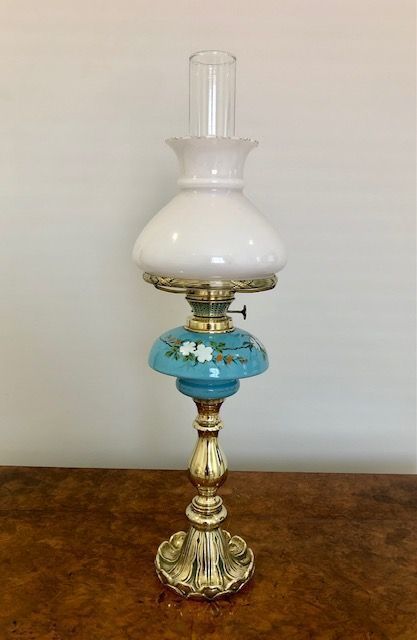


Blue Glass Kerosene Lamp
These blue glass kerosene lamps bring soft, coloured light and rich Victorian character to any room.
Blue Glass Kerosene Lamp
A blue glass kerosene lamp is a functional domestic lighting piece designed to burn paraffin or oil, usually featuring a decorative reservoir paired with a burner and chimney. When you search for a blue glass kerosene lamp, you encounter items originating primarily from the Victorian and Edwardian eras, spanning the latter half of the nineteenth century into the early twentieth century.
Most examples found on this page combine moulded or tinted glass reservoirs with brass mounts and ceramic or black glass bases. These lamps often retain their original shades, including terrestrial glass globes and tinted glass covers that diffuse the flame into a warm glow.
Materials and construction
These lamps rely on a combination of brass and glass, utilising moulded glass fonts and heavy metal bases to maintain stability on a table. Brass components are frequently embossed, providing a structured support that holds the delicate glass reservoirs and burners securely.
The glass elements incorporate opaline, milk, clear, and moulded finishes, often tinted in rich blue shades during the manufacturing process. Makers combined these glass fonts with ceramic sections and black glass bases to create durable domestic objects.
Object types recorded across these pages consist entirely of traditional oil lamps equipped with various shade configurations.
Judging quality in domestic lighting
Quality rests in the weight of the brass mounts and the crispness of the moulded glass details on the font. Superior pieces display substantial metal casting and well-balanced proportions between the base, the reservoir, and the matching shade.
The integration of original decorative elements, such as terrestrial glass globes or embossed brass collars, distinguishes finer pieces from simpler utilitarian lamps. Finer examples maintain the original harmony of materials without mismatched replacement components.
The Blue Glass Kerosene Lamp Glossary
- Font
- The oil reservoir of the lamp, typically formed from moulded or tinted glass to hold the fuel safely. This container sits atop the base and beneath the burner mechanism.
- Terrestrial globe shade
- A spherical glass shade surrounding the flame, often patterned or tinted to soften the light. These globes sit above the burner on larger table lamps.
- Opaline glass
- A semi-translucent white or tinted glass popular in nineteenth-century lighting manufacture. It diffuses light evenly while adding colour to the room.
- Brass mount
- The metal collar or connector that joins the glass font to the base or burner. Embossed versions display raised decorative patterns pressed into the metal.
Blue Glass Kerosene Lamp: Frequently Asked Questions
How do I date an oil lamp?
Dating relies on stylistic clues such as the shape of the brass mounts, the presence of embossed metalwork, and the design of any accompanying glass shades. Pieces from the mid-nineteenth century often display simpler forms, while late Victorian and Edwardian examples incorporate more elaborate colour combinations.
Examining the materials, including black glass bases and ceramic stems, helps narrow down the decade of production. Comparing the construction methods of the burner and collar provides further context for the manufacturing period.
Are these lamps still safe to use?
Most buyers treat these items as decorative objects rather than functional household lighting. Converting them for modern electrical use requires professional rewiring to ensure safety standards are met.
Original burners and wicks remain intact on many pieces, but collectors generally display them unlit to preserve the antique glass and brass components.
How should I clean the glass parts?
Cleaning requires warm water and mild soap, keeping moisture away from any remaining paper labels or aged brass fittings. Soft cloths prevent scratching the tinted or moulded surfaces of the glass reservoirs.
Harsh chemical cleaners can damage nineteenth-century brass finishes and delicate glass tints, so gentle maintenance preserves the surface best.
Did these lamps always include shades?
Many table lamps were manufactured with matching glass shades, though some survived the decades separated from their original globes. Terrestrial globes and tinted shades were common additions for domestic sitting rooms.
Finding a lamp with its matching shade intact enhances the completeness of the object. Plain chimneys without decorative globes also appear frequently among surviving examples.