

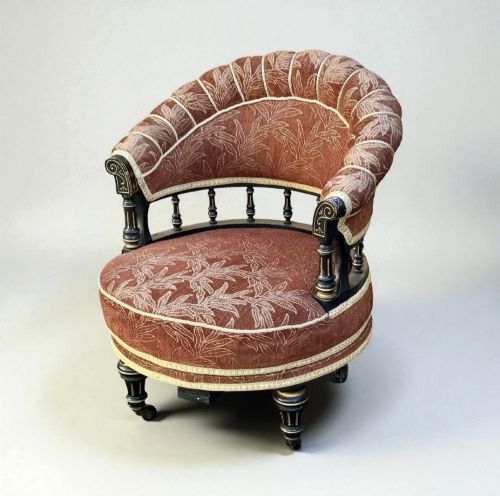
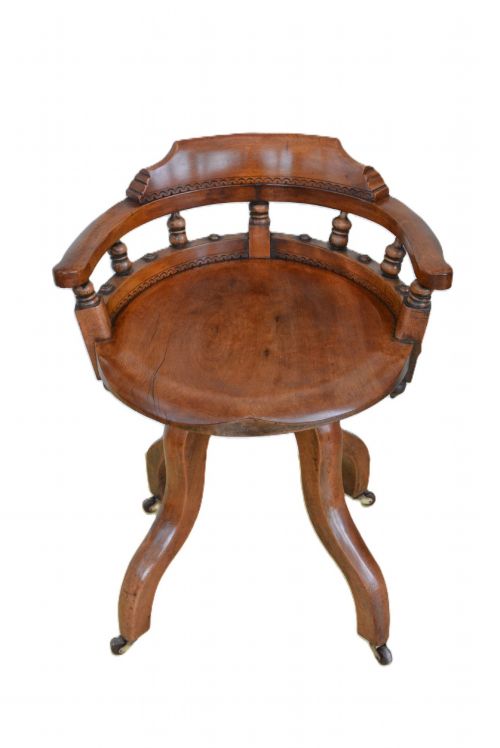
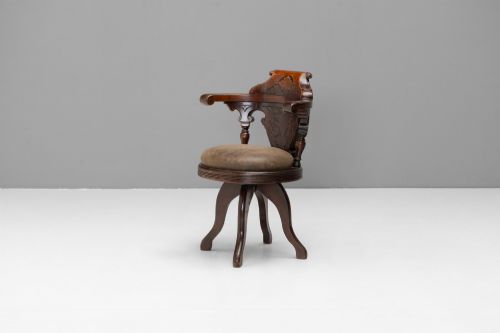
Victorian Swivel Office Chair
A victorian swivel office chair offers a sturdy rotating seat built for nineteenth-century writing desks and studies, combining heavy timber frames with functional mechanics.
Victorian Swivel Office Chair
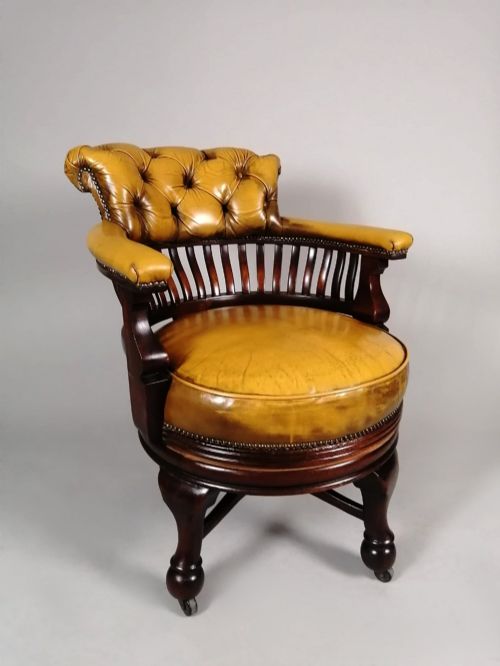
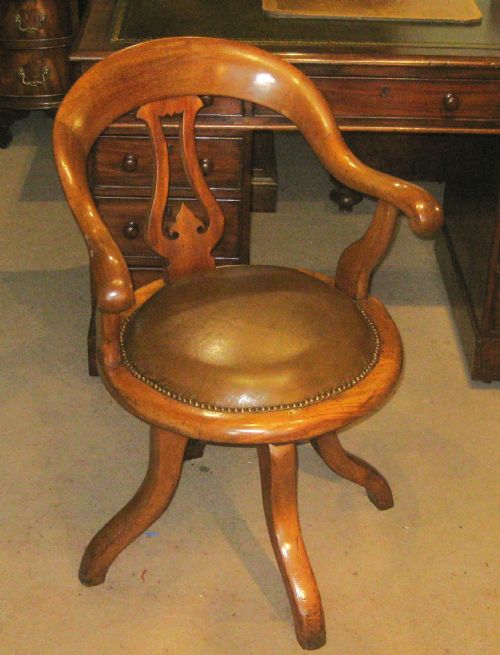
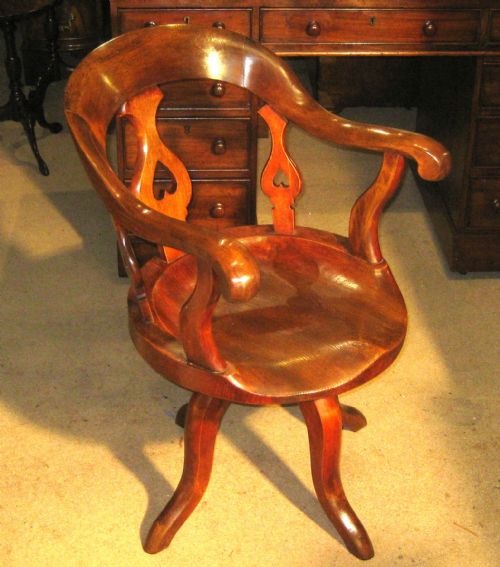
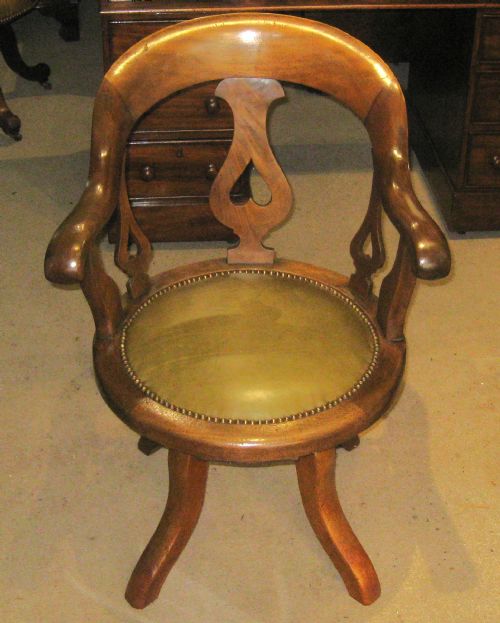
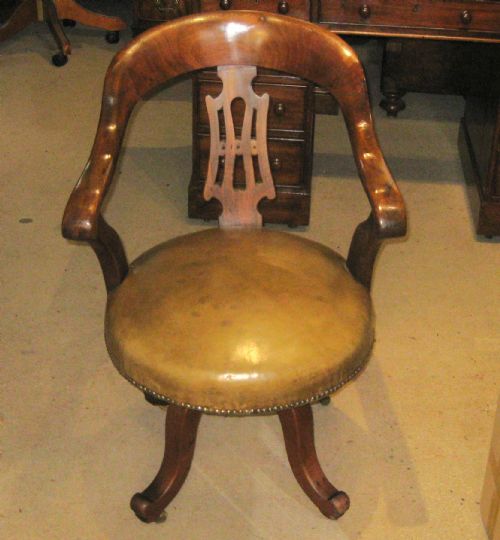
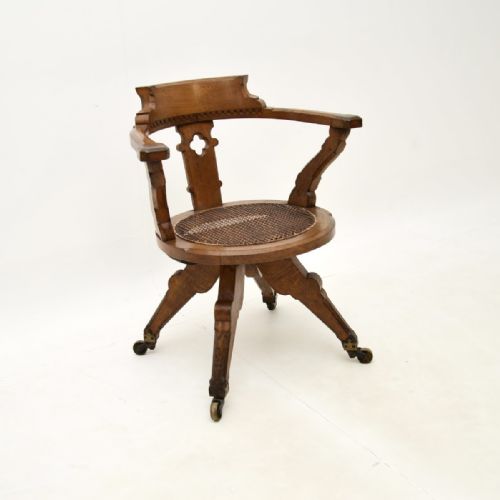
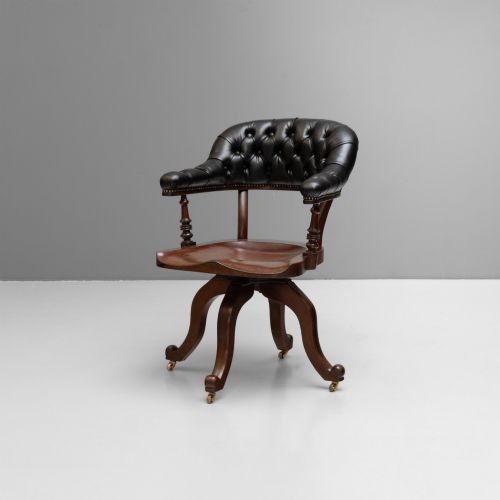
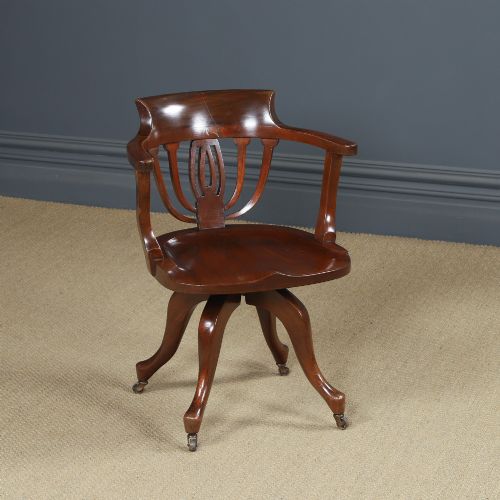
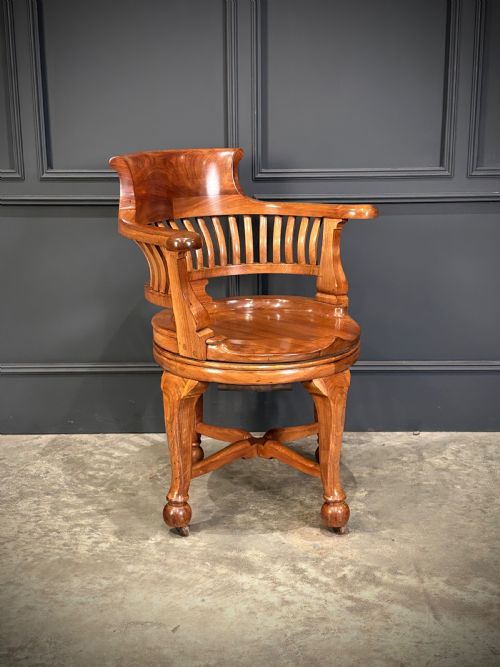
A victorian swivel office chair primarily takes the form of a revolving desk chair or library captain's armchair designed for administrative work. These pieces emerge from periods spanning the late nineteenth century and Edwardian eras, often originating as heavy office seating or specialised marine fittings.
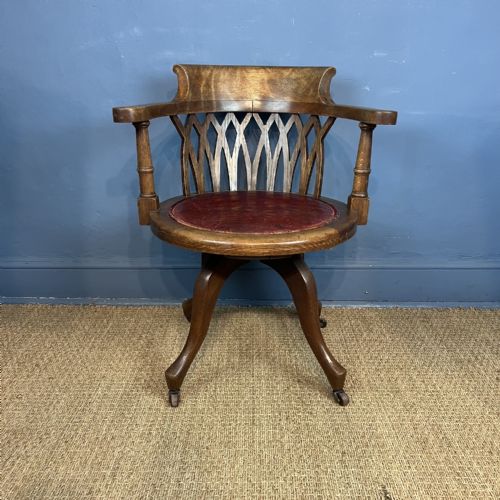
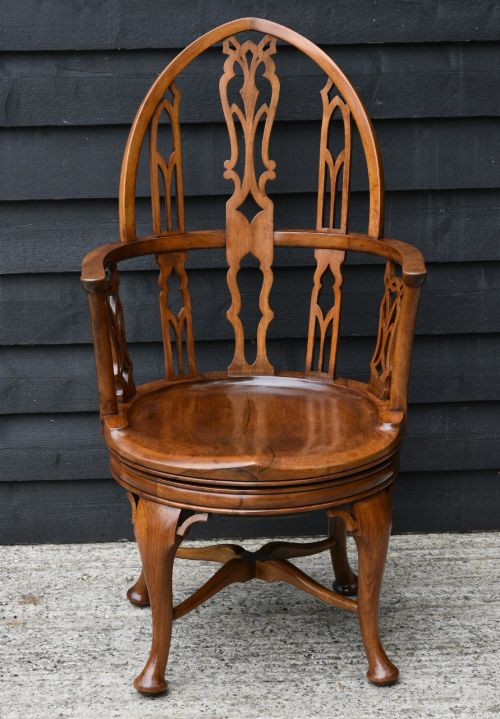
Mahogany and oak dominate the surviving examples, shaped into robust armchairs with revolving mechanisms that allow full rotation. Buyers frequently encounter walnut variants alongside distinctive ship chairs and Gothic revival designs featuring carved wooden frames.
The standard configuration relies on a central spindle and iron or brass underframe supporting a timber seat, which is occasionally upholstered in leather for daily clerical use.
Materials and Construction
Makers constructed these chairs using dense hardwoods like mahogany, oak, and walnut, joined with robust dowels and mortise-and-tenon joints to withstand the torsion of a revolving seat. Iron and brass mechanisms provide the swivel function, often concealed beneath the wooden platform or exposed as heavy cast iron underframes.
Upholstered surfaces typically utilise bonded leather stretched over supportive padding, secured with brass clout nails along the perimeter of the seat and arms. Bentwood techniques also appear in specific examples, allowing curved wooden armrests and backrails to be formed under steam.
Several examples originated on passenger ships, designed to let travellers swivel steadily against the roll of the ocean.
Gradations of Quality
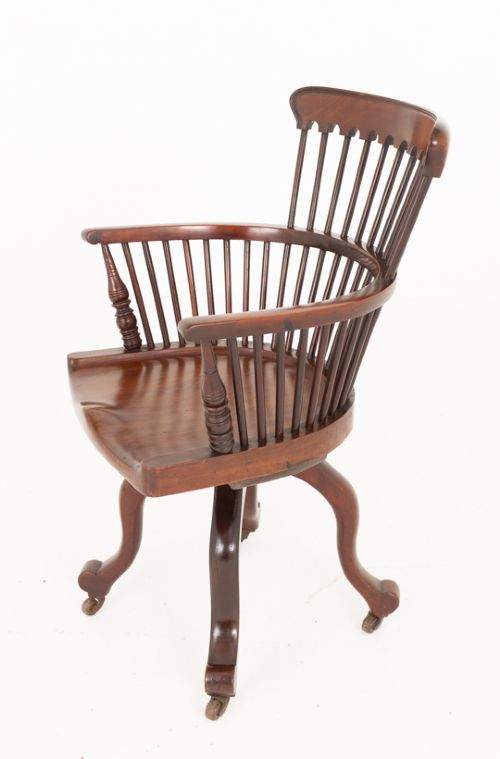
The calibre of a victorian swivel office chair rests upon the density of the timber selection, such as golden mahogany or figured walnut, and the sophistication of the joinery in the revolving mechanism. Superior pieces exhibit crisp hand-carved detailing, particularly in Gothic revival or heavily carved oak variants, whereas simpler utilitarian chairs rely on plain turned spindles.
The integrity of the original swivel ironwork and the retention of period leather upholstery significantly influence the execution of the piece. Master craftsmanship shows in smooth, unbinding rotation and stable underframes that avoid excessive wobble over time.
SHOOLBRED·GEORGE BARTHOLOMEW CO·EDWARD WILLIAM GODWIN
The Victorian Swivel Office Chair Glossary
- Revolving desk chair
- A seating form equipped with a central vertical pivot that allows the user to turn in a complete circle while seated at a table.
- Captain's armchair
- A low-backed wooden armchair with a continuous curved armrail supported by multiple turned spindles, frequently adapted for office use.
- Gothic Revival
- A design style drawing inspiration from medieval architecture, characterised by pointed arches, heavy mouldings, and elaborate tracery carved into the timber.
- Aesthetic Movement
- A late nineteenth-century artistic design current focusing on visual and material refinement, often rejecting heavy Victorian ornamentation in favour of cleaner lines.
- Rise and fall mechanism
- An adjustable mechanical screw or vertical post system that permits the seat height to be raised or lowered relative to the desk.
Victorian Swivel Office Chair: Frequently Asked Questions
How do I identify a genuine period swivel mechanism?
Authentic nineteenth-century mechanisms typically consist of heavy cast iron or brass components showing hand-machined surfaces, threaded central spindles, and visible wear consistent with age. Modern replacements often feature shiny modern steel, welded joints, or standardised contemporary fixings.
Examine the underside of the wooden seat to check for the original mounting plates and screw holes that match the patina of the surrounding timber.
Were these chairs used exclusively in offices?
While many served in administrative rooms, banks, and libraries, a significant number were manufactured specifically for marine environments. Ships chairs and variants supplied to shipping lines feature heavy construction designed to endure movement at sea.
Domestic studies and professional chambers also utilised these revolving forms for ease of access around large partner desks.
How should I care for the leather upholstery?
Period leather benefits from gentle cleaning using specialised saddle soap or mild damp cloths, followed by the application of traditional leather creams to maintain flexibility. Avoid synthetic chemical cleaners that strip natural oils from nineteenth-century hides.
Maintaining moderate room humidity prevents the timber frame from drying out and keeps the leather from cracking.
What distinguishes oak examples from mahogany ones?
Oak frames generally present a heavy, visible grain pattern and frequently appear in Gothic revival, Arts and Crafts, or institutional contexts. Mahogany versions tend to display smoother, deeper reddish-brown tones suited to formal residential libraries and executive offices.
Both timbers provide the structural strength necessary for a heavily loaded revolving armchair.