


Lyre Back Desk Chair
These lyre back desk chair pieces offer graceful proportions and sturdy timber, making them a practical addition to any study.
Lyre Back Desk Chair
A lyre back desk chair provides comfortable seating for a study or home office, combining traditional woodworking with a distinctive musical instrument motif in the splat. These pieces appear primarily in mahogany, satinwood, and beech, drawing on Regency, Victorian, and Edwardian design idioms.
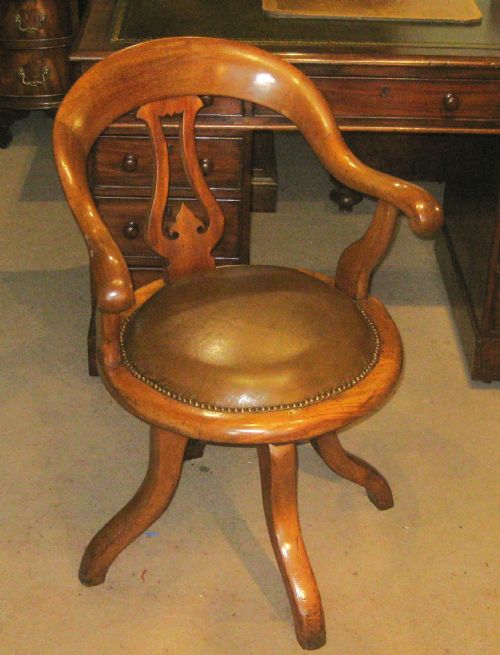
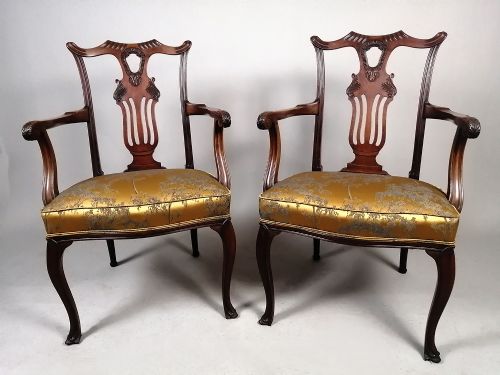
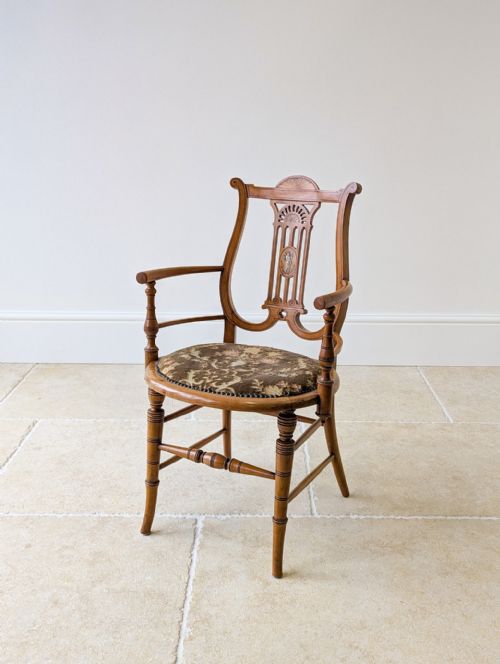
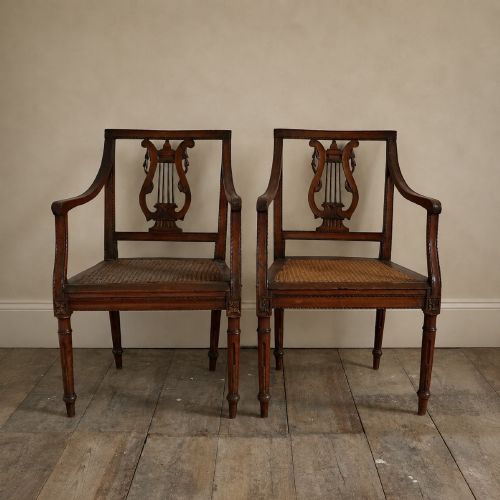
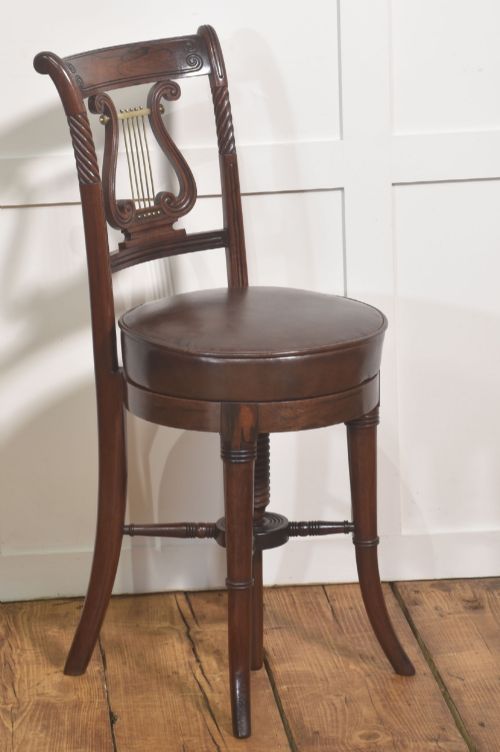
The versions most commonly met on this page range from Victorian revolving models to Edwardian side chairs and nineteenth-century armchairs. Makers frequently employed classic revival styles such as Sheraton Revival and Chippendale Revival to update earlier Regency forms for later nineteenth and early twentieth-century interiors.
Beyond standard desk chairs, the evidence includes related seating forms like dressing table chairs, elbow chairs, and carvers, showing the versatility of the lyre motif across different domestic spaces. Buyers select them for their distinctive openwork backs and reliable wooden construction.
How they were made
Cabinetmakers constructed these chairs using dense hardwoods like mahogany, walnut, oak, and beech, frequently embellishing finer examples with satinwood inlay or brass fittings. Timber selection dictated the structural integrity of the characteristic lyre-shaped back splat.
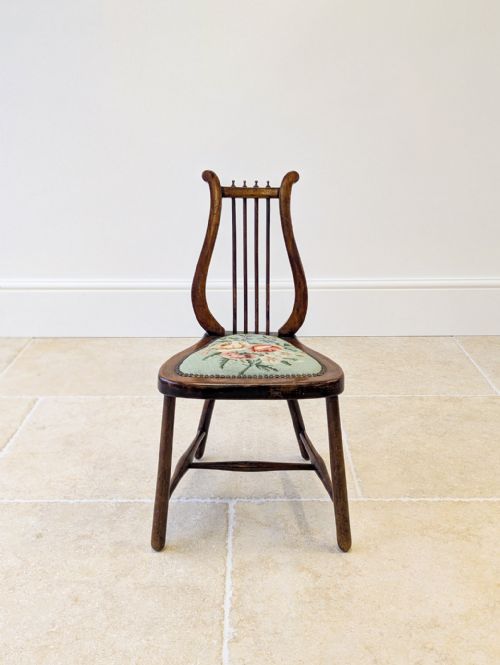
Seating surfaces vary from traditional caning and drop-in pads to upholstered panels covered in leather, fabric, tapestry, or needlepoint. Revolving and adjustable desk chairs incorporated early mechanical elements to allow movement and height variation for the seated user.
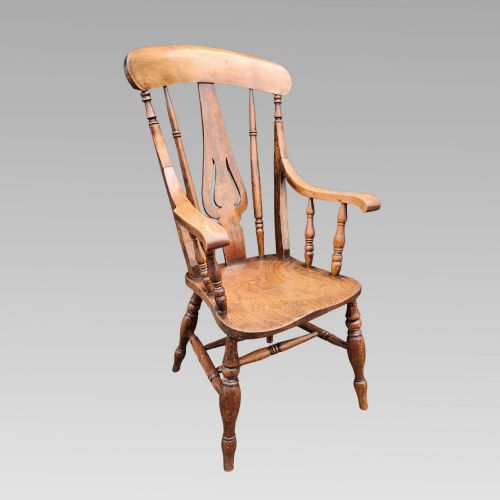
A farmhouse armchair unexpectedly pairs traditional Windsor spindles with a musical lyre back.
What varies in quality
The quality of a lyre back desk chair rests on the choice of primary timber and the precision of the joinery within the back splat. Superior examples demonstrate crisp carving around the curves of the lyre and well-figured grain in the mahogany or satinwood.
Stability in the revolving mechanisms and the integrity of cane or upholstered seats further distinguish finer pieces. Consideration of the proportion between the ornate backrest and the supporting legs marks the distinction between standard production and higher workshop standards.
The Lyre Back Desk Chair Glossary
- Lyre back
- A chair back featuring an openwork splat shaped like the ancient musical instrument. This design gained prominence during the Regency period and returned in later revival styles.
- Satinwood
- A pale, lustrous hardwood prized for its fine grain and yellow colouring. Cabinetmakers utilised it extensively in Sheraton Revival pieces.
- Cane
- Woven rattan material used for lightweight seat panels. It provides a flexible and breathable surface on chairs.
- Carver chair
- An armchair designed in a matching style to a set of dining or desk side chairs. They often feature more elaborate arms and back supports.
- Spindle
- A turned wooden rod used as a structural or decorative element in chair backs. They appear alongside lyre motifs in vernacular farmhouse seating.
Lyre Back Desk Chair: Frequently Asked Questions
Are lyre back desk chairs comfortable for daily use?
Many of these chairs were built with ergonomic considerations for writing or office tasks, particularly revolving or adjustable nineteenth-century models.
Pairing a sturdy timber frame with a well-maintained upholstered or caned seat ensures they remain practical for regular daily sitting.
How do I identify a Regency style lyre back chair?
Regency style pieces typically exhibit classical restraint, clean lines, and dark mahogany timbers inspired by ancient Greek and Roman furniture forms.
The lyre motif serves as a central focal point in the backrest, often complemented by brass mounts or subtle reeding.
What is the difference between Edwardian and Victorian versions?
Victorian examples often utilise heavier timbers like golden mahogany and heavier proportions, reflecting a desire for substantial furniture.
Edwardian pieces tend to employ lighter woods such as beech or satinwood, favouring a brighter aesthetic suited to smaller rooms.
Can I use a dressing chair at a desk?
Dressing table chairs share similar dimensions and seating heights with standard desk chairs, making them adaptable for light writing tasks.
Their lighter frames and occasional adjustable mechanisms allow them to move easily between rooms depending on daily requirements.