




Victorian Swept Frame
When you search for a victorian swept frame, you seek the exuberant, curved moulding that houses period oils and mirrors with undeniable presence.
Victorian Swept Frame
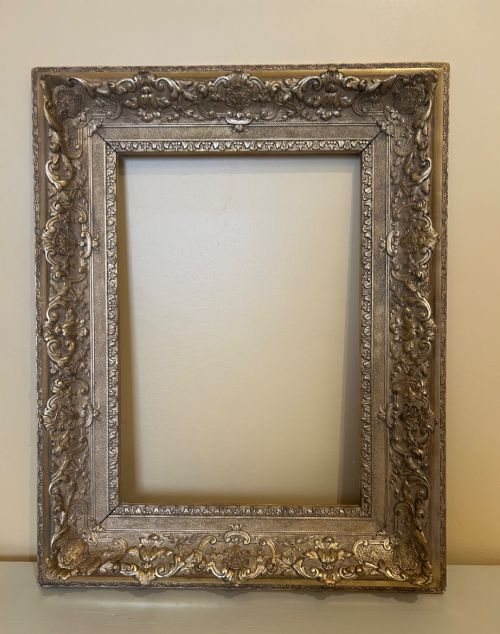
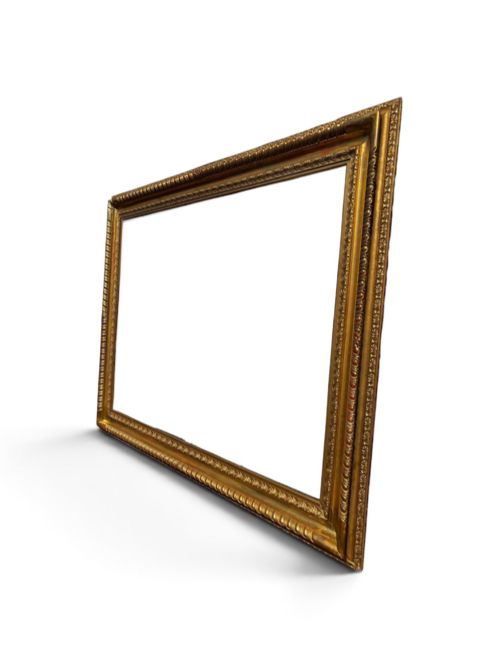
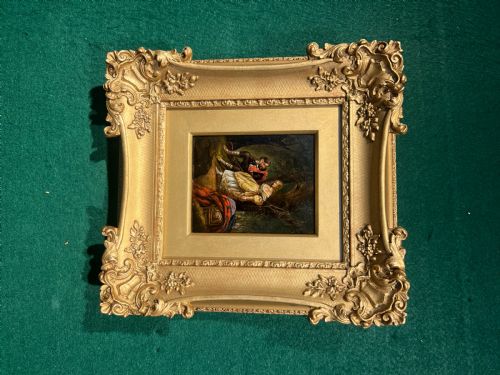
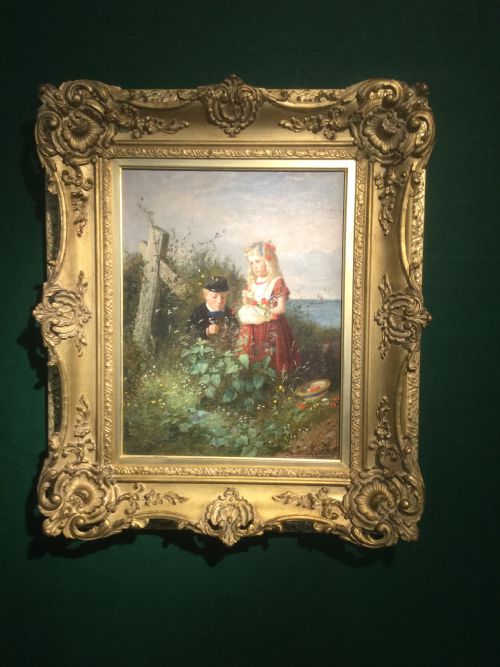
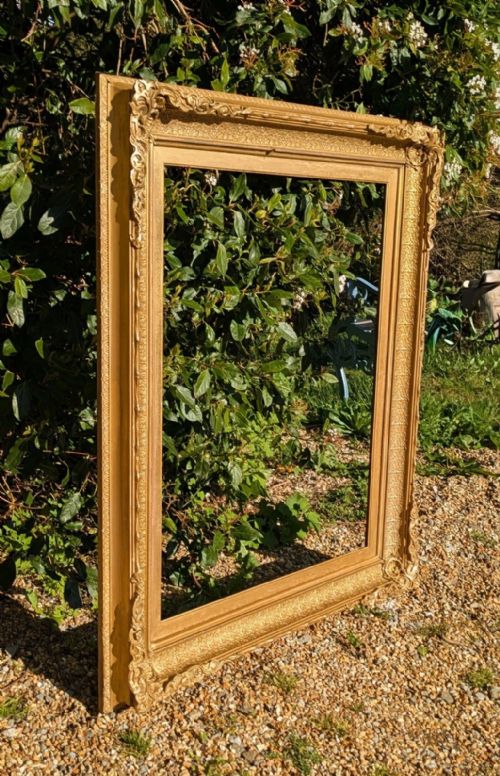
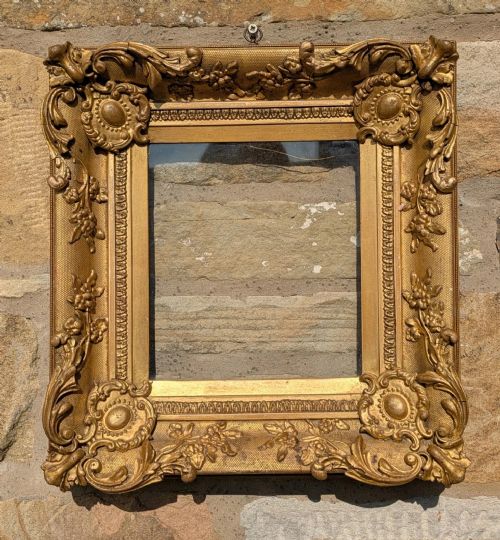
A victorian swept frame is an ornate, curved moulding designed to hold oil paintings, watercolours or wall mirrors. The form typically exhibits deep relief, flowing scrollwork and pronounced corner cartouches that draw the eye inward toward the canvas or glass. Many examples survive from the nineteenth century, built to complement the grand interiors of their day.
On this page, you encounter these frames either housing original nineteenth-century oil paintings or adapted to hold overmantel and wall mirrors. The versions most commonly met combine substantial wooden cores with intricate surface ornamentation. They range from modest apertures intended for domestic portraits to massive architectural surrounds for landscape canvases.
How they were made
The primary construction relies on a carved wooden base, often reinforced at the corners to support the heavy relief work. Artisans then applied layers of gesso, a fine plaster mixture, directly onto the wood to build up the complex curves and deep undercut scrolls characteristic of the style.
Gilding completed the process, using gold leaf or fine gilt coatings applied over the prepared gesso surface. This metal leaf caught candlelight and gas illumination in period rooms, creating the warm, shimmering border that defines the aesthetic.
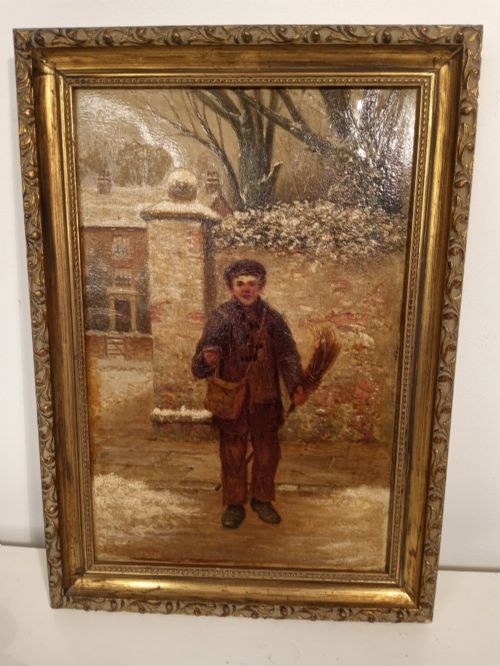
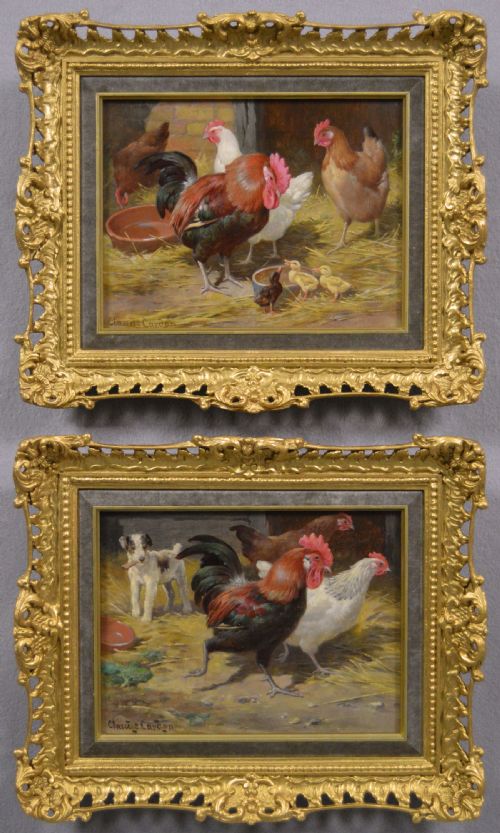
Several frames come populated with unexpected company, including nineteenth-century farmyard chickens, stubborn cows by rivers and wandering chimney sweeps.
What varies in quality
The crispness of the modelled gesso ornament dictates much of the visual success. Superior examples retain sharp, deeply undercut scrolls and clearly defined botanical motifs where lesser pieces show softened edges and clogged detail from repeated over-gilding.
The integrity of the underlying wooden structure and the quality of the original gilding also divide the range. Pieces retaining their original gold leaf display a richer, more complex patina than those aggressively restored or painted over in later decades.
Charles Hunt·Claude Cardon·Arthur Herbert Rigg·Percival Glenfern·J Barclay·William Miller Frazer·Emily Selinger·William Sidney Cooper·Ludwig Hermann·George Parson-Norman·John Holland Snr
The Victorian Swept Frame Glossary
- Swept frame
- A picture frame moulding characterised by an S-curve profile that sweeps outward from the rebate before curving inward again at the outer edge. This complex contour creates strong shadow lines and a sense of movement.
- Gesso
- A traditional mixture of chalk, gypsum and size applied to wood as a base for gilding. It allowed carvers and moulders to build up high-relief ornament.
- Giltwood
- Timber that has been coated with thin sheets of gold leaf or gold paint. It provides a durable, reflective finish typical of grand nineteenth-century frames.
- Rococo Revival
- A nineteenth-century design style drawing on eighteenth-century French motifs like C-scrolls, asymmetric foliage and shellwork. It heavily influenced the curvature of swept frames.
- Overmantel mirror
- A large wall mirror specifically proportioned to hang above a fireplace mantel. Many surviving nineteenth-century examples utilise heavy swept frames.
Victorian Swept Frame: Frequently Asked Questions
What holds a swept frame together?
The structure depends on heavy timber joined at the mitres, often reinforced with wooden corner blocks to bear the weight of the dense gesso relief. These sturdy joints prevent the frame from warping under the tension of the built-up ornament.
Over the decades, these joints take considerable stress, particularly on larger overmantel formats. Sound construction ensures the frame maintains its rigid geometry around the canvas or mirror plate.
How were these frames displayed originally?
Period interiors positioned these pieces as focal points in drawing rooms, dining spaces and libraries, frequently mounting them above marble fireplaces. Their reflective gilt surfaces amplified the available light in Victorian homes.
They paired naturally with heavy drapes, patterned wallpapers and substantial oil paintings depicting landscapes, portraits or farmyard scenes. Today, they serve a similar role, anchoring a room with distinct nineteenth-century character.
Can I swap the painting for a mirror?
Many frames on the market have transitioned between holding artwork and framing mirror glass over their long histories. The rabbet depth and internal rebate often accommodate either a stretched canvas or a heavy mirror plate.
When making such a change, the weight distribution requires careful consideration to ensure the hanging hardware and wall fixings safely support the glass.
How do I distinguish Victorian work from later copies?
Nineteenth-century originals display hand-carved nuances, shrinkage cracks in the gesso layers and the dull, muted tone of genuine gold leaf or early metal leaf. The timber behind the gesso typically shows age-appropriate oxidation and tool marks.
Later reproductions often rely on cast polyurethane or modern resin compositions rather than traditional gesso over wood. Examining the back of the moulding usually reveals the true materials and construction methods.