

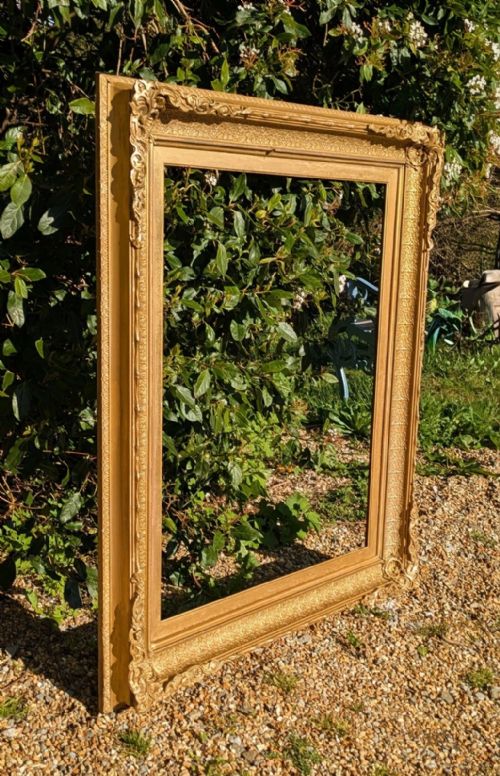

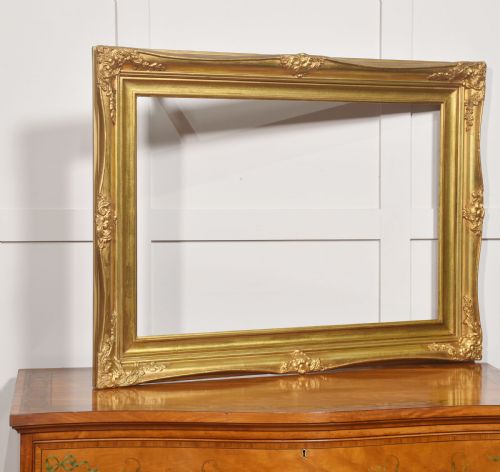

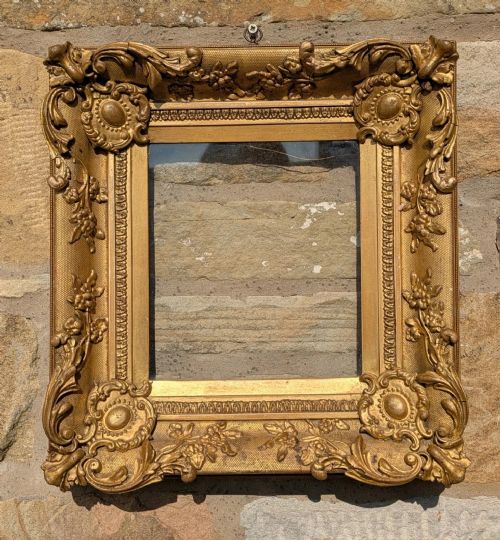


Gesso Picture Frame
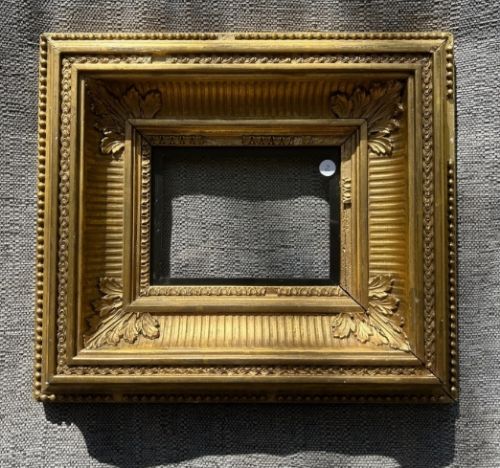
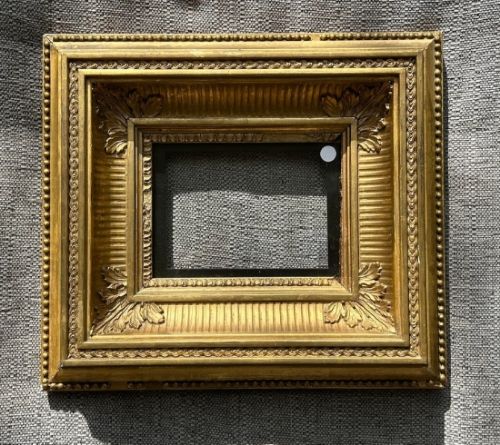
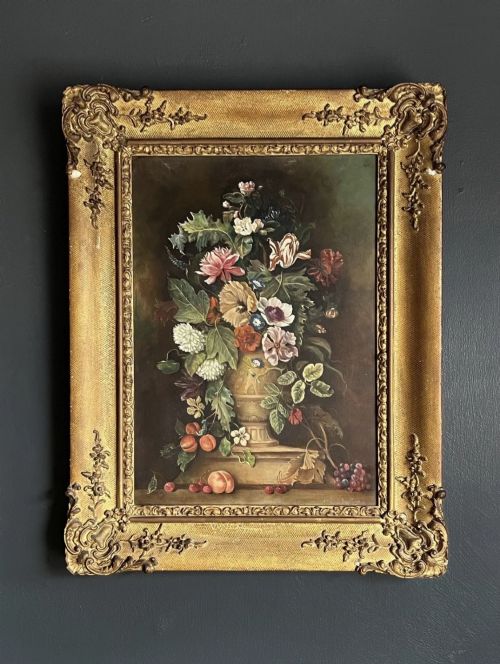
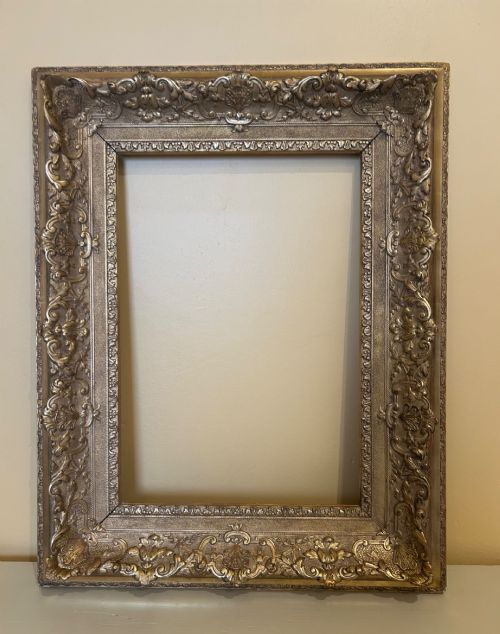
These gesso picture frame pieces combine carved wooden foundations with plaster ornament and gold leaf finish to hold oils, mirrors, and needlework.
Gesso Picture Frame
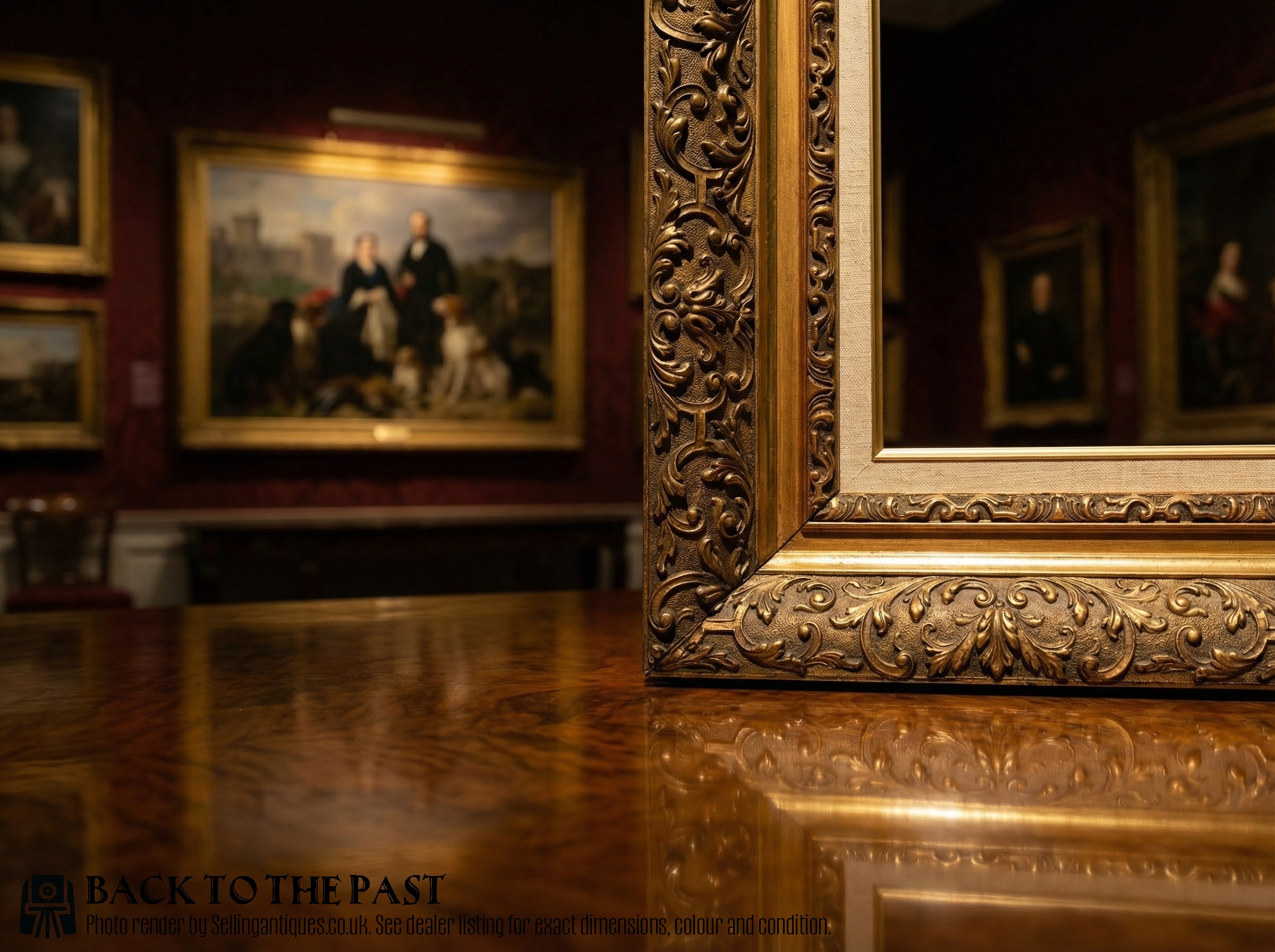
When you search for a gesso picture frame, you encounter ornate mouldings built to house oil paintings, wall mirrors, and portraits from the nineteenth century onward. The selection spans deep Victorian profiles, swept Rococo revival curves, and occasional Art Nouveau linear decoration.
Most pieces date from the Victorian era and the broader nineteenth century, constructed with wooden carcases that support moulded plaster ornament. They appear either empty as standalone frames or housing period oil paintings, tapestries, and mirrors.
The form ranges from small portrait sizes to large wall-hanging formats adorned with floral motifs, lions' heads, or classical scrolls. These objects serve as period surrounds that complete traditional artwork and decorative interiors.
How they were made
Makers built the structural carcase from timber, typically pine or oak, joining the corners with mitres and reinforcing blocks. They applied layers of gesso, a mixture of chalk and glue binder, directly onto the wood substrate.
Artisans carved details into the dried gesso or pressed composition ornaments into the surface using metal moulds while the material remained pliable. They applied thin sheets of gold leaf or silver gilt over a coloured bole base, burnishing the metal to achieve a bright finish.
Gesso Picture Frame Retail Price Guide 2026
Typical asking prices for gesso picture frame among the pieces listed under this phrase on Sellingantiques today, from the lower quarter to the upper quarter. They describe what is for sale here now, not the wider market.
One unexpected Victorian frame comes complete with a tiny easel designed specifically for miniature portrait photography.
What varies in quality
The crispness of the modelled ornament distinguishes better examples, as hand-carved detailing and sharp plaster moulding retain greater definition than worn or heavily retouched casts. Deep profiles with multiple stepped cavetto layers demand more labour than flat sections.
The integrity of the original gilt surface determines the character of the object, with intact gold leaf showing richer ageing than later metallic paint or patchy overgilding. The weight and stability of the underlying timber carcase also indicate the standard of construction.
Praat and Polak
The Gesso Picture Frame Glossary
- Gesso
- A prepared mixture of plaster of Paris or chalk mixed with glue, applied to wood to provide a smooth surface for gilding and ornamentation.
- Giltwood
- Timber that has been coated with gold leaf or gold paint, forming the primary lustrous surface of many traditional frames.
- Rococo Revival
- A nineteenth-century decorative style characterised by asymmetrical scrolls, C-curves, and naturalistic floral motifs adapted from eighteenth-century French design.
- Swept frame
- A picture frame featuring undulating, curved moulding profiles that swell outward from the sight edge toward the outer corners.
- Composition
- A moulded mixture of whiting, resin, glue, and linseed oil pressed into shape to create ornamental details on picture frames.
Gesso Picture Frame: Frequently Asked Questions
How do I hang a heavy gesso frame?
These heavy wooden and plaster objects require sturdy brass mirror plates or picture wire secured directly into the structural timber carcase rather than the backing boards.
Professional wall fixings into masonry or wall studs ensure the substantial weight is supported safely without straining the mitre joints.
Can I put a mirror inside an empty frame?
Many of these pieces function interchangeably as picture frames or wall mirrors, and local glaziers can cut mirror glass to fit the rebate dimensions.
Choosing bevelled mirror glass suits the nineteenth-century aesthetic common to Victorian and Rococo revival mouldings.
How do I clean a gilt gesso frame?
Dust accumulates within the deep relief mouldings and requires careful removal using a soft, dry artist brush or ostrich feather duster.
Moisture and commercial cleaning agents damage fragile gold leaf and historical gesso, so wet cleaning should be avoided entirely.
How do I date an antique frame?
The construction methods, timber types, and style of ornament reveal the period, with Victorian examples often showing machine-sawn backing boards and moulded composition details.
Earlier nineteenth-century pieces display hand-carved wooden elements beneath the gesso, while twentieth-century versions utilise simpler timber profiles.