

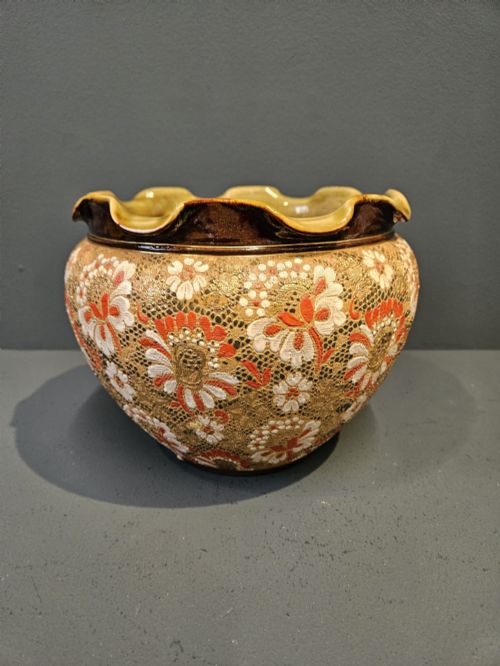


Victorian Stoneware Pot
These Victorian stoneware pots range from heavy kitchen jars and garden planters to refined art pottery, bringing rugged utility and detailed craftsmanship together.
Victorian Stoneware Pot
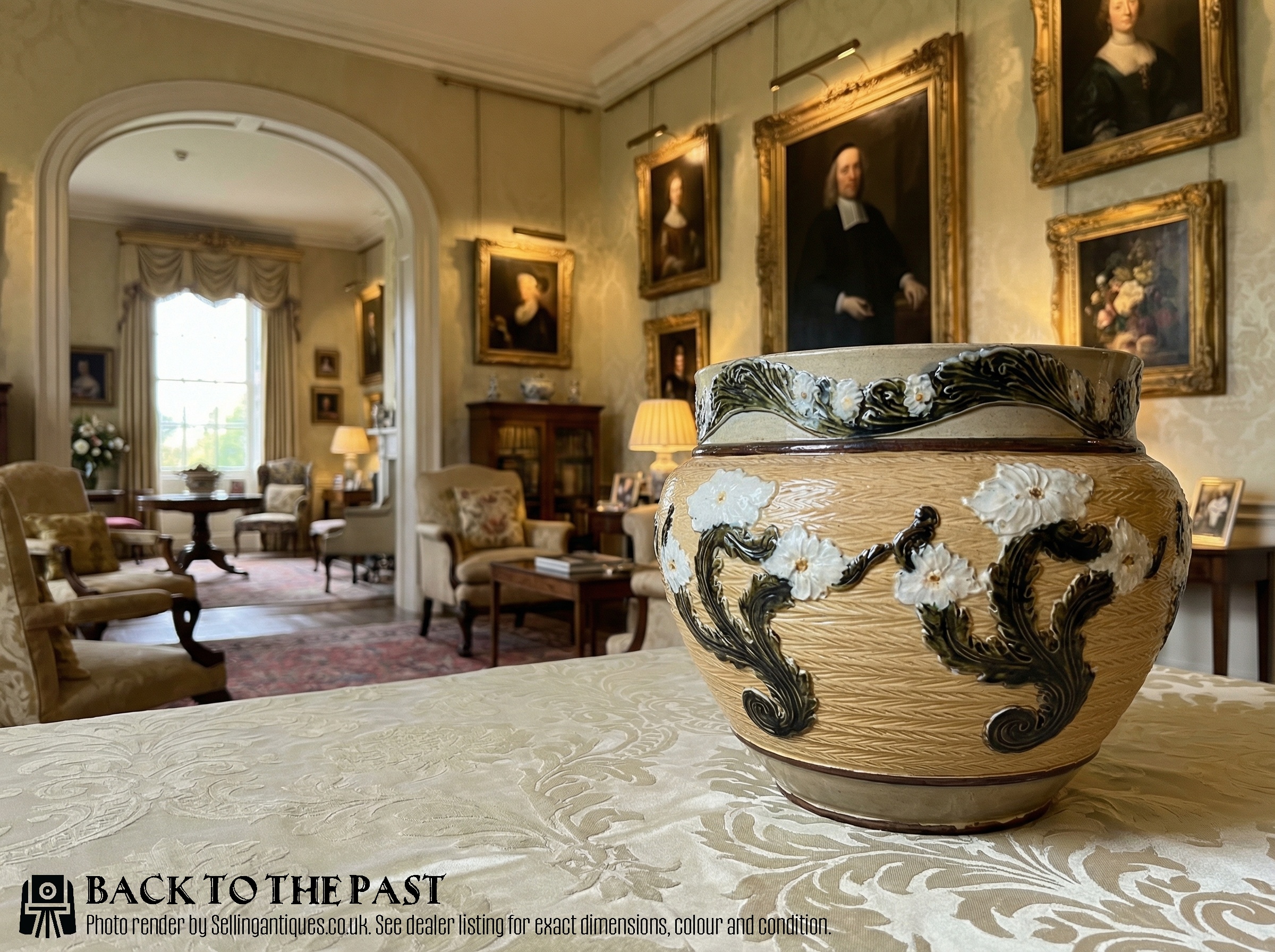
A Victorian stoneware pot encompasses a wide variety of domestic vessels, storage jars, kitchenware, and garden planters shaped from dense, vitrified clay. Buyers searching for a Victorian stoneware pot frequently encounter jardinieres, vases, and utilitarian containers spanning the nineteenth century.
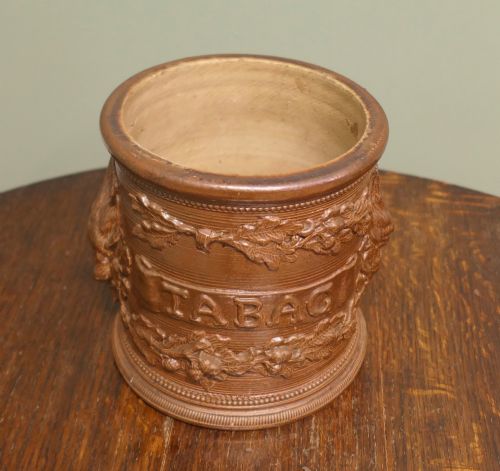
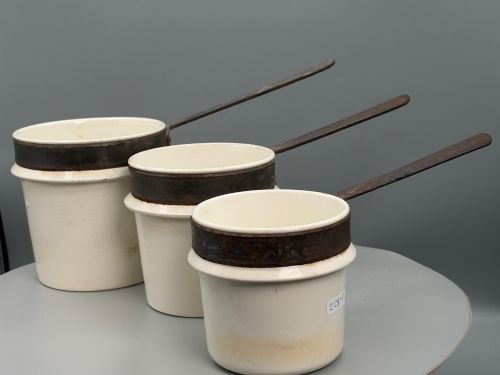
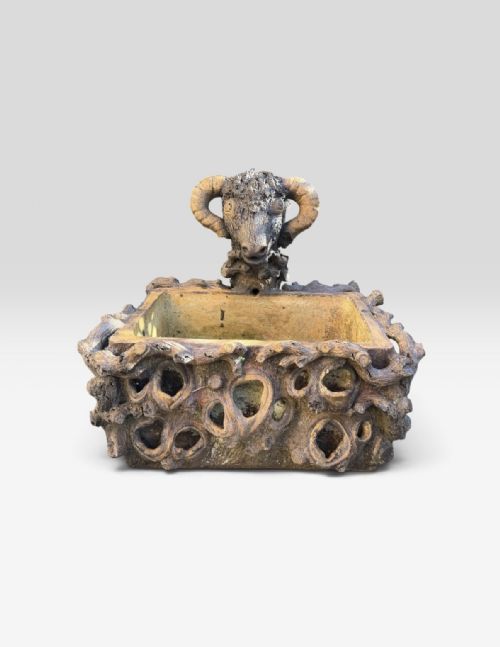
The selection on this page demonstrates how domestic utility overlapped with ornamental design during the period. Pieces stretch from rustic salt-glazed garden urns and faux bois planters to delicate tea sets, biscuit barrels, and apothecary jars.
Makers and potteries from England and beyond utilised durable materials to fashion functional household items alongside decorative pieces. Collectors find both simple cooking dishes and ornate art pottery bearing distinctive glazes and moulded details.
Materials and Techniques
Potters relied on robust clay bodies fired at high temperatures to create impermeable stoneware capable of holding liquids and withstanding garden use. Many examples feature salt glazes, where salt thrown into the kiln during firing produced a characteristic textured, pebbled finish on the surface.
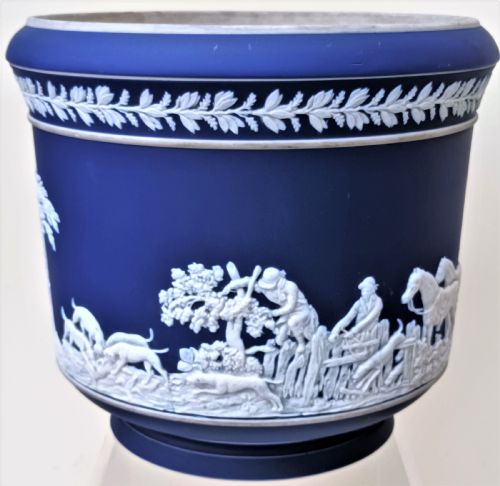
Other pieces incorporate applied decoration such as jasperware reliefs, slip trailing, or intricate incised patterns typical of art pottery traditions. Workshops employed turning on the potter's wheel alongside moulding techniques to shape utilitarian jars and decorative jardinieres alike.
Victorian Stoneware Pot Retail Price Guide 2026
Typical asking prices for victorian stoneware pot among the pieces listed under this phrase on Sellingantiques today, from the lower quarter to the upper quarter. They describe what is for sale here now, not the wider market.
A heavy stoneware rugby ball inkwell proves that Victorian writers needed their desk accessories to withstand a robust tackle.
Assessing Quality
Quality in these vessels depends upon the crispness of the modelling, the depth of the glaze, and the balance of the form. Finer pieces display sharply defined impressed or applied ornamentation, whereas simpler utilitarian items prioritise structural thickness and durability.
Attribution to notable potteries or named artists elevates a piece beyond standard production wares. The presence of specialised techniques, such as complex salt glazing or hand-painted details, separates ordinary storage vessels from exceptional collector pieces.
Doulton Lambeth·William Adams And Sons·Doulton Burslem·Royal Doulton·Lipscombe And Co London Pottery·Wedgwood
The Victorian Stoneware Pot Glossary
- Stoneware
- A type of pottery fired at high temperatures until vitrified, making the material non-porous and extremely durable. It resists moisture without needing a glaze, though many Victorian examples are glazed.
- Salt-Glazed Stoneware
- Ware glazed by throwing common salt into the kiln during the high-temperature firing stage. This creates a distinctive orange-peel texture across the surface.
- Jasperware
- A type of fine stoneware developed by Josiah Wedgwood, characterised by a matte finish and contrasting white moulded reliefs against a coloured ground. Blue is the most common background colour found on these pieces.
- Jardiniere
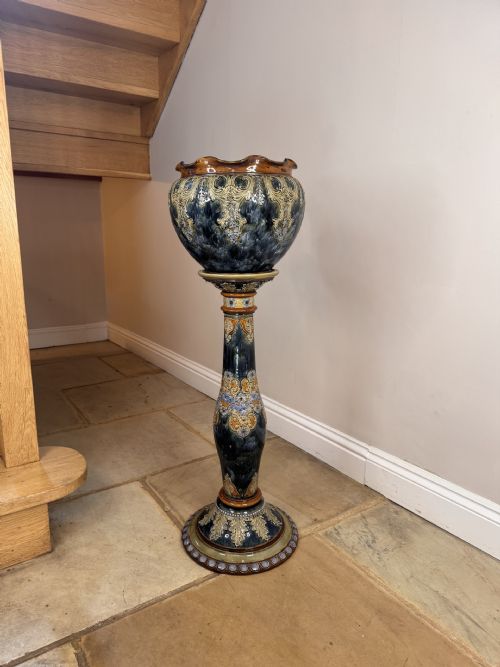
- A large ornamental pot or planter designed to hold growing plants or flowers. Victorian versions often sat on heavy tables or pedestals within domestic interiors and orangeries.
- Faux Bois
- A decorative technique mimicking the texture and appearance of natural wood grain. In garden planters, this style was moulded directly into the stoneware clay body.
Victorian Stoneware Pot: Frequently Asked Questions
What were Victorian stoneware pots used for?
These vessels served a wide array of practical and decorative functions across the nineteenth century. Households relied on heavy jars for storing kitchen provisions, preserving jams, and dispensing apothecary medicines.
Larger pots functioned as garden planters, log bins, and indoor jardinieres for displaying ferns and palms. Some specialised items, such as inkwells and soup jars, fulfilled specific domestic and commercial needs.
How do I care for antique stoneware?
Stoneware is naturally robust, but antique pieces require gentle handling to preserve their glazes and surfaces. Wash them gently with warm water and mild soap when necessary, avoiding harsh scrubbing or abrasive cleaners.
Keep garden planters protected from severe freezing temperatures if left outdoors, as trapped moisture can cause historic clay bodies to crack.
How can I tell the difference between utilitarian and art pottery?
Utilitarian vessels focus on durability and simple function, often featuring plain salt glazes, heavy walls, and stamped maker marks for commercial use. They were built for daily work in kitchens, dairies, and shops.
Art pottery pieces showcase refined surface decoration, incised patterns, specialised coloured glazes, and individual artist signatures. These items were made to be displayed in parlours and drawing rooms rather than used for storage.
Are these pots waterproof?
True stoneware is vitrified during high-temperature firing, meaning the clay body itself is non-porous and holds liquids safely. Many historic kitchen and storage jars remain entirely watertight.
However, buyers should check individual pieces for hairline cracks or historic damage that might compromise their ability to hold water today.