






Doulton Pottery Pot
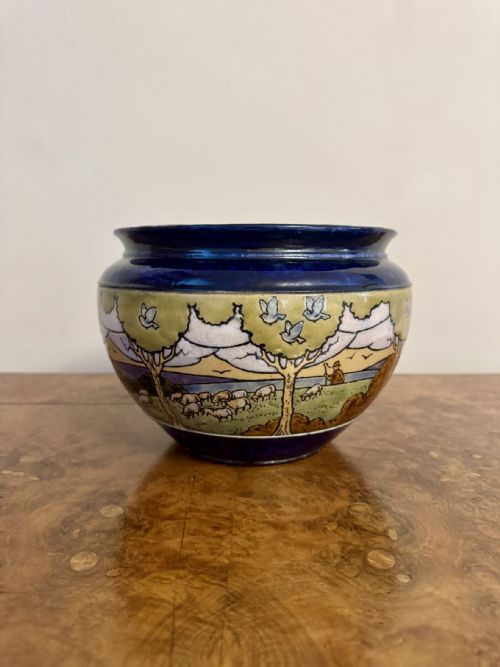
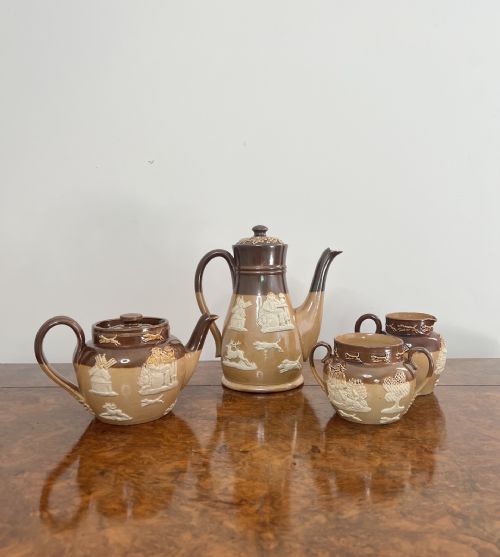
A doulton pottery pot brings heavy Victorian character and rich studio craft into a room, spanning jardinières and tea sets.
Doulton Pottery Pot
A doulton pottery pot takes many forms across the evidence, appearing most frequently as large jardinieres and planters intended for interior displays of plants and foliage. Buyers searching this phrase meet substantial vessels designed to anchor a room, with smaller vases and a four-piece tea set also represented.
The objects span several decades of production from the nineteenth century into the twentieth, encompassing Victorian art pottery and Arts and Crafts aesthetics. Pieces range from the Lambeth and Burslem works of the 1880s through to later stoneware issues around 1920.
How they were made
Makers shaped these vessels primarily in stoneware and glazed ceramic, applying specialised glazes and enamel details to the fired clay bodies. Certain pieces incorporate gold leaf highlights to accentuate the surface texture and patterning.
Techniques varied from slip decoration and textured slaterware finishes to detailed hand painting in blue and white patterns like Norfolk, reflecting the diverse output of Doulton workshops.
Doulton Pottery Pot Retail Price Guide 2026
Typical asking prices for doulton pottery pot among the pieces listed under this phrase on Sellingantiques today, from the lower quarter to the upper quarter. They describe what is for sale here now, not the wider market.
A cricket ball pattern once found its way onto a Lambeth vesta holder.
What varies in quality
Quality separates ordinary production runs from pieces bearing specific artistic signatures or named model numbers, such as designated bonsai planters or works attributed to individual decorators like Ethel Beard. The depth of the glaze application and the crispness of the incised ornament dictate the visual weight of each vessel.
Early Lambeth and Burslem productions demonstrate greater ambition in surface manipulation than standard later wares, shifting the distinction between domestic utility and distinct exhibition pieces.
Royal Doulton·Doulton Burslem·Doulton Lambeth·Ethel Beard
The Doulton Pottery Pot Glossary
- Jardiniere
- A large ornamental pot or planter designed to hold a live plant, usually displayed on a stand or table. These vessels form the majority of the current selection.
- Stoneware
- A robust, vitrified ceramic fired at high temperatures until non-porous. It provides a durable ground for intricate surface incising.
- Slaterware
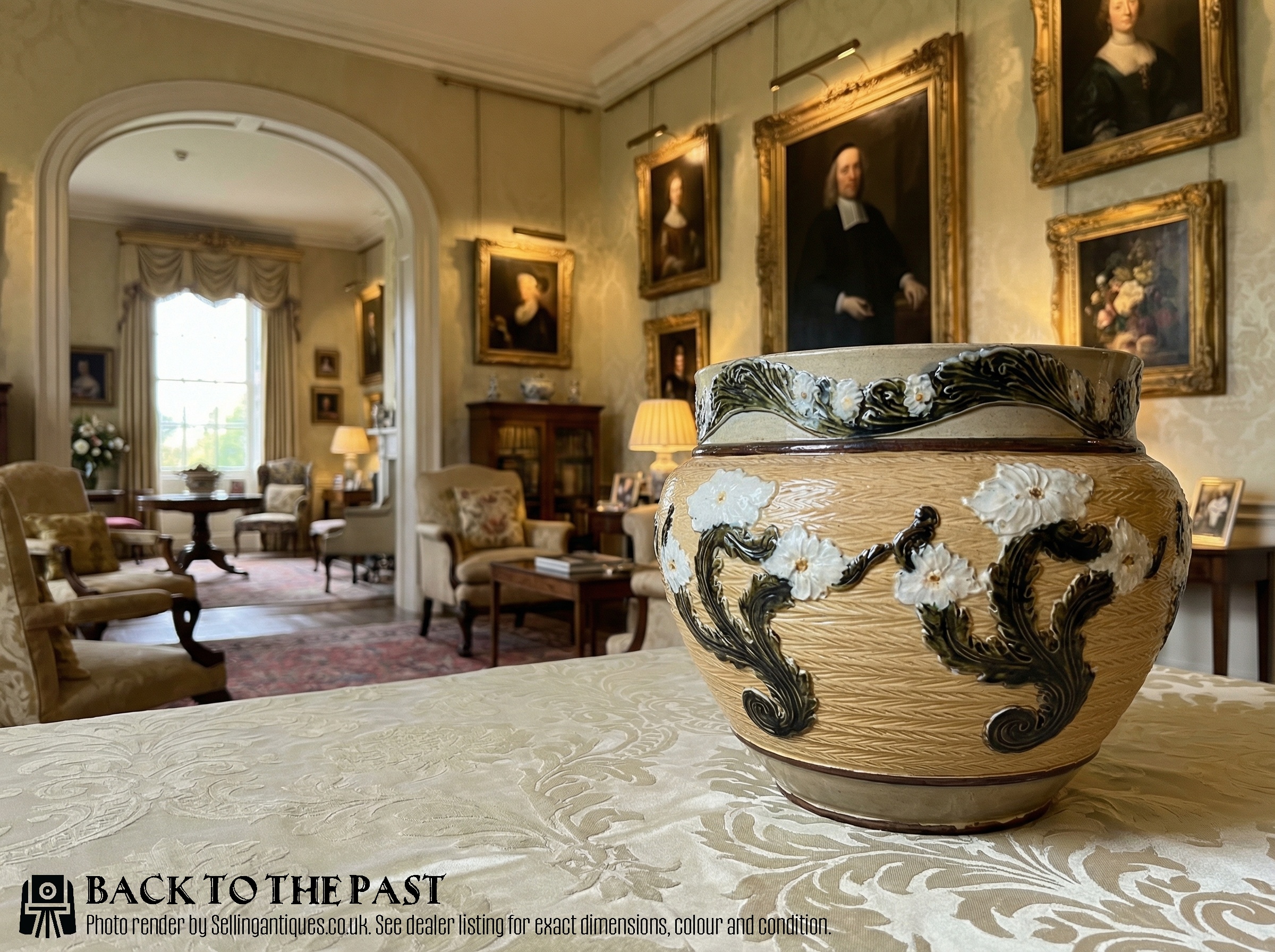
- A specific Doulton technique mimicking the texture of woven lace or matting pressed into the damp clay body before firing. This creates a distinctive tactile pattern.
- Bonsai Planter
- A shallow vessel specifically proportioned for growing miniature trees. Model numbers help identify these specialised horticultural containers.
Doulton Pottery Pot: Frequently Asked Questions
What is a doulton pottery pot used for?
These vessels served primarily as decorative jardinieres for indoor plants or as functional tableware such as tea sets and platters. Their robust construction suited both domestic utility and formal parlour display.
Today, collectors use the larger jardinieres for interior plant staging while smaller vases and tea pieces sit on display in cabinets.
How do I date a doulton pottery pot?
Dating relies on the specific factory marks stamped on the base, stylistic indicators like Arts and Crafts or Art Nouveau motifs, and the recorded production eras. Lambeth and Burslem marks help anchor pieces to the 1880s and 1890s.
Later stoneware pieces often reflect the aesthetic shifts of the 1900s and 1920s through simpler profiles and heavier glazes.
Are these pots made of stoneware?
Many of the listed examples utilise heavy stoneware or glazed ceramic bodies, which were fired to achieve durability and a dense finish. Earthenware and enamel details also appear across specific domestic wares.
The choice of material typically aligns with the production period and the intended function of the vessel.
Who made these ceramic pieces?
The production spans various Doulton factories including the Lambeth and Burslem works, alongside individual decorator attributions recorded on specific items. These workshops employed skilled modellers and artists.
Identifying marks on the underside often reveal the specific workshop and sometimes the individual hand responsible for the decoration.