


Victorian Staffordshire Dog Figurines
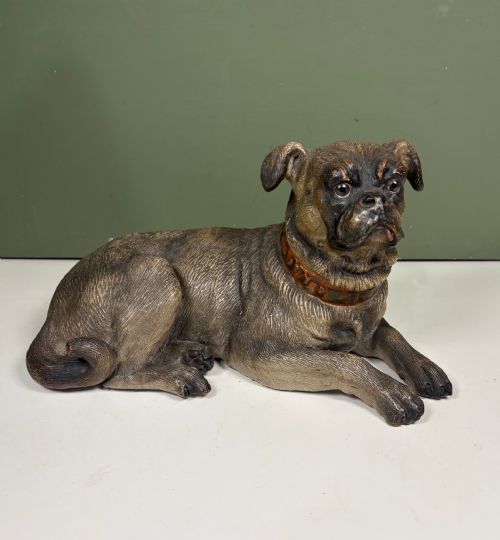
Victorian staffordshire dog figurines are mantelpiece ceramics shaped as spaniels, pugs, greyhounds and poodles, bought to bring domestic charm into a room.
Victorian Staffordshire Dog Figurines
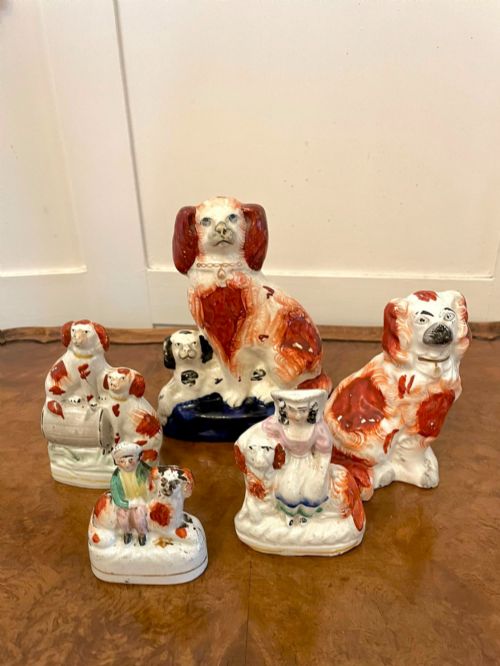
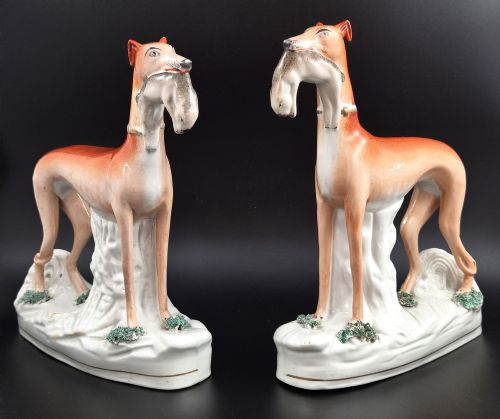
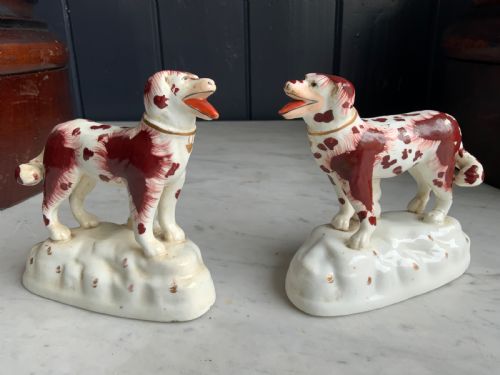
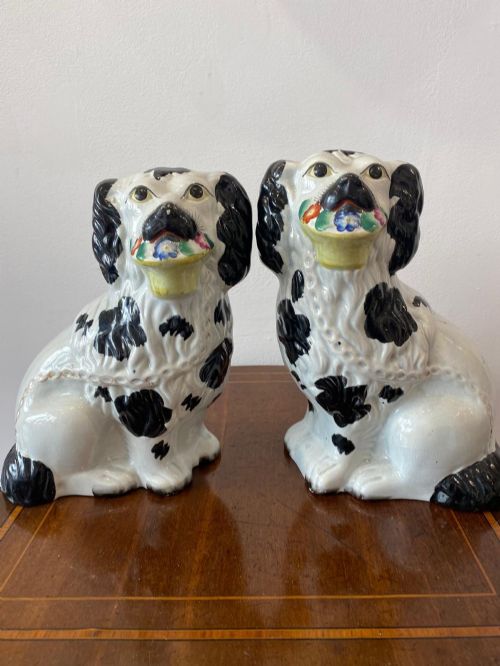
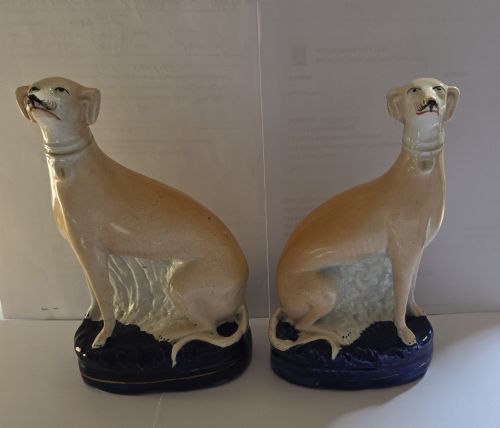
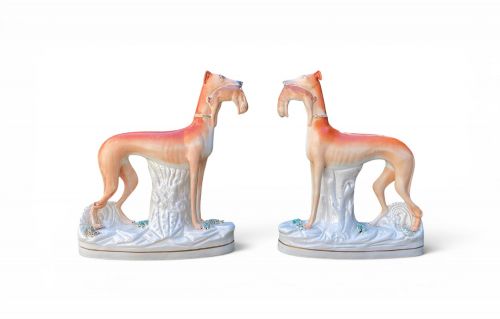
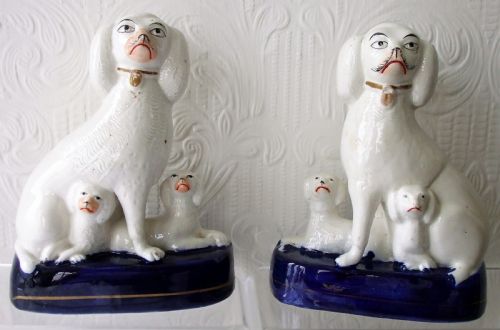
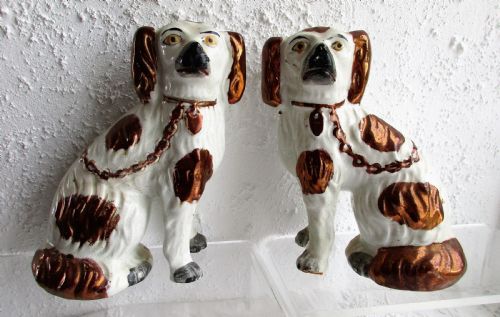
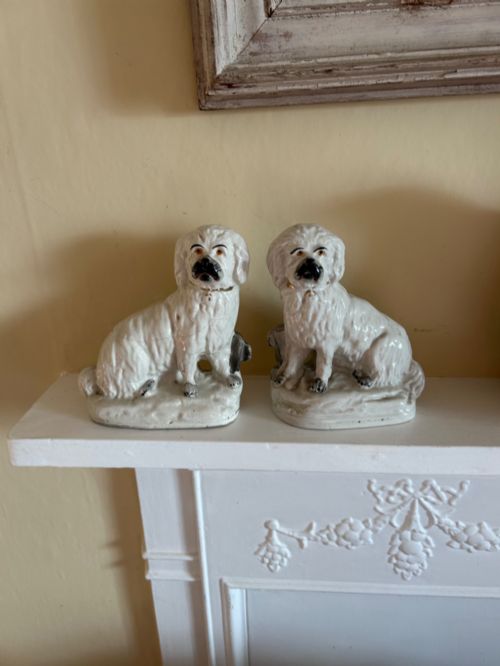
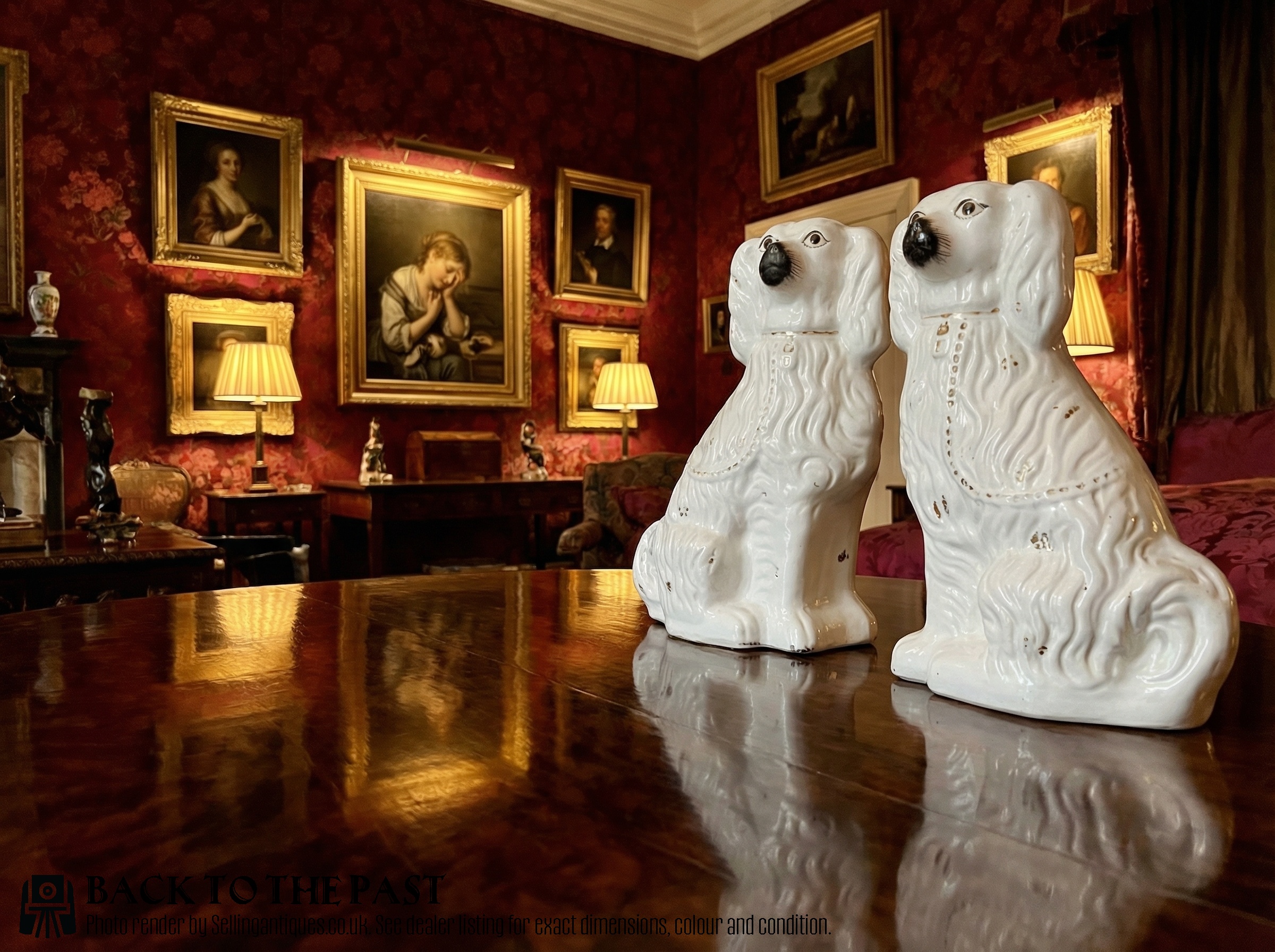
Victorian staffordshire dog figurines comprise earthenware animals modelled as seated spaniels, greyhounds, poodles, pugs, and maltese terriers. These pieces frequently appear in matched pairs intended to sit facing each other on either end of a mantelpiece.
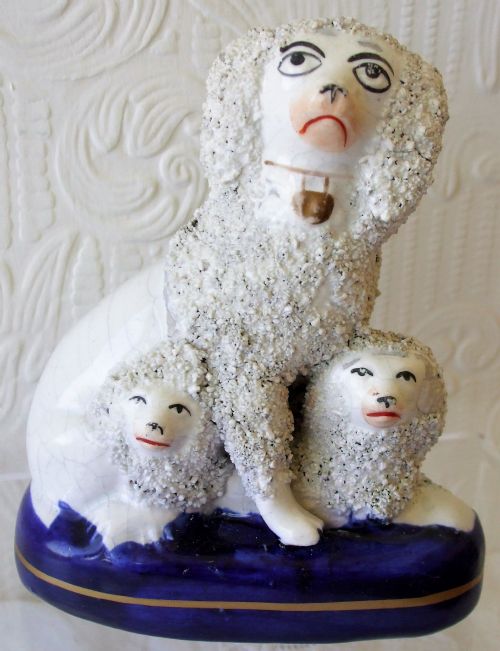
The objects date primarily from the nineteenth century, spanning periods from the regency era through to late victorian times. Alongside standard spaniels, the selection includes specialised forms such as greyhound quill holders, dalmatian inkwells, and poodles with pups.
The styling encompasses traditional country pottery techniques alongside more finished Victorian decorative figures. Collectors encounter various colourways, ranging from simple white and gilt treatments to copper lustre, black and white, and red and white variants.
Materials and construction methods
Makers fashioned these figures from ceramic earthenware and pottery, shaped using traditional moulding techniques suited to mass production in Staffordshire workshops. Once formed, the clay bodies received lead glaze to seal the surface.
Firing methods varied, leading to differences in the vitrification of the pottery and the consistency of the glaze. Some examples utilised stoneware bodies, offering a heavier and more robust alternative to standard earthenware.
Listings feature earthenware, ceramic, and stoneware bodies decorated with lead glaze, enamel paint, and gold leaf.
Distinctions in craftsmanship
Quality rests heavily on the crispness of the modelling and the precision of the hand-painted enamel work. Pieces with finely delineated facial expressions and carefully applied gold leaf sit higher in the range than hastily painted utilitarian output.
The completeness of original matched pairs influences desirability, especially when dealing with larger or more unusual breeds such as greyhounds with hares or poodles with pups. Consistency in the glaze application and the absence of heavy firing flaws mark superior execution.
Thomas Parr·Wooley
The Victorian Staffordshire Dog Figurines Glossary
- Earthenware
- Porous pottery fired at lower temperatures, serving as the primary ceramic body for these figures. It requires a glaze to become impermeable to liquids.
- Lead glaze
- A glossy coating applied to pottery before firing that produces a smooth, shiny finish. This glaze protects the underlying enamel paint and clay body.
- Enamel paint
- Coloured decoration applied over the glaze and fired at a lower temperature. It provides the distinctive coats, patches, and facial markings on the animals.
- Gold leaf
- Extremely thin sheets of beaten gold used for gilding highlights on collars and lockets. Its presence usually indicates a more carefully finished decorative object.
- Quill holder
- A functional ceramic desk accessory featuring a modelled animal with provision for holding writing implements. Greyhound and dog figures frequently incorporated this practical element.
Victorian Staffordshire Dog Figurines: Frequently Asked Questions
What are victorian staffordshire dog figurines?
Victorian staffordshire dog figurines are ceramic decorative sculptures modelled after popular canine breeds of the nineteenth century. Makers produced them in great numbers as mantelpiece ornaments for British homes.
They depict animals such as spaniels, greyhounds, pugs, and poodles, often finished with hand-painted enamel markings and gilt details. Many were manufactured as symmetrical pairs to adorn either end of a fireplace.
Why were they made in pairs?
Makers produced these dogs in matched pairs so they could sit facing one another on a mantelpiece or sideboard. This symmetrical arrangement suited the interior decoration styles of nineteenth century parlours.
Left and right facing variants ensured the animals looked inward toward the centre of the display space. Pairs remain particularly sought after by collectors today.
How do I date these figures?
Dating relies on examining the clay body, glaze characteristics, and the style of the painting. Earlier pieces from the regency period often feature different potting weights compared to late victorian examples.
Markings, specific breed popularity, and the complexity of the enamel work also help narrow down the decade of production. Stylistic shifts from simple earthenware to more refined porcelain types provide further chronological clues.
How should I clean them?
Cleaning requires gentle dusting with a soft, dry brush to protect the delicate overglaze enamel paint. Moisture can damage old earthenware and flaking gold leaf.
Avoid using chemical cleaners or immersing the figures in water, as old lead glazes and porous clay bodies can absorb moisture. Minimal intervention preserves the original surface finish.