


Antique Earthenware Spaniel Pair
An antique earthenware spaniel pair brings the steady gaze of Victorian hearths straight into a modern room.
Antique Earthenware Spaniel Pair
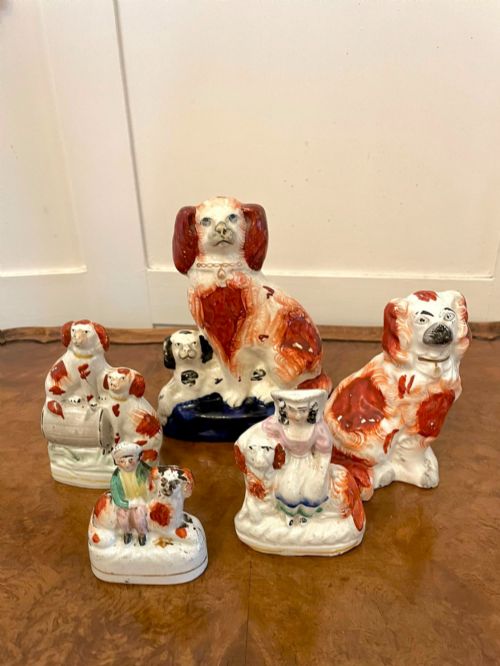
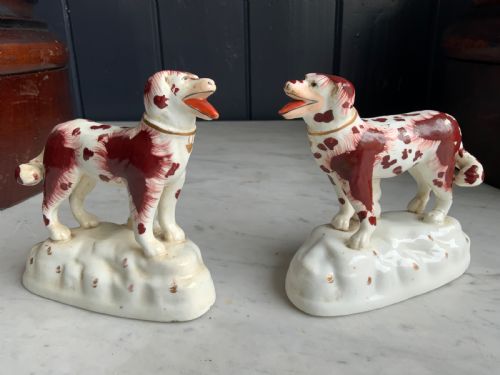
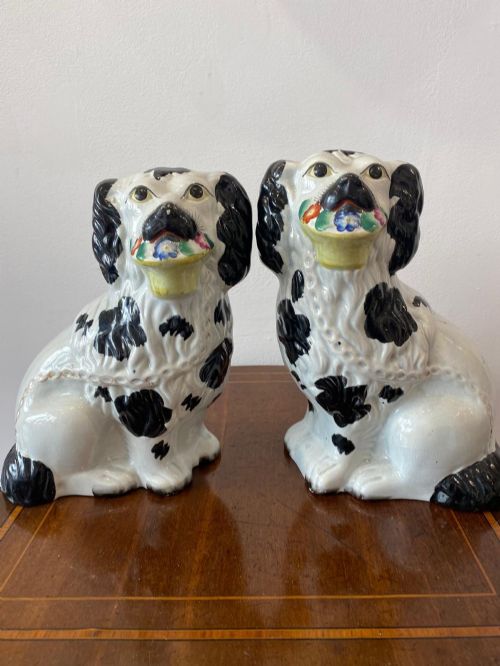
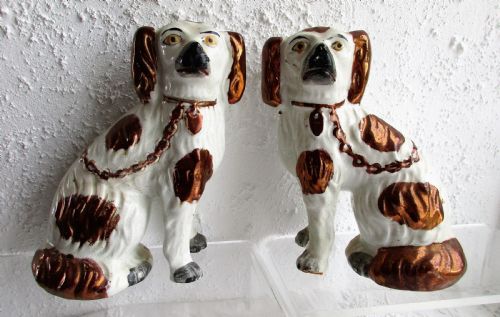
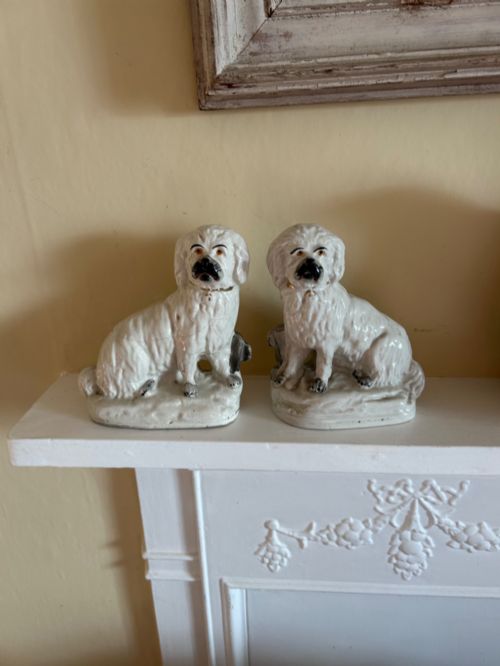
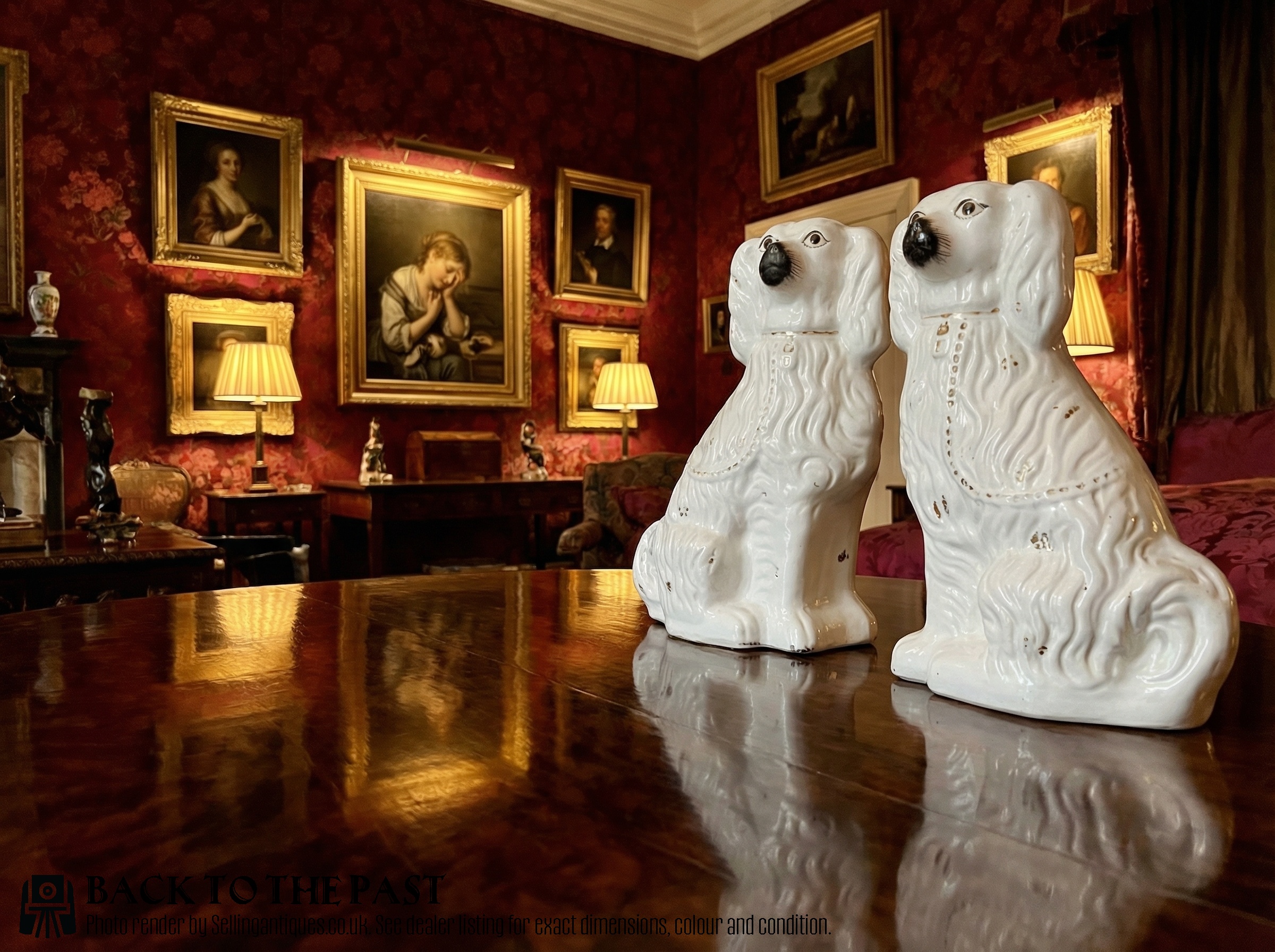
An antique earthenware spaniel pair depicts the comforting pets that guarded nineteenth-century chimney pieces across English homes. Buyers hunting this phrase meet symmetrical pairs of seated dogs, often modelled as comforter spaniels looking outward from opposite ends of a shelf. These decorative figures appear in forms ranging from plain white bodies to versions with black, red, or copper lustre markings.
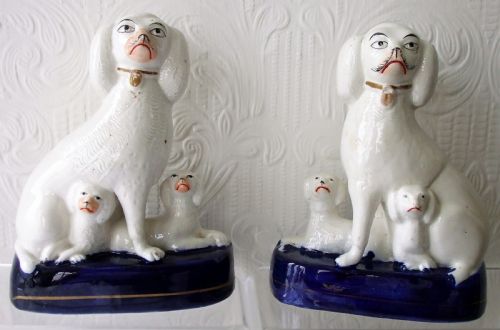
The objects span periods from the Regency era through to the late nineteenth century, with the Victorian decades providing the bulk of the examples. Alongside standard seated spaniels, the listings include variants such as dogs with pups, poodles, and Maltese terriers. Makers also produced functional iterations, including quill holders and spill vases designed for practical use alongside their decorative role.
Most pieces date from the mid-to-late nineteenth century, reflecting the peak of domestic pottery production. The pairings are designed to face one another, mirroring the traditional mantel arrangement intended to bring symmetry to a hearth. Collectors encounter both small shelf figures and much larger scale pairs intended for prominent display.
Materials and methods of production
Potters built these figures using earthenware bodies, shaping the clay through press-moulding before firing the ceramic material in kilns. Artisans then applied glazes to seal the porous clay, creating a smooth surface that accepted subsequent surface decoration. Enamel colours and copper lustre finishes were painted over the glaze and fixed in a second, lower-temperature firing.
Detailing on the better examples relies on hand-painted touches, including gold leaf highlights, gilt accents, and glass eyes inserted before the final finish. Some iterations feature applied clay encrusting to represent texture on cushions or fur. The combination of earthenware, glaze, and metallic lustre defines the physical presence of the group.
Listings feature periods spanning from the Regency era through to 1900, with the 1860 and 1880 decades appearing most frequently.
Distinguishing the finer examples
Quality rests primarily in the crispness of the moulding and the care taken with hand painting. Finer examples display clean facial expressions, neatly applied enamel markings, and sharp detailing on the fur rather than softened, blurred contours from worn moulds. The application of gold leaf or copper lustre adds depth when executed with precision.
The presence of secondary elements, such as glass eyes, blue cushions, or functional additions like quill holders and spill vases, elevates the character of a pair. Consistency between the left and right figures also marks superior production, as mass-produced moulds occasionally yielded mismatched sizes or uneven stances.
Beswick
The Antique Earthenware Spaniel Pair Glossary
- Earthenware
- A porous pottery body fired at lower temperatures than stoneware or porcelain, requiring a protective glaze to hold liquids. It forms the core material for the vast majority of these Victorian figures.
- Comforter spaniel
- A type of mantelpiece dog modelled on the King Charles spaniels kept by Victorian royalty. These figures typically sit upright with alert expressions and heavy coats.
- Copper lustre
- A metallic glaze finish that creates a reflective, coppery sheen over the ceramic body. Potters used this technique to give certain spaniels a rich, metallic exterior.
- Spill vase
- A hollow ceramic tube attached to a figure, designed to hold wooden spills for lighting fires or candles. Several spaniel pairs incorporate these practical vessels into their design.
Antique Earthenware Spaniel Pair: Frequently Asked Questions
What are comforter spaniels?
Comforter spaniels are nineteenth-century ceramic figures modelled after the small toy spaniels popular in Victorian drawing rooms. They were placed on mantelpieces to symbolise loyalty and domestic warmth.
Potters produced them in matching left- and right-facing pairs so they could sit symmetrically at either end of a fireplace.
How do I date an antique spaniel pair?
Dating relies on observing the potting style, the brightness of the glazes, and specific design details like glass eyes or moulded cushions. Most examples originate from the Victorian period, spanning the mid to late nineteenth century.
Earlier Regency pieces tend to feature simpler modelling, while late nineteenth-century versions sometimes incorporate distinct manufacturing methods.
Were these dogs meant to be used?
While most functioned purely as mantel ornaments, certain variations served practical household purposes. Some pairs double as quill holders for desks or feature integrated spill vases for holding taper matches near the hearth.
These functional iterations combine utility with the familiar decorative spaniel form.
How should I display my spaniel pair?
Tradition places them facing inward toward each other at opposite ends of a mantelpiece or shelf. This symmetrical arrangement mimics how Victorian households originally displayed them to frame a fireplace.
Keeping them out of direct, harsh sunlight helps preserve the hand-painted enamel and gilt details over time.