
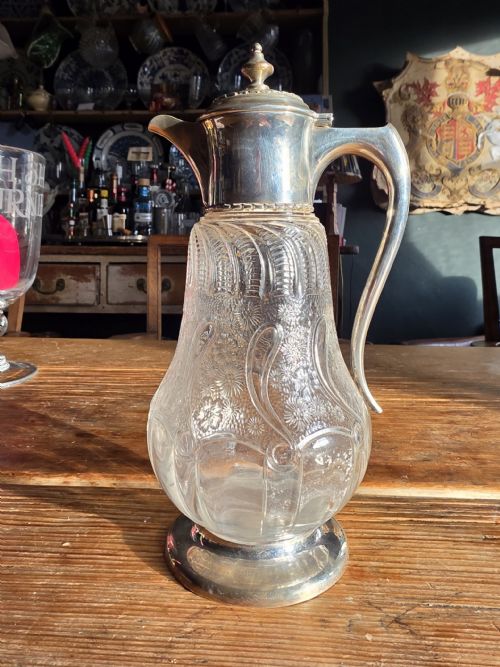


Victorian Silver Water Jug
A victorian silver water jug brings heavy metal and clear glass to the dining table, offering both decorative presence and pouring practicality.
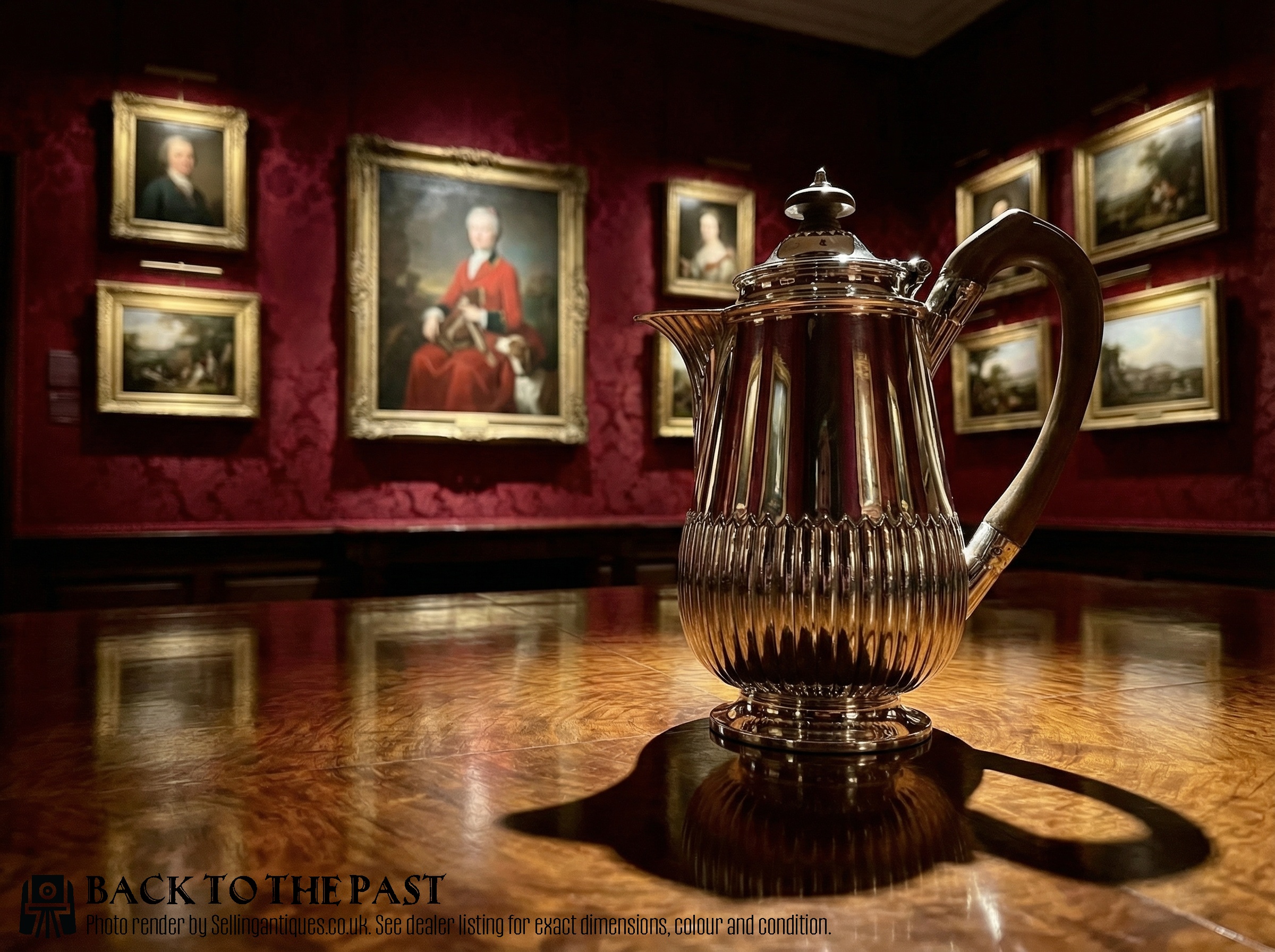
Victorian Silver Water Jug
A victorian silver water jug stands as a formal vessel for the dining table, appearing in sterling silver, silver plate, and cut glass forms. The pieces span the nineteenth century, the Edwardian years, and occasional Georgian origins, with forms encompassing water jugs, ewers, and lemonade vessels.
Buyers meet large sterling examples carrying hallmarks from London and Edinburgh alongside silver plated iterations from makers such as Elkington and Mappin and Webb. Handles wrapped in bone or woven details occur, and interior ice tubes appear in several refreshment-focused jugs.
How they were made
Silversmiths utilised sterling silver and silver plate over base metals, combining solid casting with hand engraving and embossing techniques. Glass bodies feature cut crystal or hobnail cutting, joined to silver rims, handles, and mounts through secure collars.
Makers integrated organic elements like bone for insulation on handles, alongside wood components and applied crests. Plated items employed Old Sheffield plating or electroplating methods to bond silver layers to supportive base metals.
Several Victorian lemonade jugs arrive equipped with removable metal ice cylinders, proving our ancestors took chilled summer drinks rather seriously.
What varies in quality
The standard of a victorian silver water jug rests on the depth of hand engraving, the crispness of cast handle mounts, and the clarity of the cut glass body. Heavy gauge sterling silver commands greater weight in the hand, while plated wares show distinction through the intact preservation of the silver coating over the underlying metal.
Design complexity marks the upper tier, seen in embossed hunting scenes or fitted interior ice tubes, compared to simpler utilitarian forms. Hallmarks stamped clearly by regional assay offices confirm origin and metal purity, separating standard commercial production from distinguished maker output.
William Comyns·Mappin and Webb·Elkington and Co·Boardman Glossop and Co
The Victorian Silver Water Jug Glossary
- Sterling silver
- A silver alloy containing 92.5 percent pure silver by weight, paired with other metals for durability. This standard metal appears across many nineteenth-century hollowware pieces.
- Silver plate
- A thin layer of silver bonded to a base metal core, such as copper or white metal. Makers like Elkington utilised this method to offer decorative vessels at accessible costs.
- Ewer
- A large jug with a wide spout and curved handle, often rooted in classical forms. These vessels function as water or wine containers on formal dining tables.
- Old Sheffield plate
- An early fusing technique where a sheet of silver is fused to a copper ingot before rolling. This process creates distinctive dual-metal edges on nineteenth-century jugs.
- Ice tube
- A central metal cylinder inserted into the jug body to cool liquids without dilution. This feature appears in lemonade and water pitchers designed for warm weather.
Victorian Silver Water Jug: Frequently Asked Questions
How do I clean a silver water jug?
Use a soft cloth and dedicated silver polish designed for hollowware, avoiding harsh abrasives that wear away thin plating or fine hand engraving.
Take care around applied handles and bone insulators, keeping moisture away from organic elements during the cleaning process.
Can I still use these jugs for serving water?
Sterling silver and silver plate remain suitable for serving cold water and beverages at the table, provided the interior shows sound condition.
Inspect the vessel for internal cleanliness and confirm that soldered joints and glass bodies hold liquids securely without leaking.
How do I read the hallmarks on these pieces?
British hallmarks typically include a maker mark, a standard purity symbol like the lion passant, a town mark for assay offices such as London or Edinburgh, and a date letter.
These tiny stamped symbols indicate the exact year of testing and the workshop responsible for crafting the silver vessel.