




Antique Silver Beverage Jug
An antique silver beverage jug brings formal hospitality into daily use, offering the weight and polish of sterling silver or Old Sheffield plate.
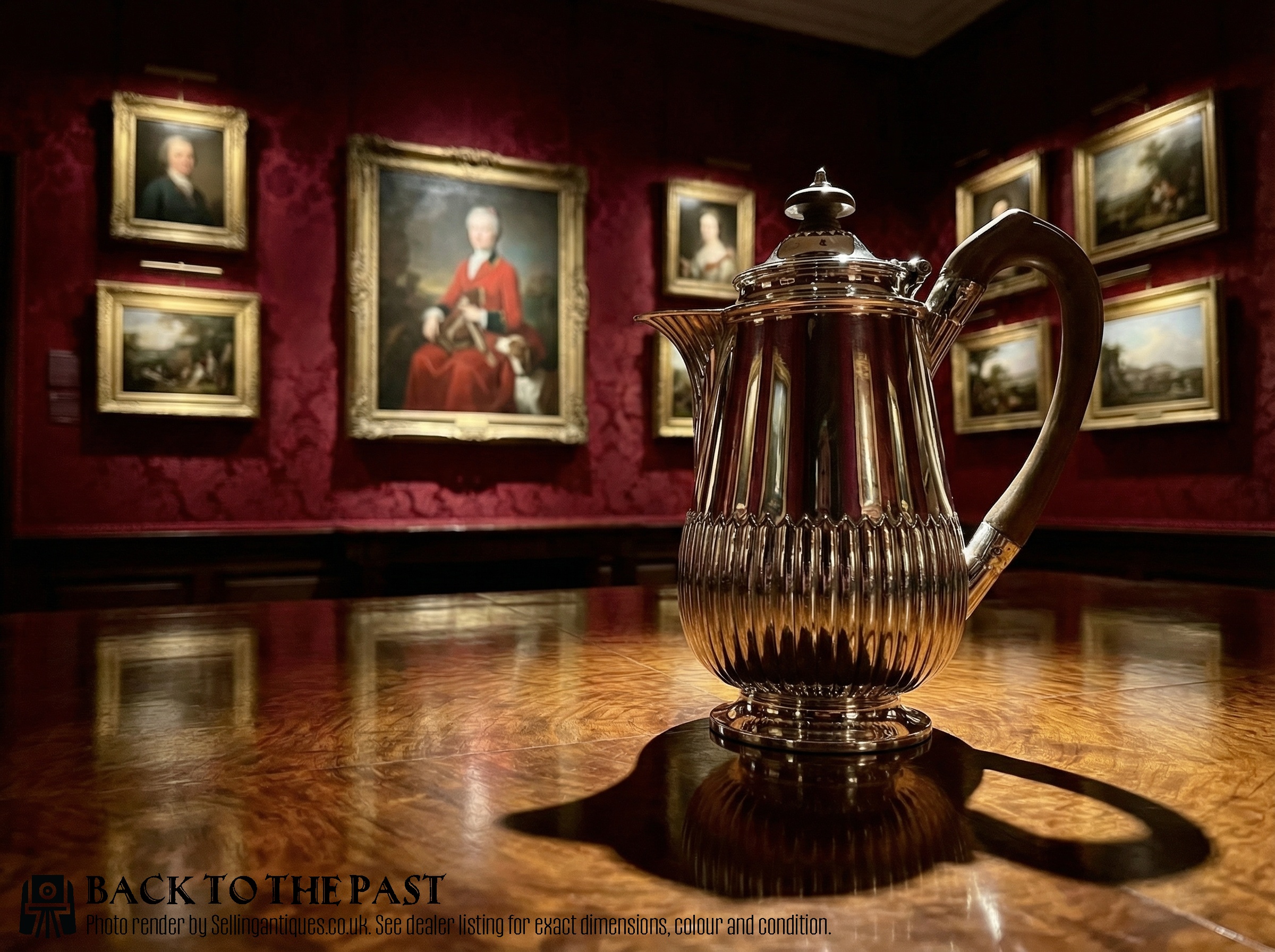
Antique Silver Beverage Jug
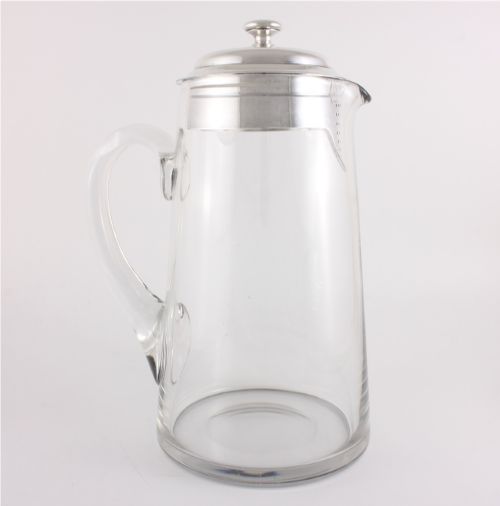
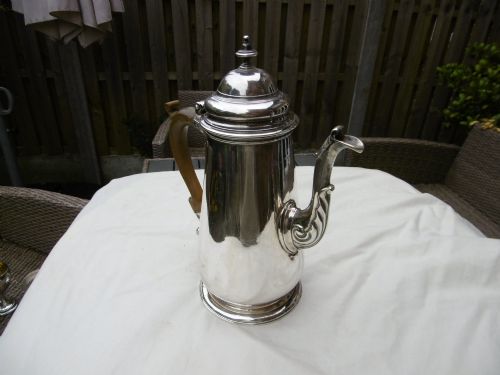
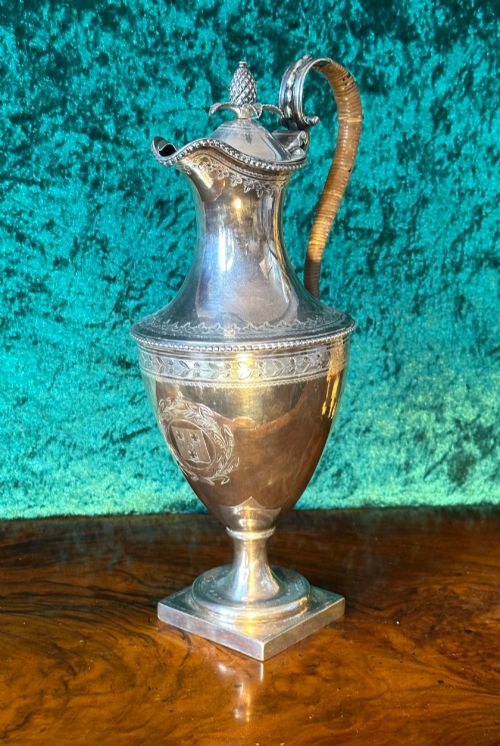
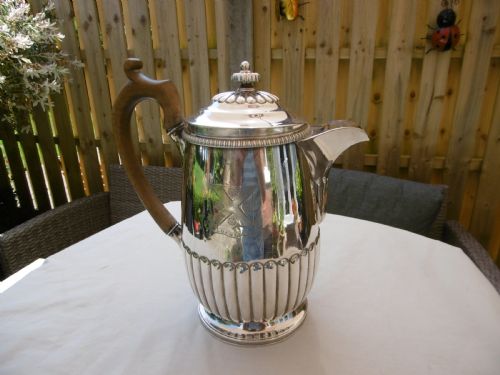
An antique silver beverage jug encompasses coffee pots, claret jugs, water jugs, and hot water pots spanning periods from the eighteenth century to the twentieth century. These vessels served functional roles in dining and entertaining across Georgian, Victorian, and Edwardian households.
The most common examples on this page are silver plated coffee pots and glass claret jugs mounted with metalwork. Pieces from the Georgian and Victorian eras frequently appear alongside Edwardian water jugs and later silver plated cocktail mixers.
Forms range from side-handled coffee pots to large lemonade jugs and ewers. Each object reflects the serving customs of its respective period, utilising materials typical of domestic metalwork.
Materials and construction
Construction relies heavily on sterling silver, silver plate, and Old Sheffield plate, often combined with clear glass, cranberry glass, wood, and wicker elements. Metal bodies are shaped through smithing or plating techniques onto copper or base metals.
Glass bodies on claret jugs and water jugs integrate fitted metal collars, handles, and hinged lids. Wood and wicker additions appear on handles to provide insulation against heat from hot liquids.
Some Edwardian water jugs arrive dressed in striking cranberry glass, ensuring your table hydration comes with a vibrant Victorian punch.
Evaluating quality and execution
Quality rests in the crispness of chased or engraved crests and the structural integrity of hinged lids and handles. Heavier gauge metal and balanced proportions distinguish finer pieces from standard domestic wares.
The integration of materials, such as the mounting of silver plate onto glass or the attachment of insulated handles, shows the maker's hand. Maker marks and hallmarks provide verifiable markers of origin and standard.
Richard Gurney·Matthew Boulton·Elkington and Co·Harrison Brothers and Howson
The Antique Silver Beverage Jug Glossary
- Old Sheffield Plated
- A composite material made by fusing a thin sheet of silver to a thicker copper base before shaping. This technique was widely used before electroplating became common.
- Claret Jug
- A tabletop vessel designed for serving red wine, typically featuring a glass body with a silver or silver-plated mount, handle, and spout.
- Ewer
- A large jug with a wide spout and arched handle, traditionally used for holding water or wine. In domestic silver, the form often overlaps with coffee pots.
- Sterling Silver
- An alloy of silver containing ninety-two point five percent silver and seven point five percent other metals, usually copper. It provides the standard composition for high-grade antique holloware.
- Cranberry Glass
- A pinkish-red glass created by adding gold chloride to the molten glass batch. It appears on decorative water jugs from the late nineteenth and early twentieth centuries.
Antique Silver Beverage Jug: Frequently Asked Questions
What is an antique silver beverage jug?
An antique silver beverage jug is a vessel designed for holding and pouring liquids such as coffee, water, wine, or lemonade. These items include sterling silver pots, silver plated servers, and glass claret jugs mounted in metal.
Produced across the eighteenth, nineteenth, and early twentieth centuries, they reflect changing domestic habits and social rituals surrounding dining and entertaining.
How do I clean a silver beverage jug?
Cleaning requires a soft cloth and a gentle silver polish formulated specifically for antiques to preserve the surface metal. Avoid abrasive materials that can wear down thin silver plating or Old Sheffield plate.
For pieces with glass bodies, detach or protect the glass components during polishing. Regular dusting and careful handling prevent the buildup of tarnish.
Can I use an antique coffee pot daily?
Using an antique coffee pot daily is possible, but requires care due to delicate hinges, insulated handles, and historical plating. Many owners choose to display them or use them strictly for cold beverages or decorative purposes.
Hot liquids can affect antique insulators or interior linings, so gentle hand washing is necessary after any use.
How do I identify the period of a jug?
Dating a jug involves examining hallmarks, maker stamps, stylistic cues, and manufacturing techniques. Georgian pieces often feature distinct neoclassical or rococo decorative motifs, while Victorian and Edwardian items display broader industrial plating methods.
Comparing the handle insulation, lid hinge construction, and overall silhouette against known period examples helps narrow down the date.