
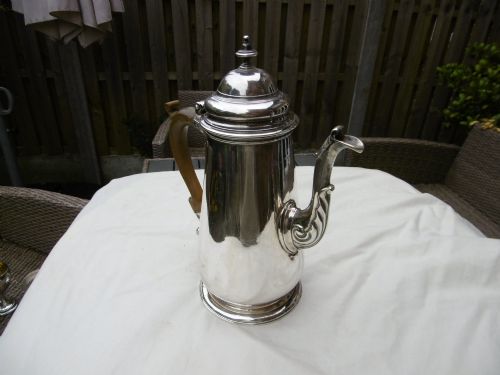


Sterling Silver Water Pot
These sterling silver water pot examples span Georgian, Victorian, and Edwardian periods, offering refined service vessels for the dining table.
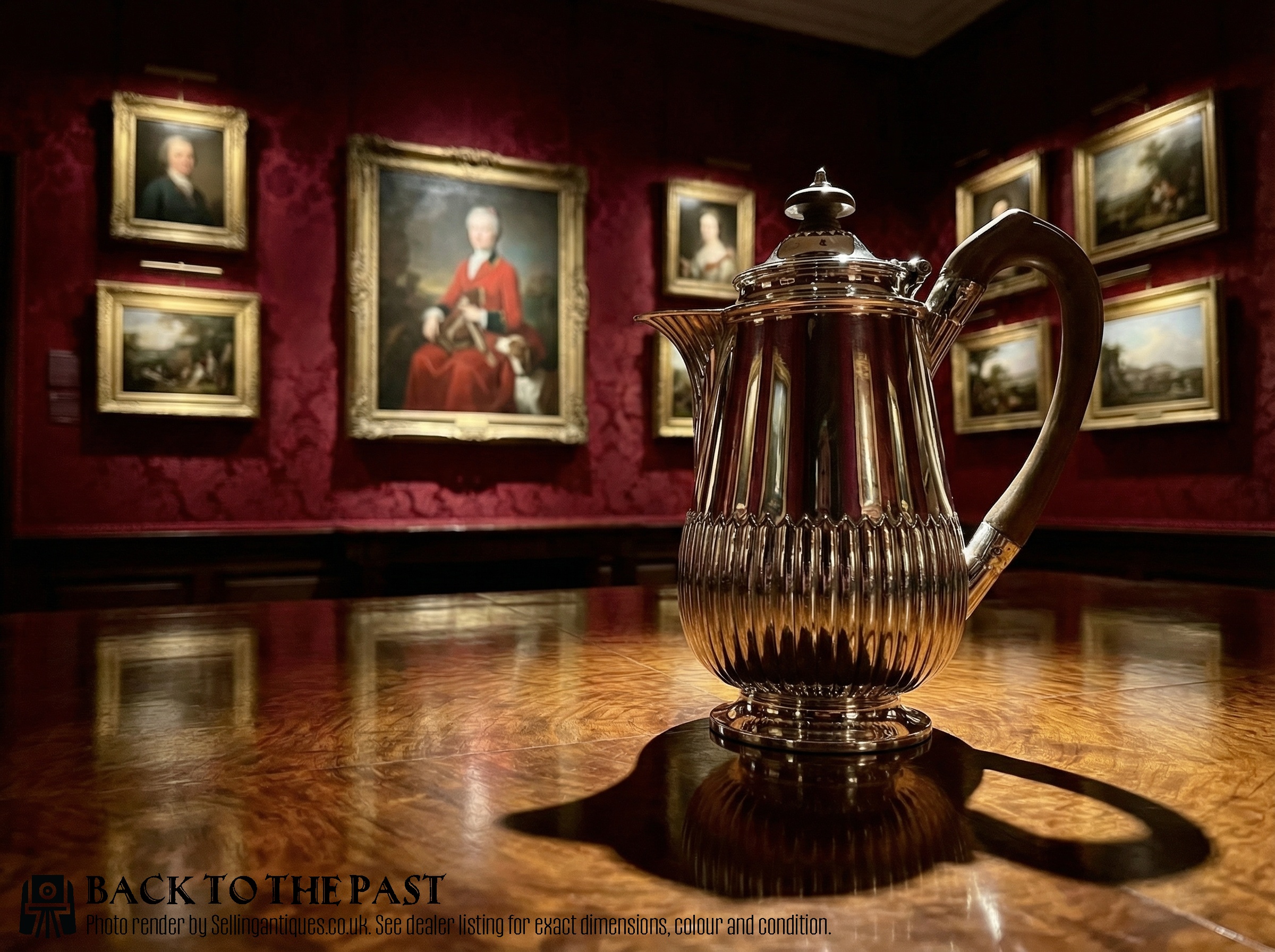
Sterling Silver Water Pot
A sterling silver water pot provides a dedicated vessel for serving water at the table, echoing the forms of related hot beverage servers. These items appear across Georgian, Victorian, and Edwardian periods, alongside related coffee pots and watering cans.
The objects recorded here include Georgian examples from the eighteenth century, alongside Victorian and Edwardian pieces from later decades. Forms range from traditional pots to side-handled variations and water jugs.
Buyers encountering this search phrase will find that many listed items share characteristics with coffee pots and hot water pots. The selection spans distinct eras of British silversmithing, from 1750 through the early twentieth century.
How they were made
These items are constructed primarily from sterling silver, utilising traditional smithing and forming techniques appropriate to their period of manufacture. Surviving examples frequently incorporate insulated handles fashioned from wood, ebony, or cane to protect the hand from heat.
The physical construction reflects the standards of workshops ranging from provincial makers to prominent silversmiths. Details such as side handles and insulated components demonstrate the functional adaptations employed during the Georgian and Edwardian eras.
Listings feature sterling silver, wood, cane, and ebony across Georgian, Victorian, and Edwardian periods.
What varies in quality
The standard of a sterling silver water pot depends upon the clarity of its hallmarks, the crispness of any chased or engraved decoration, and the integrity of its original components. Pieces by notable makers such as Paul Storr or Richard Gurney display exceptional precision in their construction.
Weight and structural balance also distinguish examples across the range, with heavier specimens such as those by Edward Power demonstrating substantial metalwork. The preservation of original insulated elements like wood or cane handles further influences the overall character of the piece.
Richard Gurney·Edward Power·Harrison Brothers And Howson·Paul Storr·Dobson Piccadilly
The Sterling Silver Water Pot Glossary
- Sterling silver
- A silver alloy containing 92.5 percent pure silver by mass, with the remainder comprising other metals such as copper.
- Hallmark
- An official stamp applied by an assay office to indicate the purity of the metal, the maker, and the year of production.
- George III
- The period of British history spanning the reign of George III from 1760 to 1820, noted for specific neoclassical silversmithing styles.
- Edwardian
- The period covering the reign of Edward VII from 1901 to 1910, characterised by lighter designs drawing on earlier eighteenth-century motifs.
- Biggin
- A tall coffee pot or container fitted with a wire-basket infuser, often mounted on a stand with a lamp.
Sterling Silver Water Pot: Frequently Asked Questions
How do I distinguish a water pot from a coffee pot?
Water pots and coffee pots share similar vertical profiles and spouts, making them difficult to separate by silhouette alone. Examining the interior surface and any associated documentary evidence helps clarify the original intended contents.
Many listings combine these categories due to overlapping forms during the Georgian and Victorian eras. Makers often produced versatile vessels suitable for multiple hot or cold liquids.
What periods do these silver pots come from?
The available pieces predominantly date from the Georgian, Victorian, and Edwardian eras. Evidence shows production spans from the mid-eighteenth century through to the early twentieth century.
Earlier examples from the 1700s contrast with later Victorian and Edwardian iterations in their weight and decorative detailing. Each era brings distinct stylistic traits tied to the prevailing tastes of the time.
How were wood and cane elements used on these pots?
Insulating materials like wood, ebony, and cane appear on handles to prevent heat transfer during service. These organic components were fitted carefully into the metal structure of the handle.
Survival of these original insulating parts is a key consideration for collectors. They reflect the practical requirements of serving hot water or coffee at the dining table.
Where were these silver pots manufactured?
Manufacturing locations include London and regional assay offices such as Newcastle, as recorded in period hallmarks. Makers operated within established silversmithing hubs across Britain.
Workshops ranged from large commercial enterprises to individual master silversmiths. The assay office marks provide definitive proof of geographic origin and date.