


Victorian Silver Vase
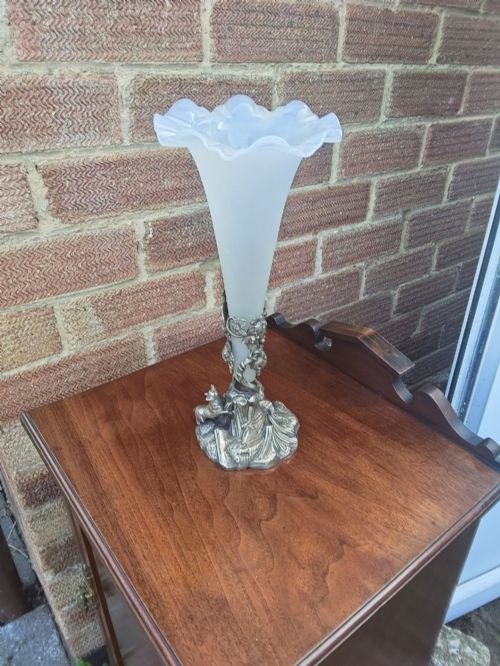
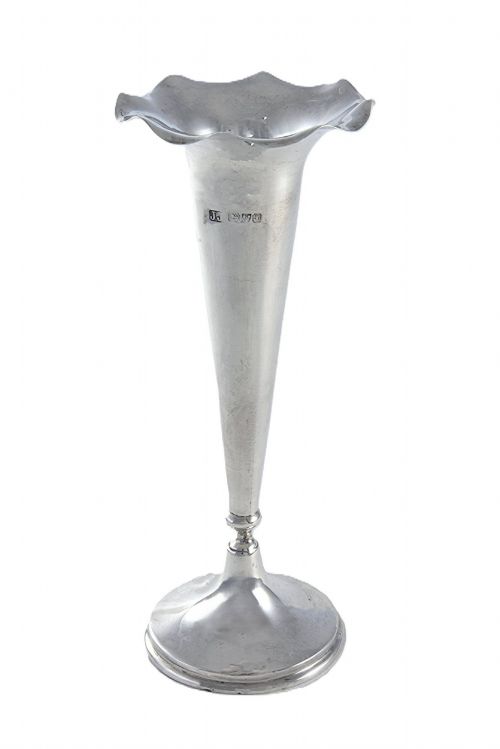
These pieces are a victorian silver vase, encompassing sterling silver, silver plate, and glass combinations designed to display cut blooms on nineteenth-century tables.
Victorian Silver Vase
A victorian silver vase typically manifests as a trumpet vase, posy holder, or bud vase, often paired with clear, vaseline, or opaque glass liners. Examples range from modest single stems to substantial centerpieces and multi-trumpet epergnes.
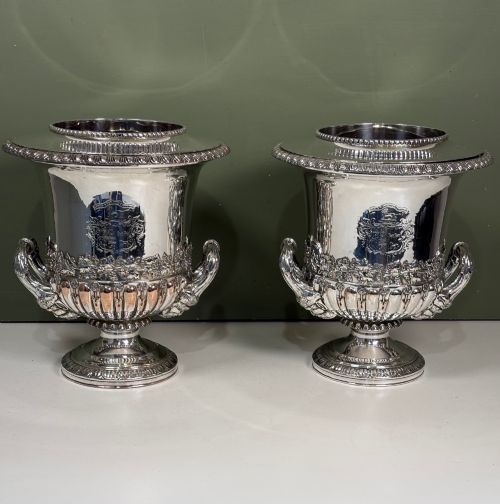
Makers utilised sterling silver alongside silver plate and white metal frames to support blown or etched glass bodies. The surviving record includes paired items alongside individual decorative urns and wine coolers.
Materials and Construction
Metals were shaped through casting, spinning, and piercing, creating reticulated galleries and sturdy weighted bases. Sterling components carry hallmarks for assay offices in cities such as Birmingham and Chester, while plated wares utilise nickel silver or white metal foundations.
Glass elements incorporate mercury, vaseline, and opaque variants, frequently finished with hand-cut flutes, etched ferns, or mounts secured directly to silver pedestals.
The inventory combines sterling silver, silver plate, and various coloured glasses including vaseline and opaque variants across the nineteenth and early twentieth centuries.
Assessing Craftsmanship
The standard of piercing and the crispness of repoussé work distinguish heavier gauged vessels from lighter stamped examples. Integrated components, such as original glass liners and matching pairs, elevate the integrity of a piece.
Engraved ornamentation and maker marks indicate the workshop's output, with prominent makers applying detailed chasing to trumpet bodies and mounts.
Walker & Hall·Daniel & Arter·William Comyns·John Millward Banks·Hukin & Heath·Josiah Williams & Co·Hawksworth Eyre & Co·Mappin & Webb
The Victorian Silver Vase Glossary
- Epergne
- A central table ornament featuring a large central dish surrounded by multiple hanging baskets or trumpet vases. These are often supported by silver plated bases.
- Vaseline glass
- A type of glass containing uranium dioxide that exhibits a distinctive yellow-green fluorescence under ultraviolet light. It frequently appears paired with silver mounts.
- Trumpet vase
- A vessel characterised by a narrow base that flares outward toward a wide rim. This silhouette supports single stems or arrangements.
- Posy vase
- A small vessel designed to hold a compact bunch of flowers. These items are frequently found in matched pairs from the late nineteenth century.
- Silver plate
- A base white metal coated with a thin layer of silver. Many nineteenth-century table vessels utilised this method for durability and lower cost.
Victorian Silver Vase: Frequently Asked Questions
How do I clean a silver and glass vase?
Wash glass liners in warm soapy water using a soft cloth, avoiding abrasive pads that scratch the surface. Polish the silver elements separately with a dedicated cloth to preserve hallmarks and chased details.
Keep moisture away from any weighted interior bases or felt pads to prevent internal corrosion and deterioration of the cement fillings.
Were these vases made as pairs?
Makers produced both individual vessels and matched pairs intended for symmetrical placement on dining tables and mantelpieces. Pairs often share identical assay marks and decorative motifs.
Single vases frequently served as centrepieces or individual posy holders rather than part of a matched set.
How can I date a silver vase?
Sterling items carry hallmarks that include a date letter indicating the exact year of assay, alongside the maker's mark and town symbol. Silver plated variants rely on style, register numbers, and maker stamps.
Stylistic cues such as Arts and Crafts influences or late Victorian floral etching provide additional chronological indicators when hallmarks are absent.
Can I use these vases for fresh flowers?
Many surviving vessels retain their original glass liners designed to hold water safely away from the silver or plated metal. Using liners prevents mineral deposits and water stains from forming on the interior metal surfaces.
Unlined vessels require careful handling and immediate drying after use to protect the integrity of the antique metalwork.