


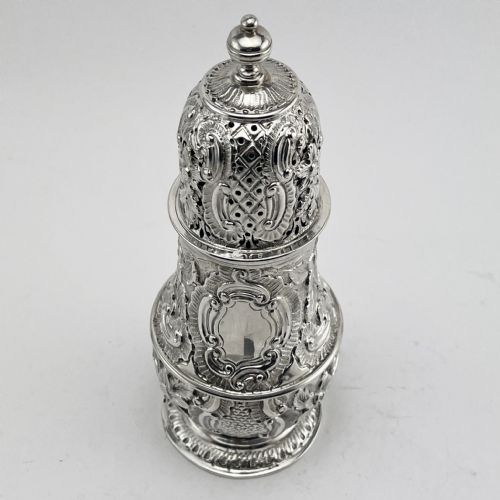


Victorian Silver Sugar Sifter
These pieces of victorian silver sugar sifter range from slender cast spoons to tall casters designed to dust fine grains over dessert.
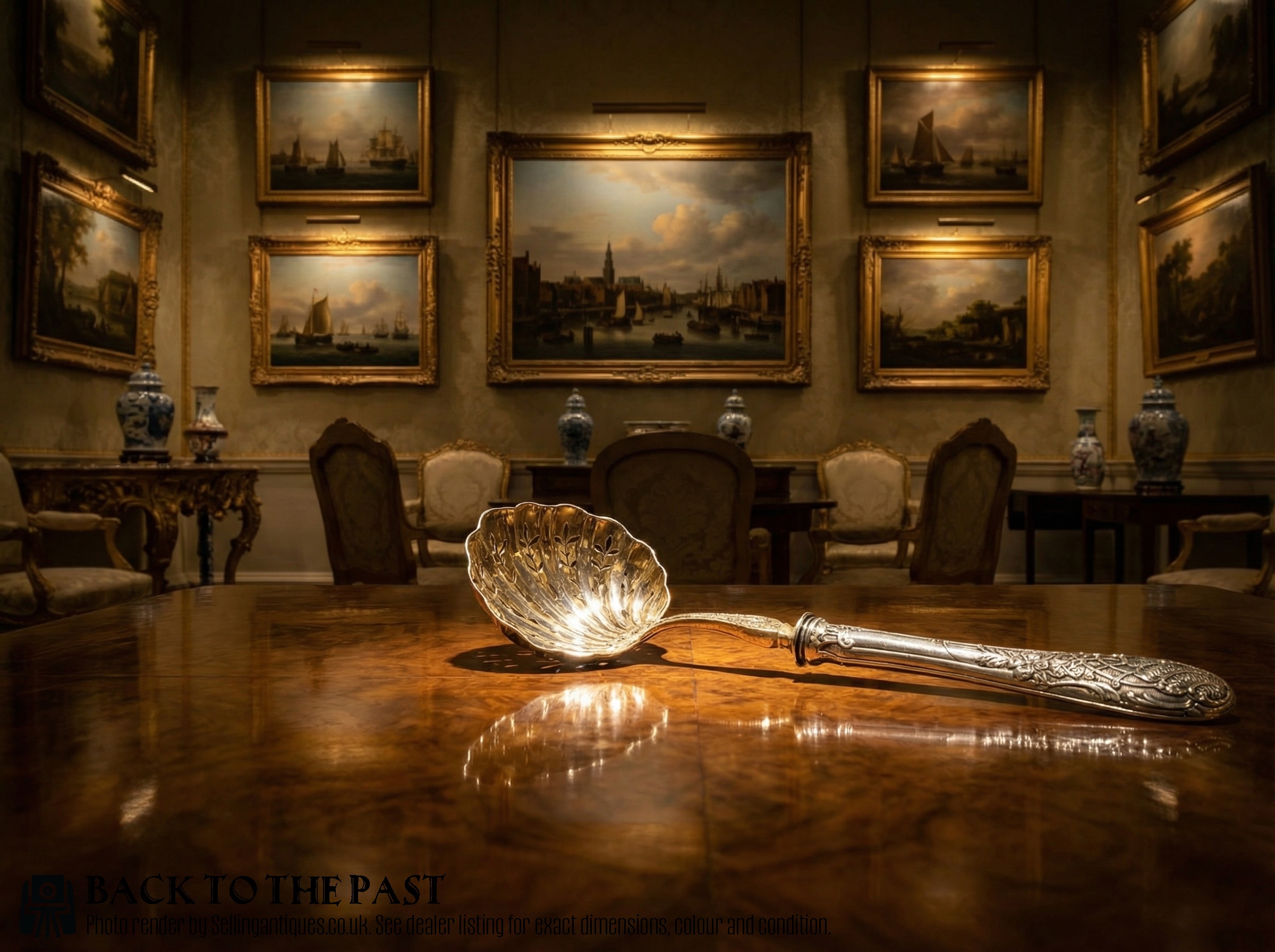
Victorian Silver Sugar Sifter
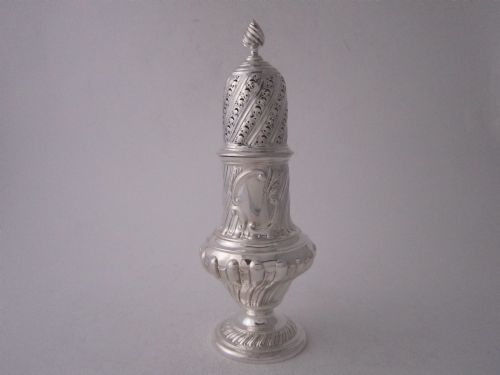
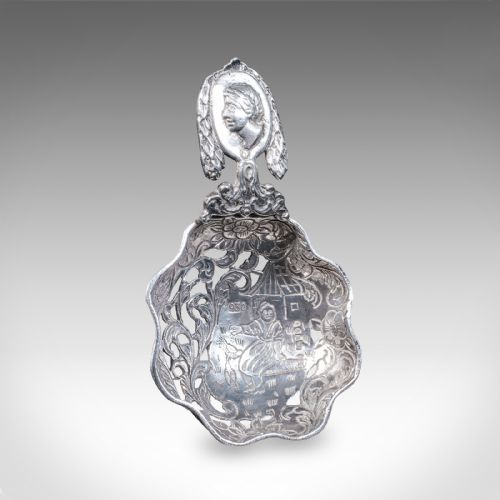
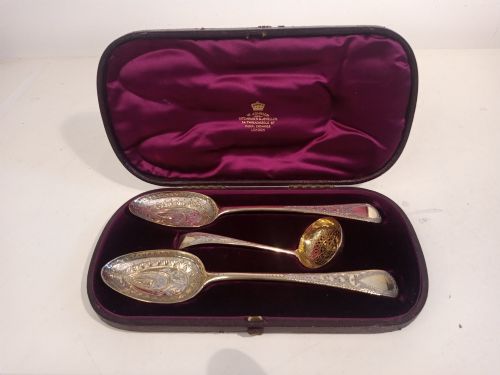
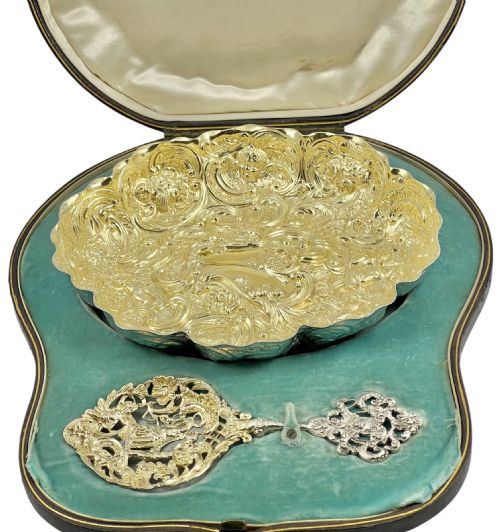
A victorian silver sugar sifter encompasses both individual spoons with pierced bowls and upright casters or shakers intended for the dining table. The items appearing here span from solitary spoons to complete cased sets that pair a bowl with a matching sifter.
The majority of surviving examples take the form of sterling silver spoons bearing nineteenth-century hallmarked dates, alongside substantial sugar casters fashioned in the Victorian Rococo Revival or Georgian Revival styles. Collectors also encounter fitted velvet or silk-lined presentation boxes containing bowls and spoons together.
Materials and technique
Makers utilised sterling silver as the primary material, frequently applying silver gilt or gold gilt to the interior of bowls and the bowls of spoons for a rich dual-tone effect. Some objects integrate cranberry glass or are accompanied by fitted cases lined in silk, velvet, and leather.
Techniques combine hand-piercing for the intricate bowl patterns of sifting spoons with casting and chasing for heavier casters and figural terminals. Silversmiths employed detailed engraving to articulate grape vine motifs and cornucopia designs upon the metal.
The listings on this site record items spanning the Victorian era, utilising sterling silver, silver gilt, and silver plate alongside glass and velvet.
What varies in quality
The distinction between standard production and superior craftsmanship rests in the weight of the metal and the crispness of the pierced or chased decoration. Heavy gauge sterling silver and deeply defined cast ornamentations denote a higher standard of manufacture.
The presence of a recognised maker's mark and a complete, matching fitted case elevates the standing of an item. Pieces demonstrating careful hand-piercing in intricate patterns rather than simple machine work represent the upper tier of surviving examples.
Horace Woodward and Co Ltd·Berthold Muller Hanau·Chawner and Co·Taylor and Perry·Martin Hall and Co
The Victorian Silver Sugar Sifter Glossary
- Sugar caster
- A standing vessel with a pierced dome top used for sprinkling sugar onto food. These tall forms often display repoussé decoration.
- Sifter spoon
- A spoon featuring a perforated or pierced bowl designed to let loose sugar pass through while retaining larger lumps. They appear in various nineteenth-century patterns.
- Silver gilt
- Sterling silver that has been coated with a thin layer of gold. This treatment protects the silver from tarnishing and adds a warm interior glow.
- Hallmark
- An official stamp applied to precious metals indicating the standard of purity, the assay office, and the year of testing. These marks provide definitive dating evidence.
Victorian Silver Sugar Sifter: Frequently Asked Questions
What is a victorian silver sugar sifter used for?
These implements were designed to sprinkle powdered or granulated sugar over fruit, desserts, and pastries at the nineteenth-century dining table.
Spoons with pierced bowls allowed fine sugar to pass through while holding back larger crystals, whereas tall casters shook sugar from a perforated top.
How do I identify a period piece?
Examination of the metal hallmarks stamped on the silver reveals the assay office, metal purity, and the specific year of manufacture.
Stylistic indicators such as Rococo Revival curves or Georgian Revival symmetry also point to nineteenth-century production.
Are cased sets common?
Many surviving examples include fitted presentation boxes lined with silk or velvet, often pairing a sugar bowl with a matching sifter spoon.
These sets were frequently given as gifts, which explains their survival in protective leather cases.
What metals are used in these items?
The recorded pieces consist primarily of solid sterling silver, occasionally finished with silver gilt or gold gilt interior washing.
Some examples incorporate silver plate or pair the metal with cranberry glass bowls and leather-covered cases.