



Repousse Silver Sugar Sifter
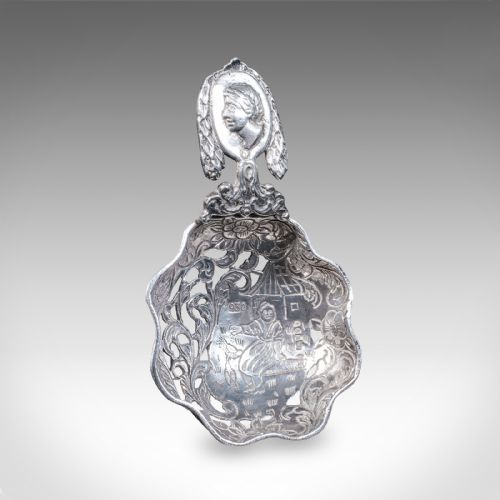
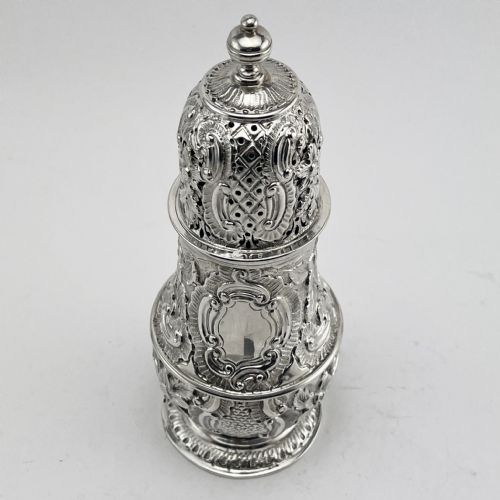
A repousse silver sugar sifter brings tactile texture to the table, pairing chased floral motifs with perforated domes built for sprinkling sugar.
Repousse Silver Sugar Sifter
A repousse silver sugar sifter encompasses table items designed to dispense fine sugar onto fruit or desserts, most commonly found here as nineteenth-century casters, shakers, and pierced spoons.
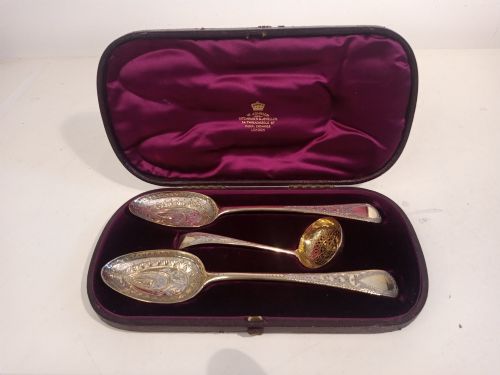
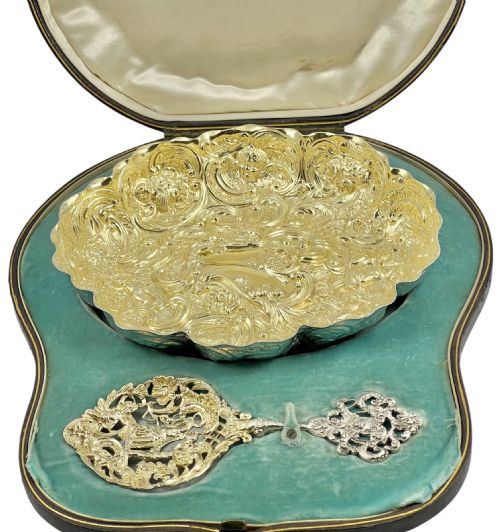
The objects span periods from the Georgian era through the Victorian years and into the Edwardian period, appearing either as standalone vessels or matched sets housed within fitted cases lined in velvet and silk.
Forms range from tall cornucopia casters to sugar bowls accompanied by specialised sifter spoons, reflecting the formal dining habits of past centuries.
How they were made
Silversmiths formed these pieces primarily from sterling silver and silver gilt, hammering the metal from the reverse side to push out rich, three-dimensional repousse ornamentation.
Interiors and specific presentation components occasionally received a layer of gold gilt, while matching storage boxes combined leather exteriors with delicate silk and velvet linings.
Listings feature sterling silver, silver gilt, and leather-cased sets spanning the Georgian, Victorian, and Edwardian periods.
What varies in quality
The definition and depth of the hammered repousse work dictate visual merit, distinguishing sharply struck floral relief from soft or worn surface detailing.
Completeness alters the standing of cased sets, particularly where original velvet linings remain intact alongside matching bowls and spoons.
Horace Woodward & CO LTD·Berthold Muller Hanau
The Repousse Silver Sugar Sifter Glossary
- Repousse
- A metalworking technique where the artisan hammers the design from the reverse side to create raised relief on the front. This method gives Victorian silverware its characteristic tactile depth.
- Silver Gilt
- Silver that has been coated with a thin layer of gold on its surface. This treatment provides a warm interior glow within sugar bowls and casters.
- Caster
- A table vessel with a perforated top used for sprinkling sugar or spices. Victorian examples often take flamboyant urn or cornucopia shapes.
- Import Hallmarks
- Official stamps applied by assay offices to foreign silver brought into the country for sale. These marks help verify the origin and metal standard of imported pieces.
Repousse Silver Sugar Sifter: Frequently Asked Questions
What is a sugar sifter used for?
These pieces were employed at the dining table to dust powdered or caster sugar over fresh fruit, pastries, and desserts. The perforated lids and pierced spoons allowed diners to control the flow evenly.
In modern settings, they continue to serve their original function during dessert courses or sit on display as fine examples of nineteenth-century metalwork.
How do I tell Victorian from Edwardian pieces?
Victorian items, dating roughly from the middle to the end of the nineteenth century, frequently exhibit exuberant ornamentation such as the Rococo Revival style or heavy repousse floral work. Edwardian pieces, starting around nineteen hundred, often display lighter, more restrained designs.
Examining the hallmarks stamped into the sterling silver will provide the exact year of assay and confirm the manufacturing period.
Are cased sets original?
Many nineteenth-century sugar bowls and sifter spoons were retailed together inside fitted presentation boxes lined with velvet and silk. These custom cases protected the silver serveware when not in use on the table.
The presence of maker details inside the lid often confirms that the set was packaged together from the start.
How should I clean silver gilt?
Silver gilt requires gentle care to protect the delicate gold layer applied over the sterling silver base. Avoid harsh dips or abrasive polishes that can wear away the gilding over time.
Soft microfiber cloths and mild soapy water are generally sufficient to maintain the lustre of both silver and gilt surfaces without causing damage.