


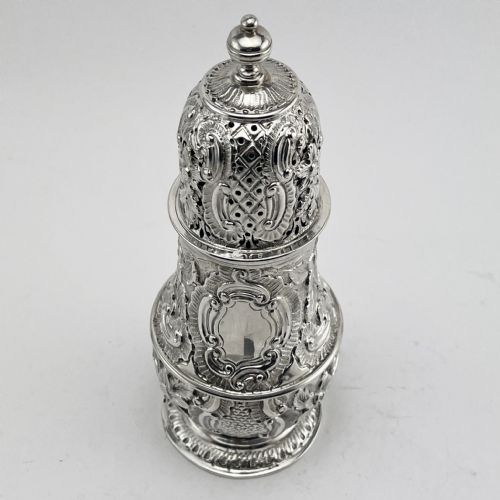


Victorian Silver Sifter
When you search for a victorian silver sifter, you encounter the refined implements designed to dust sugar over desserts and fruit.
Victorian Silver Sifter
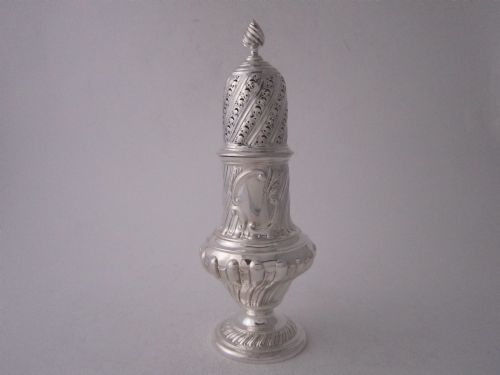
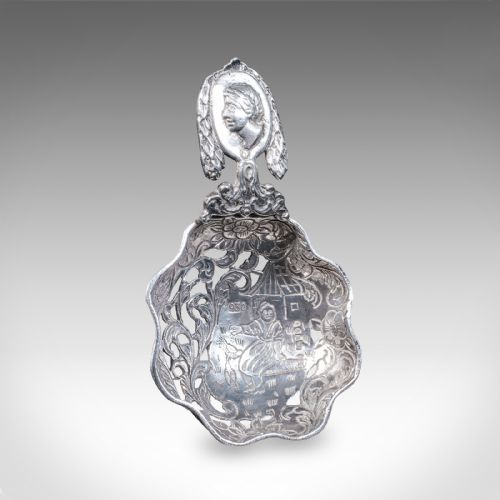
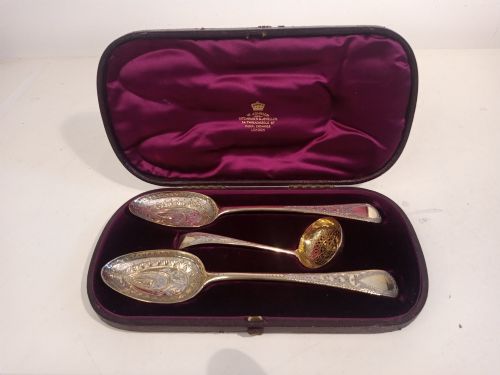
A victorian silver sifter encompasses both sugar casters and pierced spoons intended for table service during the nineteenth century. These objects appear frequently as individual ladles, matched bowl and spoon sets, or tall casters.
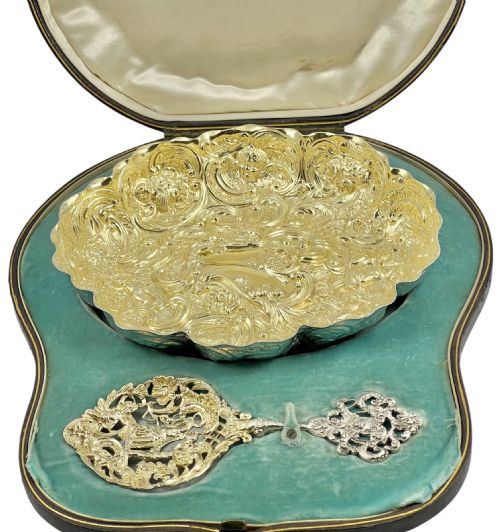
The selection ranges from simple domestic flatware patterns to ornate cased sets presented with glass bowls or liners. Most examples date from the Victorian period, drawing upon Georgian Revival and Rococo Revival design influences.
Materials and technique
Silversmiths utilised sterling silver, silver gilt, and silver plate to shape these pieces, often combining them with velvet, silk, leather, and glass inserts. Manufacturing techniques involved piercing bowls with geometric or floral patterns and casting decorative terminals.
Many items bear hallmarks recording assay offices in London, Birmingham, Sheffield, Chester, and Exeter. Cased sets frequently utilise fitted velvet and silk linings to house the silver sifter alongside bowls and ladles.
Some spoons feature figures of Diana the Huntress or apostles perched right on the handle.
What varies in quality
The distinction between standard domestic production and superior execution rests upon the weight of the silver and the intricacy of the decoration. Cast elements, figural terminals, and hand-pierced bowl designs demonstrate a higher level of craftsmanship than pressed sheet metal.
Condition and completeness also govern the hierarchy, particularly when cased presentation sets retain their original fitted boxes and matching glass components. Pieces bearing distinct maker marks and clear regional hallmarks command greater interest among collectors.
Horace Woodward And Co Ltd·Berthold Muller·Chawner And Co·J And A Savory·Taylor And Perry·A B Savory And Sons·Martin Hall And Co·Francis Higgins·John Figg
The Victorian Silver Sifter Glossary
- Sugar Caster
- A tall, perforated vessel used for sprinkling sugar over food. These standing pieces often feature cornucopia or Georgian Revival styling.
- Silver Gilt
- Silver that has been coated with a thin layer of gold on the surface. This technique imparts a rich, warm tone to bowls and spoons.
- Import Hallmarks
- Official stamps applied to foreign items brought into the country for sale. These marks verify the metal standard through domestic assay offices.
- Pierced Spoon
- A serving implement with perforations cut into the bowl to strain liquids or powder. They appear frequently within berry and sugar sifter sets.
- Fiddle and Thread
- A traditional nineteenth-century flatware pattern featuring a shaped stem and a raised central line. This design occurs across numerous Victorian sifter spoons.
Victorian Silver Sifter: Frequently Asked Questions
What is a silver sifter used for?
These implements served to dust powdered or caster sugar over desserts, fruit, and pastries during formal dining. They were an essential part of nineteenth-century table service.
Depending on the form chosen, the host either shook the sugar from a tall caster or lifted it using a specially pierced spoon.
How do I identify a Victorian piece?
Identification relies upon examining the hallmarks stamped into the metal, which record the assay office, date letter, and silver standard. Stylistic clues such as Rococo Revival curves also point to the era.
Assay offices in London, Birmingham, Sheffield, Chester, and Exeter mark many of these surviving items.
Are cased sets original?
Many sets comprising a bowl and matching spoon were retailed together in fitted presentation boxes lined with silk and velvet. These cases protect the delicate silver and glass components.
The presence of matched hallmarks across the components confirms that the contents belong together as originally sold.
What is the difference between a sifter and a caster?
A sifter typically refers to a pierced spoon designed to hold and dust sugar, while a caster is a standing vessel with a perforated lid. Both perform the same culinary function.
Victorian makers produced both forms in substantial quantities for domestic dining tables.