
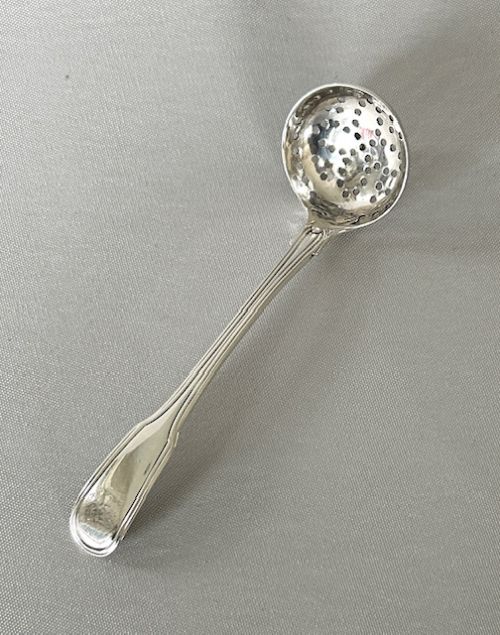
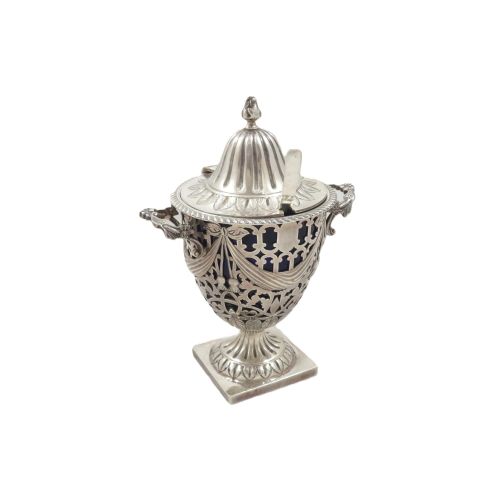
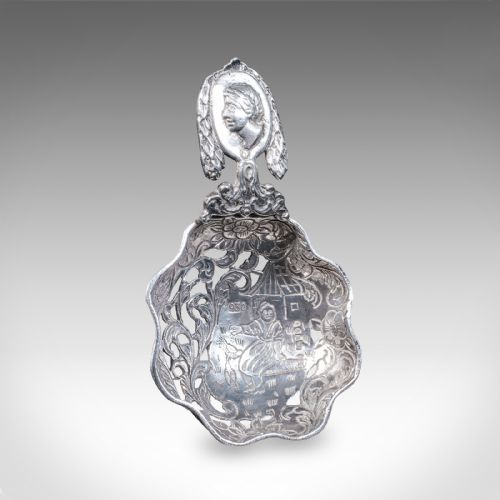


Pierced Silver Sugar Spoon
A pierced silver sugar spoon belongs on the table for sifting grains over fruit or tea, offering both utility and bright silverwork.
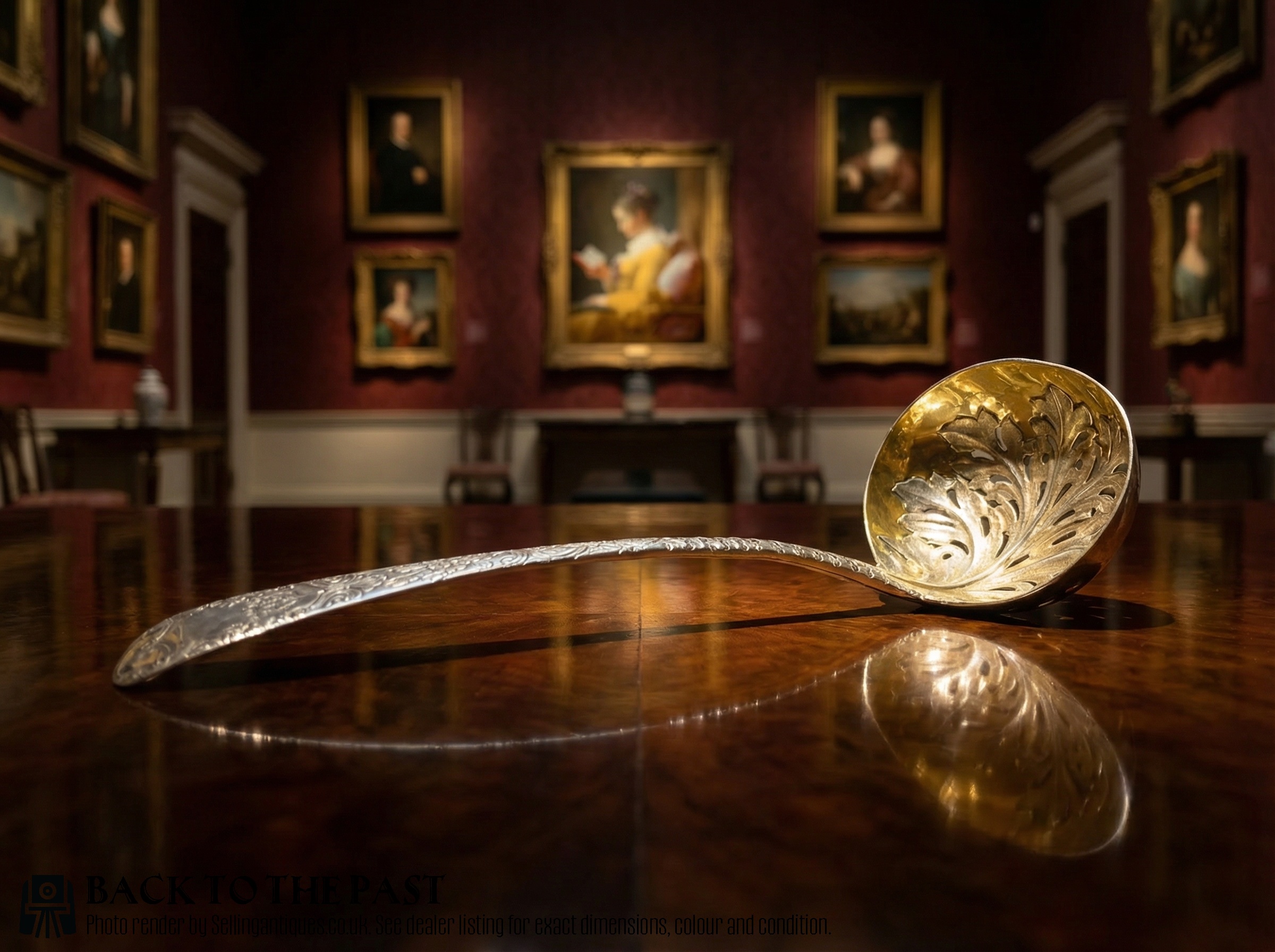
Pierced Silver Sugar Spoon
A pierced silver sugar spoon serves the table as a specialist implement for sprinkling powdered or castor sugar over fruit and beverages. The form appears across the Georgian, Victorian, and Edwardian periods in various ornate pierced bowls.
How they were made
Silversmiths shaped these utensils primarily from sterling silver or silver plate, utilising techniques of hammering, piercing, and chasing to form openwork patterns in the bowls. Piercing removed metal to create intricate grilles, foliage, or geometric apertures that allowed sugar to sift cleanly.
Some pieces incorporate supplementary materials such as cobalt or cranberry glass bowls, velvet linings, and leather cases, demonstrating the collaborative skills of glassmakers and silversmiths during the period.
Geographic origins represented in the archive stretch from London and Chester to Dutch workshops and nineteenth-century Paris.
What varies in quality
The distinction between ordinary and superior pieces rests upon the precision of the piercing and the crispness of the chased details within the bowl. Finer work displays balanced symmetry and clean edges around every aperture.
Substantial gauge silver provides a reassuring weight in the hand, whereas lighter items flex under pressure. The integration of maker marks and assay office stamps also adds weight to the provenance of an individual spoon.
Thomas Latham and Ernest Morton
The Pierced Silver Sugar Spoon Glossary
- Sifter spoon
- A spoon with a perforated or pierced bowl designed for sprinkling sugar.
- Sterling silver
- An alloy comprising ninety-two point five percent silver by mass, standard for British plate.
- Import hallmarks
- Official stamps applied by an assay office to foreign silver entering the country.
- Caddy spoon
- A short-handled spoon traditionally used for measuring loose tea from a canister.
Pierced Silver Sugar Spoon: Frequently Asked Questions
What is a pierced silver sugar spoon used for?
These spoons were designed to distribute powdered or castor sugar evenly over soft fruits, desserts, and hot beverages during formal dining.
The perforations in the bowl allowed excess lumps to remain behind while a fine dust of sweetness fell upon the food.
How do I date a silver sugar spoon?
Dating relies upon official assay office hallmarks stamped into the metal, which indicate specific towns and year cycles.
Stylistic clues such as handle shape and the complexity of the bowl piercing also help assign pieces to the Georgian, Victorian, or Edwardian eras.
Are these spoons made of solid silver?
The selection includes items fashioned from solid sterling silver alongside pieces created in silver plate.
Hallmarks usually identify solid silver items, while archived records point to plated examples from the nineteenth century.
How should I clean my antique silver spoon?
Gentle washing in warm soapy water with a soft cloth removes everyday residues without harming the delicate metalwork.
Harsh abrasive dips should be avoided to preserve the original finish and any subtle chased details on the bowl.