

Antique Silver Table Flatware
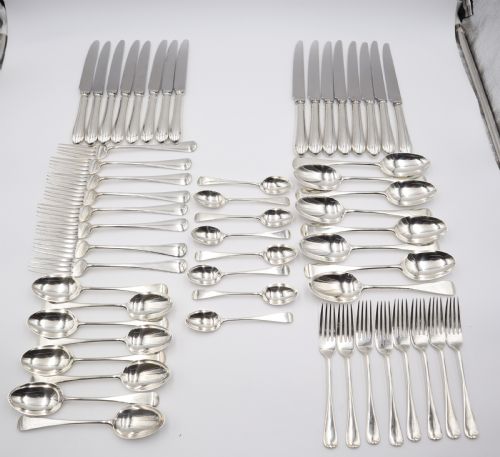
Antique silver table flatware comprises serving spoons, basting spoons, soup ladles, and complete canteens spanning the eighteenth, nineteenth, and early twentieth centuries.
Antique Silver Table Flatware
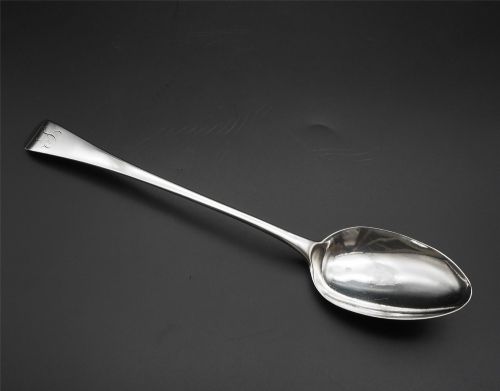
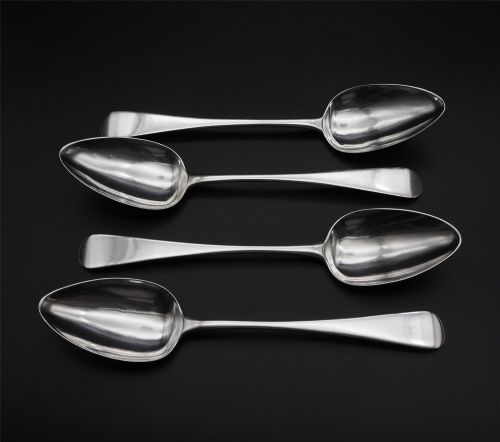
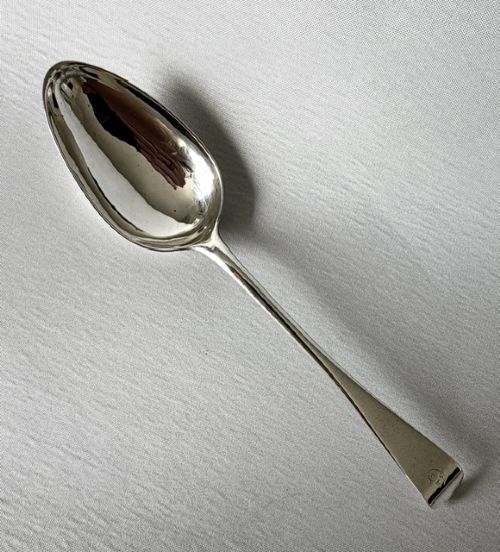
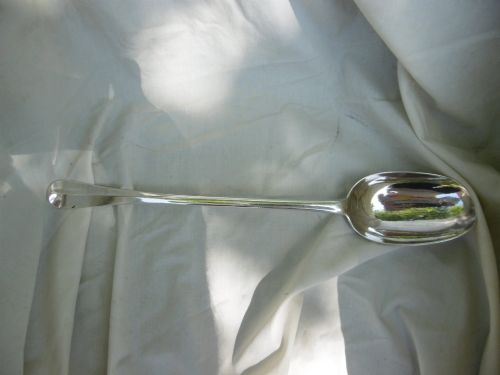
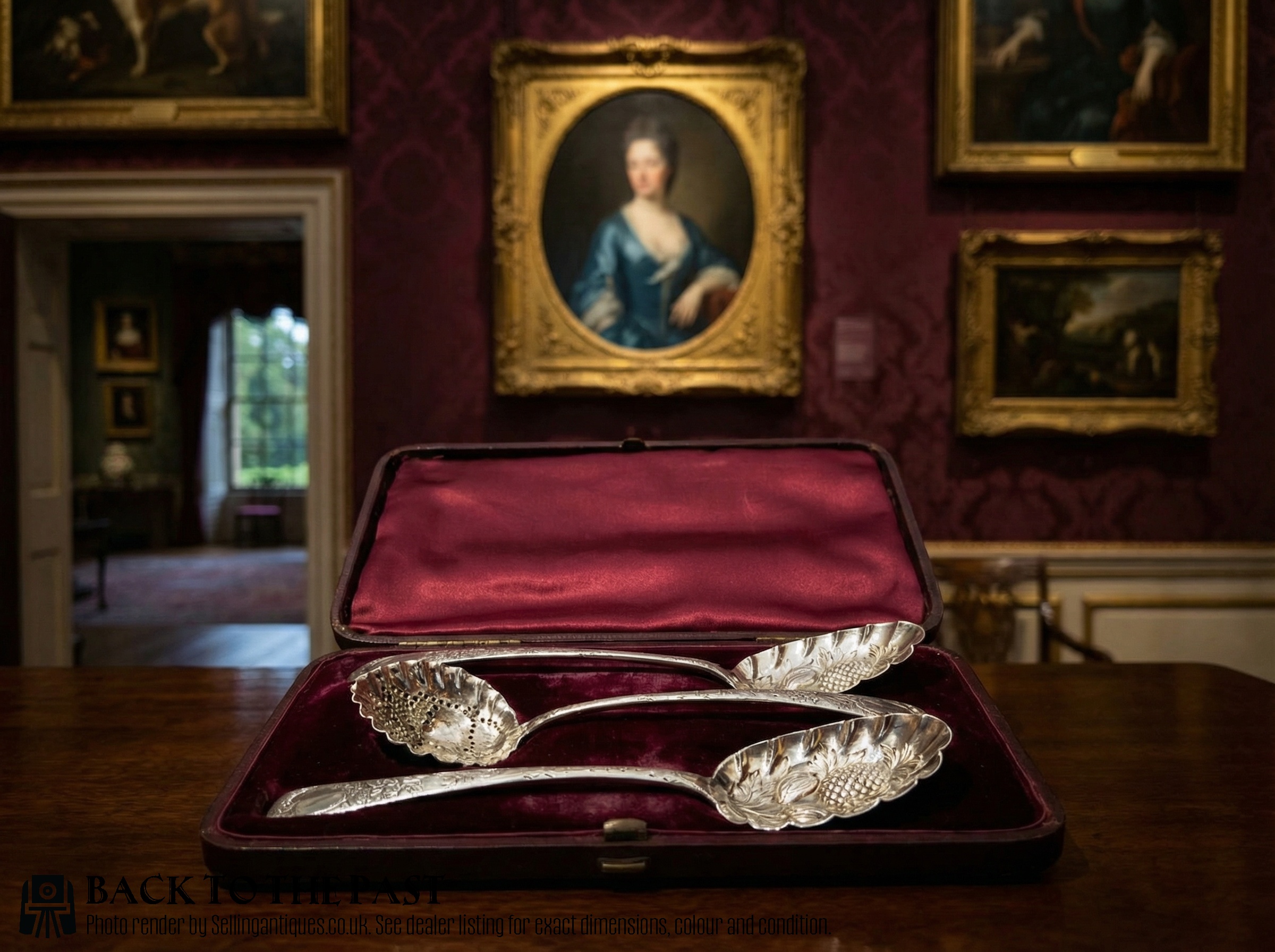
When searching for antique silver table flatware, buyers encounter individual serving pieces and full canteens designed for dining and food preparation. The items range from early eighteenth-century hash spoons and rat tail tablespoons to large nineteenth-century soup ladles and matching dessert forks.
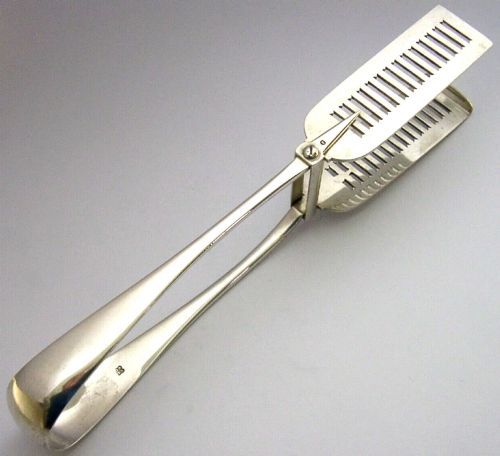
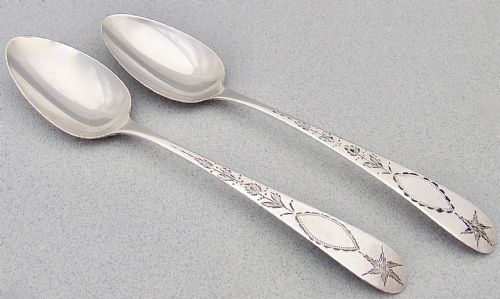
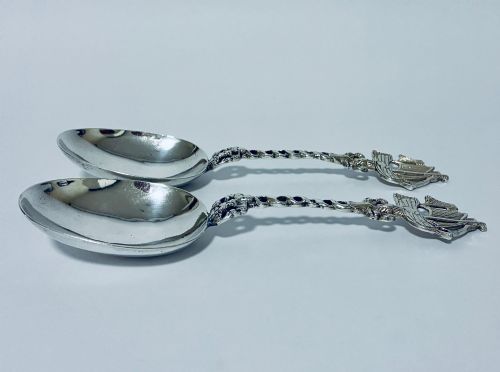
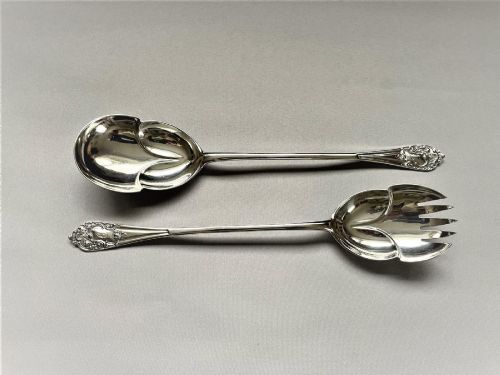
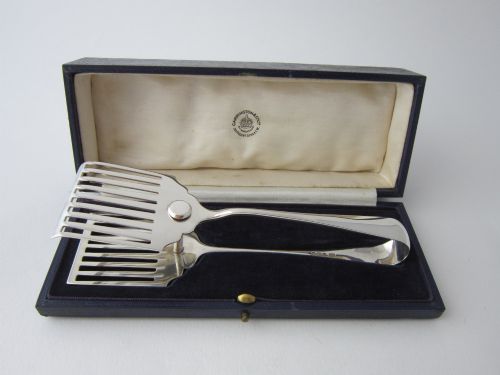
The selection on this page relies heavily on Georgian, Victorian, and Edwardian periods, alongside later twentieth-century Art Deco canteen sets. Pieces frequently appear as matched pairs of serving spoons, asparagus tongs, and fish slices carrying period family crests and hallmarks.
Materials and construction methods
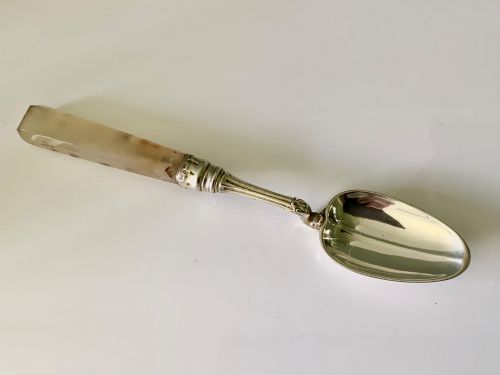
Silversmiths constructed these pieces primarily from sterling silver, Britannia standard silver, and silver plate, occasionally incorporating steel blades or handles made from agate, oak, velvet, and brass. Manufacturing techniques included hammering from ingots, casting, and hand-engraving crests and decorative borders.
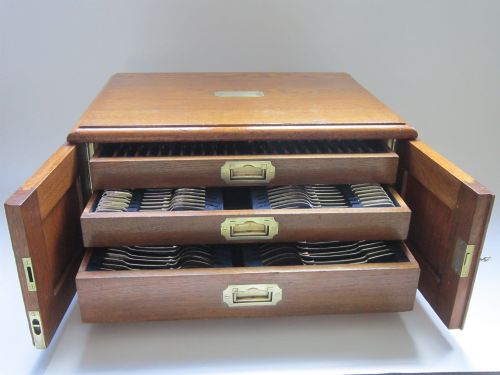
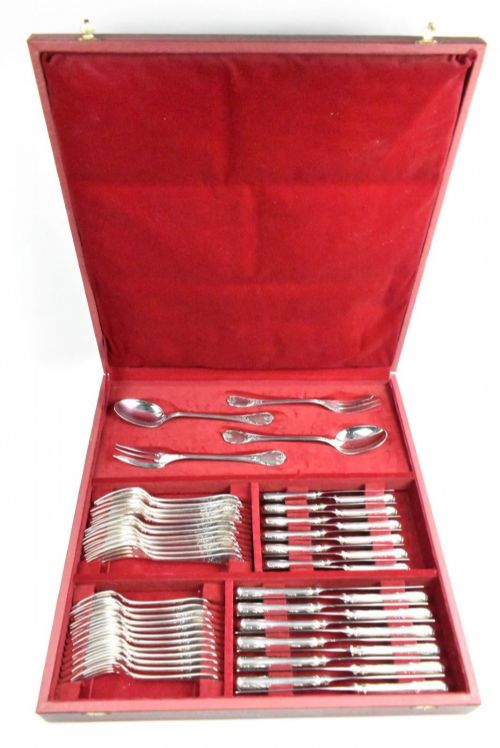
Maker marks, town marks, and date letters were punched directly into the metal to record the standard, assay office, and year of production. Canteens often combined the silver or plated utensils with fitted wooden cases lined in silk.
Listings feature periods spanning from the eighteenth century through the Georgian, Victorian, and Edwardian eras up to nineteen thirty.
Distinctions in quality and execution
Quality in these items rests upon the crispness of the original chasing, the legibility of the hallmarks, and the preservation of the maker's crest or monogram. Heavy gauge metal resists the thinning that occurs through centuries of polishing and daily use.
The retention of matching sets, original fitted boxes, and intact structural joins elevates specific pieces above standard domestic utility items. Early Britannia standard silver and pieces by known silversmiths demonstrate superior metallurgical purity and craftsmanship.
John Pittar·Andrew Archer·E Coker·William Scarlett·John Locker·John Wilks·Georg Jensen·John Smith·James Tait·Wilkes Booth
The Antique Silver Table Flatware Glossary
- Hallmark
- A series of official marks stamped onto precious metals to indicate the assay office, standard of purity, and year of manufacture.
- Basting spoon
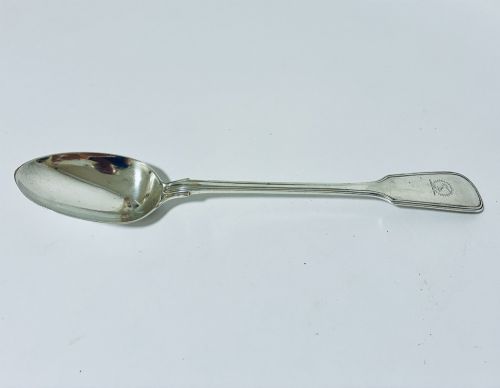
- A large utensil used originally for spooning juices over roasting meat, frequently featuring elongated stems.
- Rat tail
- A strengthening spine running down the back of a spoon bowl, characteristic of early eighteenth-century silver flatware.
- Fiddle pattern
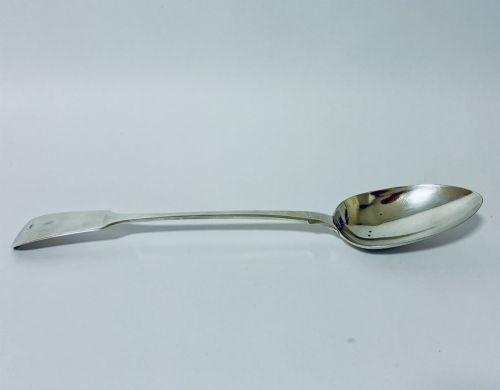
- A nineteenth-century flatware handle style featuring a broadened, shoulders-and-tang profile resembling a stringed instrument.
- Canteen
- A fitted box, chest, or case designed to hold a complete, organised set of cutlery and flatware.
Antique Silver Table Flatware: Frequently Asked Questions
How do I identify a Georgian silver spoon?
Examine the piece for clear hallmarks indicating London, Dublin, or regional assay offices active during the reigns of the Georges between seventeen fourteen and eighteen thirty.
Look also for period-specific styles like rat tails, Old English patterns, or engraved family crests typical of the eighteenth and early nineteenth centuries.
What is the difference between sterling and Britannia silver?
Sterling silver contains ninety-two point five percent pure silver, while Britannia standard silver contains a higher purity of ninety-five point eight percent.
Britannia standard metal appears primarily on pieces made during the early eighteenth century under specific legislative requirements.
How should I clean antique silver flatware?
Wash the silver gently in warm water with a mild, non-abrasive liquid soap and dry it thoroughly with a soft cloth.
Avoid harsh chemical dips that strip away the natural patina and can damage organic handle materials like agate or wood.
Can I use antique flatware for everyday dining?
Many solid silver and plated pieces remain entirely functional for modern dining provided they are washed by hand rather than placed in an automatic dishwasher.
Thinner nineteenth-century spoons and fork tines benefit from careful handling to preserve their original engraving and structural integrity.