

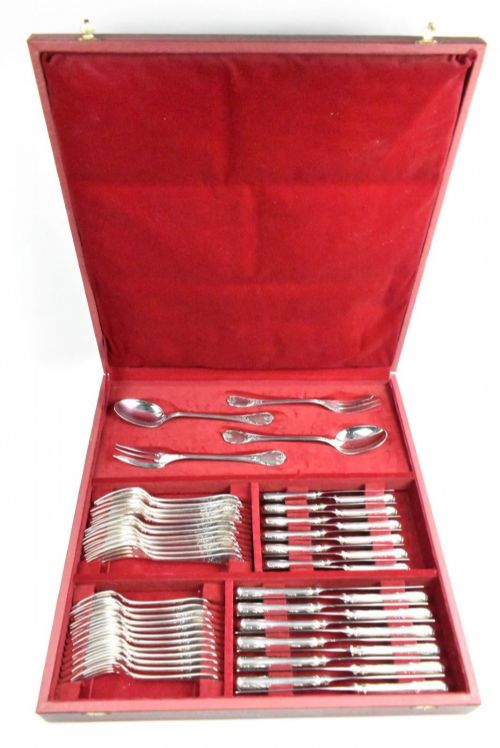


French Silver Cutlery
These french silver cutlery pieces bring continental elegance to the table, offering everything from large fitted canteens to singular servers.
French Silver Cutlery
When you search for french silver cutlery, you encounter a range of dining implements spanning the eighteenth, nineteenth and twentieth centuries. The selection encompasses comprehensive flatware sets alongside individual serving utensils such as fish slices, sardine servers and sauce ladles.
You are most likely to meet large silver-plated services from makers such as Christofle, alongside solid silver pieces bearing Parisian assay marks. Forms vary from rococo revival patterns to streamlined art deco designs and mid-century services.
The material composition ranges from solid standard silver and silver gilt to silver-plate, often accompanied by fitted wooden or fabric cases. Specialty items like horn serving sets and animal-shaped knife rests also appear within the tradition.
Assessing quality and craftsmanship
Quality rests upon the weight of the metal, the crispness of chased or pierced ornamentation, and the preservation of original fitted cases. Solid .950 silver pieces and heavy-gauge plated services demonstrate superior longevity compared to lighter wares.
The reputation of the maker, such as Christofle or Henri Soufflot, distinguishes standard production from exceptional artistry. Intricacy in decorative styles like rococo revival or the precision of art deco lines indicates the level of artisan skill.
Cast silver sheep and duck rests keep eighteenth and nineteenth century tablecloths free from sauce stains with absolute farmyard charm.
Christofle·Henri Soufflot·Souche-Lapparra
The French Silver Cutlery Glossary
- Silver Gilt
- Silver that has been coated with a thin layer of gold on its surface. This technique provides a rich decorative contrast and protects the underlying metal.
- Fish Slice
- A wide, often pierced server designed for portioning fish dishes. These pieces frequently feature intricate hand-pierced scrolling patterns.
- Sifter Spoon
- A spoon with a bowl perforated with holes, used for sprinkling sugar over food. They are commonly found in nineteenth-century dining services.
- Solid Silver
- Items constructed entirely from silver alloy rather than plated over a base metal. French pieces often utilise a high purity standard of .950.
- Knife Rest
- A small support placed on the table to keep cutlery elevated between courses. They take various forms, including animal shapes such as rams or ducks.
French Silver Cutlery: Frequently Asked Questions
How do I clean antique silver cutlery?
Use a soft cloth and a dedicated silver polish, avoiding harsh abrasive materials that can wear away thin plating or delicate details. Wash pieces by hand rather than placing them in a dishwasher.
Store items in anti-tarnish rolls or lined wooden cases when not in use to minimise exposure to air and moisture.
Are these sets safe for daily use?
Solid silver and robust silver-plated services can handle regular dining if washed promptly after use. Acidic foods should not be left sitting on the metal for extended periods.
For delicate nineteenth-century pieces with horn handles or fine piercing, reserve them for special occasions to preserve their condition.
What does .950 silver mean?
The mark indicates that the metal is ninety-five percent pure silver, which exceeds the standard sterling requirement. This higher purity was standard for fine French silver production.
You will often find this alongside small punch marks that indicate the specific Parisian or regional assay office of origin.
How do I date a set of cutlery?
Examine the style of decoration, such as rococo revival curves or art deco geometric lines, which point to specific eras. Maker stamps and assay marks provide further chronological clues.
Fitted cases and accompanying documentation can also help confirm the approximate decade of manufacture.