


Victorian Silver Serving Set
A victorian silver serving set brings dining room theatre to the table, combining heavy metalwork with practical service.
Victorian Silver Serving Set
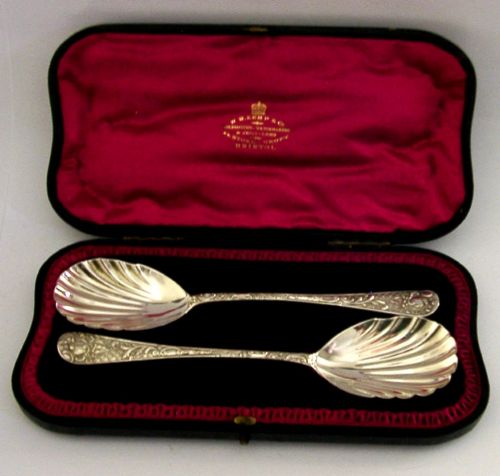
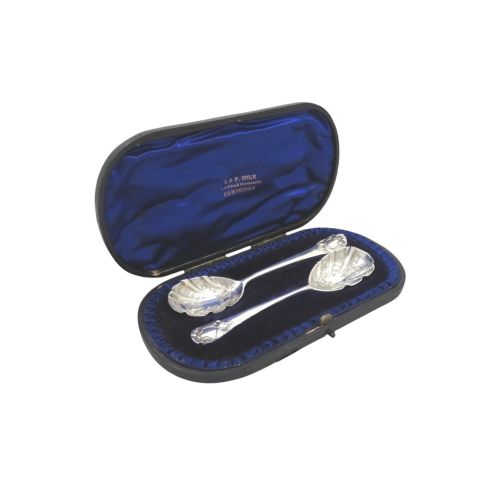
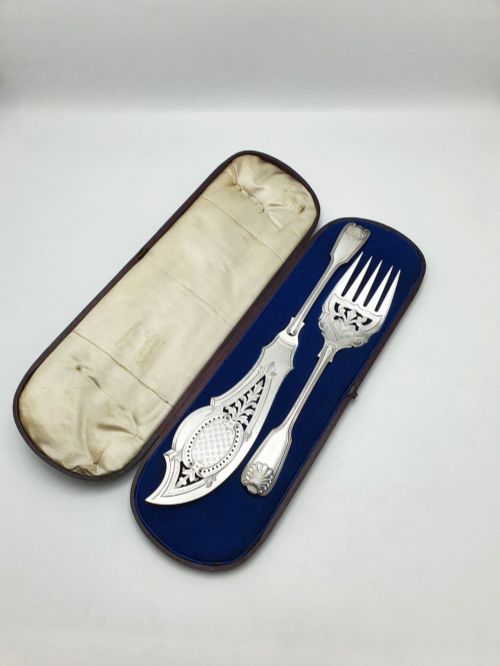
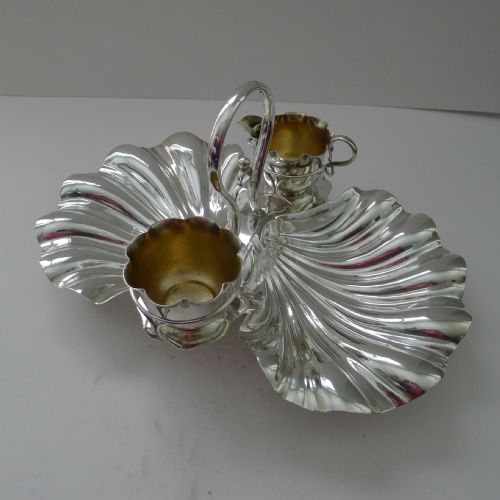
A victorian silver serving set encompasses specialised cutlery and hollowware designed for specific culinary tasks at the dining table. Buyers encounter cased sets intended for fish, fruit, jam, and cake, alongside larger canteens of cutlery and pairs of berry spoons.
The objects originate primarily from the nineteenth century, reflecting the elaborate social rituals of Victorian dining. Forms range from individual fish servers with pierced blades to complete salad bowls accompanied by matching silver utensils.
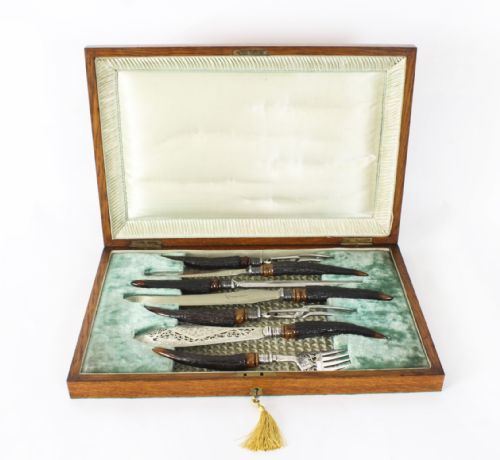
Most examples found on this page combine sterling silver or silver plate with organic elements such as antler horn, mother-of-pearl, or polished wood. These sets survive both in fitted presentation cases and as loose serving pieces.
Materials and construction methods
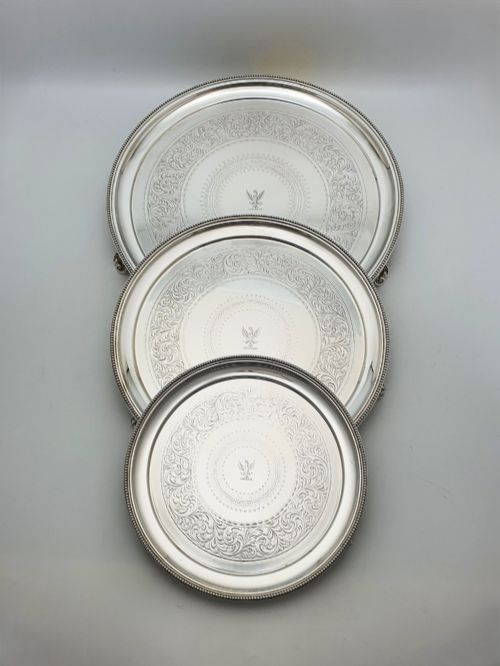
Silversmiths utilised sterling silver and silver plate over base metals, shaping components through casting, hammering, and rolling. Blades and bowls frequently received detailed hand engraving, chasing, or parcel-gilding to enhance the reflective surfaces.
Handles required distinct joinery, incorporating natural materials like stag antler, cow horn, ivory, and polished hardwoods secured with pins. Makers often paired these handles with fitted velvet, silk, or satin-lined presentation boxes to protect the metalwork.
Listings feature sterling silver and silver plate combined with wood, velvet, silk, satin, and stoneware.
Assessing quality in service pieces
The weight of the silver and the depth of the chased or engraved ornamentation dictate the foundational tier of the piece. Superior examples feature crisp, deep relief work on the bowls and blades rather than shallow machine stamping.
The integrity of the handle materials and the preservation of original fitted cases significantly influence the standing of a set. Matching elements across multi-piece service sets demonstrate higher initial investment and careful retention by past owners.
Elkington·Daniel Arter·Frank Butler·Hukin & Heath·Walter & John Barnard·Lee & Wigfull·A. J. Bailey
The Victorian Silver Serving Set Glossary
- Sterling silver
- A silver alloy containing 92.5 percent pure silver and 7.5 percent other metals, usually copper, ensuring structural durability for daily use.
- Silver plate
- A base metal substrate coated with a thin layer of pure silver, offering the visual appeal of solid silver at a lower production cost.
- Parcel-gilt
- A metal object where specific areas, such as the interior of spoon bowls, receive a thin coating of gold while the surrounding metal remains silver.
- Chasing
- A metalworking technique where the artisan pushes the metal from the front using punches to create raised decorative patterns without removing material.
- Antler horn
- A natural organic material derived from deer or stags, utilised by makers to form textured, durable handles for carving and fish serving sets.
Victorian Silver Serving Set: Frequently Asked Questions
What was a serving set used for?
Victorians employed these specialised sets for serving specific courses at formal meals, including fish, fruit, cake, and afternoon tea.
Each utensil matched the physical demands of the food, such as wide pierced blades for lifting delicate fish fillets or heavy tines for carving meat.
How do I care for silver serving pieces?
Proper maintenance involves washing the metal by hand in warm soapy water and drying it immediately with a soft cloth to prevent tarnishing.
Avoid submerging pieces with organic handles like horn, ivory, or wood in water to protect the natural material from splitting.
Are these sets safe to use today?
Most solid silver and silver-plated utensils remain fully functional for modern dining and entertaining occasions.
Careful inspection of the handle joints ensures the antique construction remains secure before serving food to guests.
Why do some sets come in fitted boxes?
Presentation boxes lined with velvet or satin protected delicate serving pieces from scratches and tarnish when stored between grand dinners.
Original fitted cases indicate that the set was purchased as a complete unit, often intended as a wedding or anniversary gift.