


Victorian Christening Set
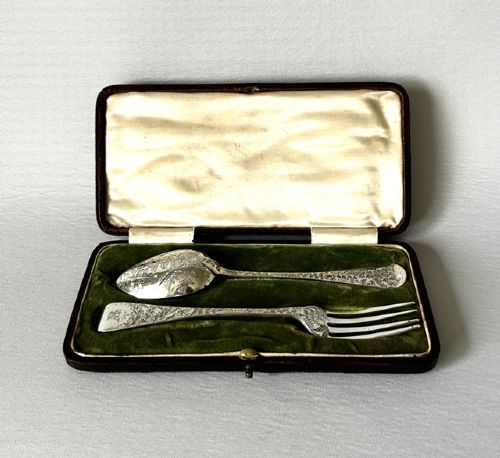
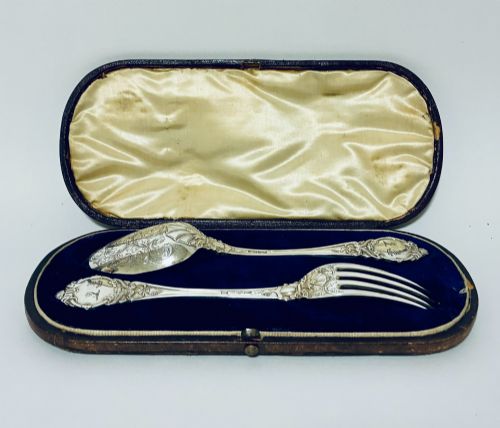
A victorian christening set brings together solid silver spoons, forks, and cups nestled inside fitted velvet and silk-lined presentation boxes.
Victorian Christening Set
When searching for a victorian christening set, a buyer typically encounters cased arrangements of silver spoons, forks, knives, and occasionally egg cups or napkin rings. These assemblies span the mid-nineteenth century through the early twentieth century, reflecting the gifting traditions of the period.
The most common formats on this page are three-piece or four-piece sterling silver sets housed in leatherette or wooden boxes. They frequently include hallmarks from major assay offices in London, Birmingham, and Sheffield, indicating exact years of manufacture.
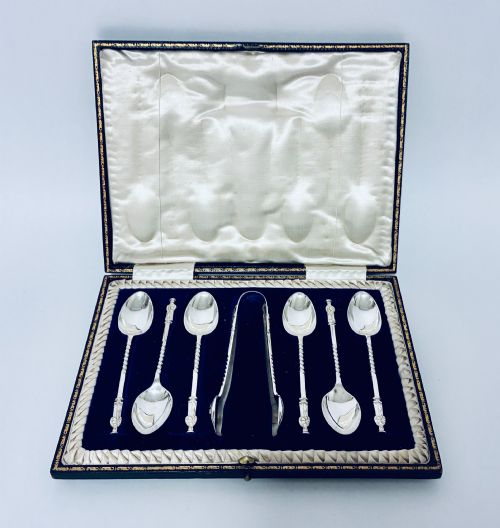
Some variants incorporate mother-of-pearl handles or gilt interiors, alongside specialised configurations like apostle spoons and tongs or travel-form cutlery sets. French Belle Epoque and Edwardian examples occasionally appear alongside core British Victorian items.
Materials and construction
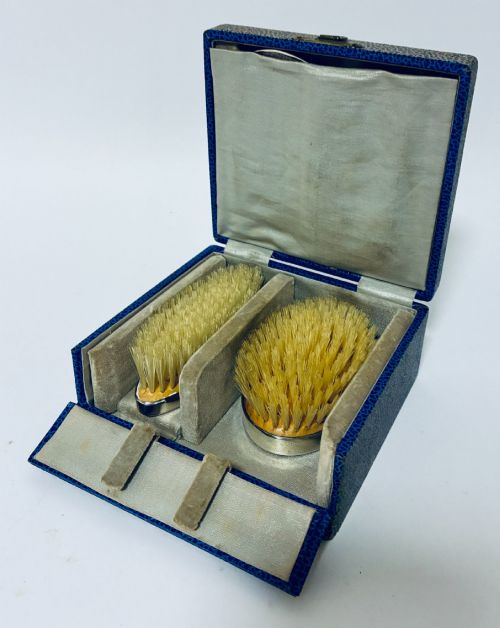
These items rely primarily on sterling silver and solid silver plate for the functional components, often paired with natural bristle, silk, velvet, and leather for the presentation cases. Metal elements undergo hammering, casting, and hand-engraving, while handles frequently utilise shaped mother-of-pearl.
Fitted boxes combine rigid leatherette or wood substrates with soft interior linings of silk and velvet to secure each utensil snugly. Silversmiths stamp punch marks directly into the metal to record hallmarking data, maker initials, and standard purity.
Recorded materials for this category include sterling silver, silk, velvet, leather, and mother-of-pearl across pieces dated from the mid-nineteenth to the early twentieth century.
Assessing quality in silver sets
The distinction between standard examples and the finest work rests on the weight of the silver and the depth of the hand-chased or engraved ornamentation. Maker attribution plays a significant role, with pieces produced by recognised workshops demonstrating superior finishing in every scroll and contour.
The condition and completeness of the original fitted case heavily influence the overall standard of a set. Well-preserved silk linings, intact exterior leather, and matching sets where every component shares a single maker and assay date represent the upper echelon of surviving pieces.
Walter and John Barnard·Thomas Harwood and Co·John Round·Colen Hewer Cheshire·George Unite·John Aldwinckle and Thomas Slater·Chawner and Co·Martin Hall and Co·Aaron Hadfield·Walker and Hall·Frederick Elkington·William Hutton
The Victorian Christening Set Glossary
- Hallmark
- A series of official marks stamped onto silver objects to guarantee metal purity, assay office origin, and year of manufacture. These symbols provide the primary method for dating individual pieces accurately.
- Gilt
- A thin layer of gold applied to the interior surface of silver cups or bowls through electroplating or mercury gilding. This technique protects the silver from tarnishing when in contact with food or liquids.
- Apostle spoon
- A decorative spoon featuring the figure of an apostle cast or engraved on the terminal of the handle. Such spoons frequently appear in matched sets alongside serving tongs.
- Leatherette
- A synthetic material embossed to imitate genuine leather, commonly used for the exterior covering of Victorian presentation boxes. It provides durable protection for the velvet and silk interior.
- Mother-of-pearl
- The iridescent inner layer of certain mollusc shells, shaped and polished to form smooth handle scales for forks and knives. Its natural lustre complements polished sterling silver.
Victorian Christening Set: Frequently Asked Questions
What is included in a typical set?
A standard Victorian christening set usually contains a silver fork and spoon, sometimes accompanied by a knife, napkin ring, or egg cup. These pieces are grouped together as a traditional gift for infants.
Most configurations arrive inside a custom-fitted presentation box lined with silk and velvet. The contents vary from simple two-piece cutlery combinations to extensive four-piece dining sets.
How do I read silver hallmarks?
Hallmarks consist of several small stamped symbols that reveal the assay office, the silver standard, and the exact year of production. A profile head or lion passant typically indicates solid sterling silver.
Additional stamps show the maker's initials and a date letter corresponding to specific municipal records. These marks confirm the authenticity and age of the cutlery.
Were these sets actually used?
Many sets served as commemorative display pieces rather than everyday tableware, which accounts for their high survival rate in pristine condition. Families preserved them as keepsakes rather than putting them into daily service.
When use did occur, it was usually reserved for special family meals or formal occasions. The soft wear patterns on certain spoons reflect occasional feeding use by children.
How should I store boxed silver?
Keep the presentation box in a stable environment away from direct sunlight and excessive humidity to protect the delicate silk and velvet linings. Consistent temperature prevents the leather and wood structures from warping.
Avoid wrapping silver in ordinary paper or rubber bands, which can cause tarnishing or chemical damage to the metal surface. Proper airflow inside a secure cabinet preserves both the case and the silver.