


Victorian Silver Salt Set
A victorian silver salt set brings nineteenth-century dining tables to life with miniature works of metalwork and glass.
Victorian Silver Salt Set
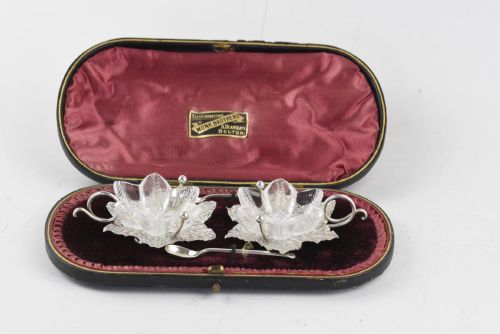
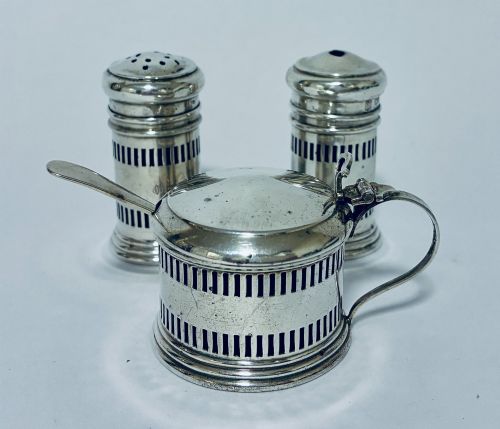
A victorian silver salt set comprises open salt cellars, covered mustard pots, pepperettes, and mustard spoons, often gathered into fitted presentation boxes or metal frames known as cruet stands. These table pieces reflect the structured dining customs of the nineteenth century, where individual condiments held a permanent place beside each setting or shared the centre of the board.
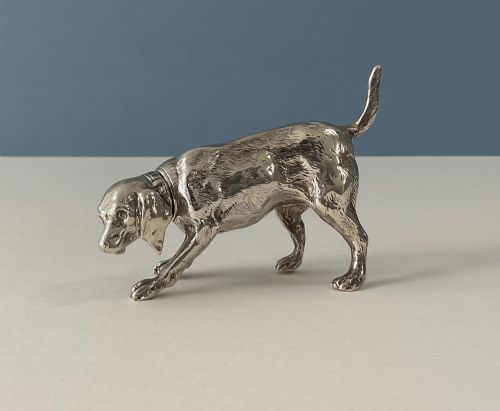
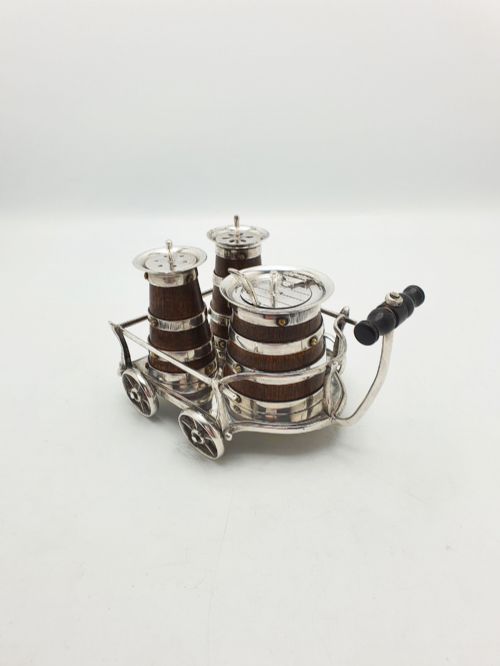
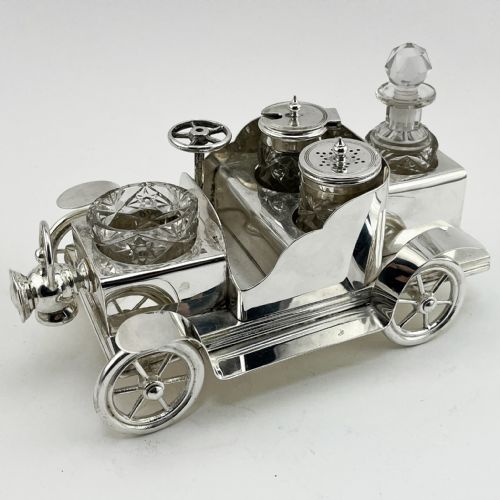
The configurations appearing here range from matched pairs of open salt cellars with spoons to complete four-piece or six-piece boxed sets, alongside multi-bottle cruet frames in silver plate. Alongside conventional cauldron, shell, and boat-shaped salt cellars, the selection frequently incorporates novelty forms modelled as animals, birds, barrels, and carriages.
Originating predominantly from the Victorian and Edwardian periods, alongside occasional Georgian precursors, these sets demonstrate the shift from grand multi-bottle frames to compact cased tablewares. Collectors encounter pieces stamped with British assay office marks from London, Birmingham, Sheffield, and Chester, linking domestic tablewares to major silversmithing hubs.
Materials and methods of construction
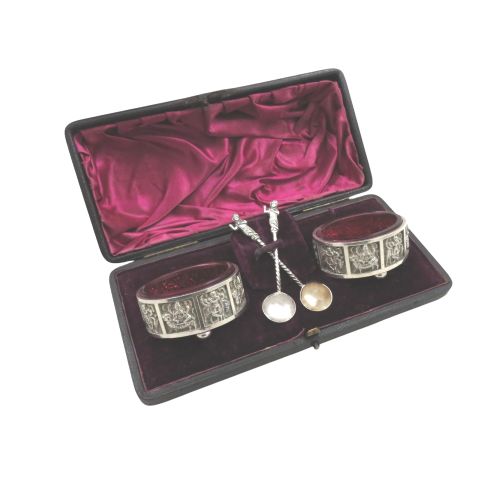
Makers constructed these sets primarily using sterling silver or durable silver plate over a base metal foundation, combining metalwork with blown or pressed glass components. Inserts such as cobalt glass liners, clear cut glass bottles, and coloured satin or velvet presentation case linings provided practical contrast and visual depth to the silver framework.
Techniques relied upon a combination of casting, chasing, piercing, and hand-engraving, particularly visible in detailed novelty forms shaped as birds, animals, and mythological figures. Glass liners were hand-blown or moulded to fit snugly inside pierced or solid silver bowls, while silver spoons were frequently shaped with matching naturalistic handles, shell bowls, or traditional King's pattern stems.
Dinners featured silver salt cellars shaped like Hindu deities, farmyard birds, and vintage cars.
Distinguishing quality across the range
Quality in a victorian silver salt set rests upon the crispness of the chasing, the weight and gauge of the sterling silver, and the survival of original matching components. Superior pieces exhibit hand-finished detailing on novelty animal and bird figures, clear hallmarks, and well-proportioned silver mounts that secure glass liners without excess solder.
The presence of the original fitted presentation case, matching hallmarked spoons, and undamaged coloured glass liners elevates a set above standard utilitarian examples. Mass-produced silver plated frames often show softer casting lines and wear to the underlying metal, contrasting with the sharp definition found on solid sterling silver workshops.
Walker & Hall·William Hutton & Sons·Thomas Smily·Sampson Mordan·James Dixon & Sons·Elkington
The Victorian Silver Salt Set Glossary
- Cruet set
- A fitted stand holding multiple bottles, jars, or shakers for condiments at the dining table. These frames frequently incorporate handles for ease of passing.
- Salt cellar
- An open vessel used to hold loose salt beside a dining plate, often elevated on three or four small feet. They commonly feature removable glass liners to protect the metal from corrosion.
- Pepperette
- A small shaker or pot designed for dispensing ground pepper, usually featuring a pierced dome top. Many examples take whimsical novelty shapes.
- Assay mark
- A stamped symbol indicating the purity of the metal, the assay office of origin, and the year of manufacture. British pieces display standard marks including the lion passant and date letters.
- Novelty salt
- A condiment container shaped to resemble an animal, vehicle, or everyday object rather than a traditional vessel. These pieces were highly popular during the late nineteenth century.
Victorian Silver Salt Set: Frequently Asked Questions
How were salt cellars used on Victorian tables?
Dinners of the period relied on open salt cellars placed beside each place setting rather than individual shakers. Guests used miniature salt spoons or pinches to take salt from the open bowl.
Larger master salts sat at intervals along the table for sharing. These vessels required glass liners to prevent the salt from corroding the silver over time.
Are glass liners original to the salts?
Original glass liners fit flush into the silver bowl and match the period of manufacture in colour and wear. Cobalt blue and clear cut glass were standard choices for Victorian silversmiths.
Replacements are common due to breakage, but correct vintage liners preserve the integrity of a set. Collectors look for minor bubbles and manufacturing irregularities that confirm age.
How do I read silver hallmarks?
British hallmarks stamped on the base or rim reveal the maker's mark, the city of assay, and the year of testing. Standard symbols include a lion for sterling silver and specific town marks like the leopard head for London.
Matching marks across the spoons, liners, and frames confirm that a set started its life together. Partial or rubbed marks remain common on small condiment pieces due to polishing.
What is a novelty cruet set?
Novelty cruets and salt sets take the form of animals, birds, vehicles, or household items while retaining their functional purpose. Makers modelled these pieces as chicks, dogs, boats, and barrels with removable heads or lids.
Victorian diners appreciated these humorous touches on formal tables. Today, these inventive designs are among the most sought-after categories for collectors.