


Victorian Silver Milk Jug
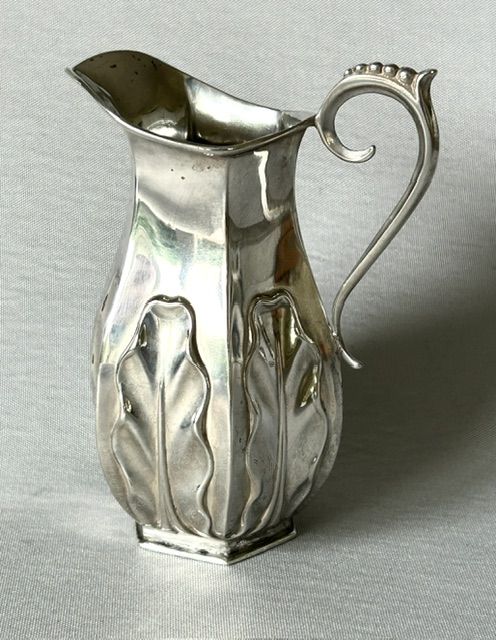
These Victorian silver milk jugs bring weight and domestic history to the tea table, ranging from plain pedestal forms to heavily chased naturalist designs.
Victorian Silver Milk Jug
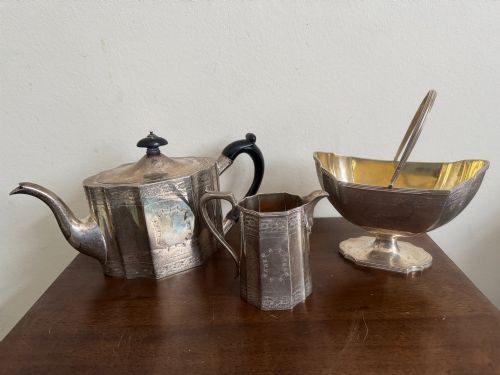
A victorian silver milk jug takes several distinct forms on this page, spanning small cream jugs, larger milk pitchers, and pieces belonging to complete tea and coffee sets. Most examples originate from the nineteenth century, including specific dates across the decades alongside later Victorian and Edwardian items.
Makers shaped these vessels as pedestal jugs, sparrow beak creamers, and spiral fluted designs, occasionally incorporating figural tavern scenes, animal embossing, or zodiac motifs. Buyers also encounter silver plated and electroplated nickel silver versions alongside solid sterling silver pieces.
Materials and construction
Silversmiths constructed these vessels primarily in solid sterling silver or silver plate, utilising techniques such as hand-engraving, ornate chasing, and embossing to decorate the surfaces. Workshops added supplementary elements including gold gilding, ebony handles, woven cane grips, and interior gilt finishes.
London, Birmingham, Glasgow, and Chester assay offices hallmarked many of the solid silver items, recording the precise year of creation. Plated alternatives provided an accessible option using electroplated nickel silver as a base material.
Listings feature sterling silver and silver plate pieces incorporating ebony, cane handles, and gold gilding across the Victorian and Edwardian periods.
Distinctions in quality
Quality rests in the crispness of the hand-chased or embossed ornamentation and the structural integrity of handles and spouts. Superior vessels demonstrate careful proportion, particularly in pedestal forms and figural scenes where detail remains sharp.
The weight of the solid silver and the clarity of the town marks, date letters, and maker stamps also separate standard items from superior works produced by notable silversmiths.
JOHN RAWLINGS·George Fox·ROBERT HENNEL·HENRY HOLLAND·Hamilton Crichton And Co·Thomas Smily·Rait
The Victorian Silver Milk Jug Glossary
- Sterling silver
- A silver alloy containing ninety-two point five percent pure silver by mass, with the remainder composed of copper or other metals. This standard dominated British silversmithing throughout the period.
- Hallmark
- An official mark stamped onto precious metal items to guarantee purity and origin. These symbols typically include the maker's mark, assay office, standard mark, and date letter.
- Chasing
- A metalworking technique where the silversmith depresses the metal from the front using punches and hammers to create a raised design. It provides texture and depth without removing material.
- Sparrow beak
- A term describing a small, pointed jug spout resembling a bird's beak. This profile appears frequently on eighteenth-century and revival cream jugs.
- Pedestal jug
- A vessel raised on a footed base or stem. This form lifts the body of the jug above the table surface.
Victorian Silver Milk Jug: Frequently Asked Questions
What is the difference between a milk jug and a cream jug?
In nineteenth-century usage, the terms often overlapped for vessels serving dairy at the tea table. Cream jugs tended to be smaller capacity pieces, while milk jugs or pitchers accommodated larger gatherings.
Both forms appear across tea and coffee sets or as individual table items in matching silver and silver-plated options.
How do I read the hallmarks on a Victorian jug?
British hallmarks typically show a leopard head or other town mark, a lion passant indicating sterling standard, and a sequential letter representing the year of assay. A maker's mark consisting of initials identifies the workshop.
Comparing these stamps against official registry tables reveals the exact city and decade of manufacture.
Can I use an antique silver jug daily?
Solid silver milk jugs remain functional objects suitable for regular table use provided they receive gentle hand washing. Avoid harsh abrasives or dishwasher cycles to preserve the original surface and any interior gilding.
Silver-plated examples require similar care to protect the underlying metal layer from excessive wear.
Why do some jugs have gilt interiors?
Silversmiths applied a thin layer of gold wash, known as gilt, to the inside of silver cream and milk jugs to prevent dairy acids from tarnishing the silver. This protective finish created a warm contrast against the polished exterior.
Many surviving nineteenth-century examples retain traces of this original gilding inside the bowl.