


Victorian Tea Service Jug
These victorian tea service jug pieces are essential table accessories for pouring cream or milk during formal tea, combining period craftsmanship with practical domestic charm.
Victorian Tea Service Jug
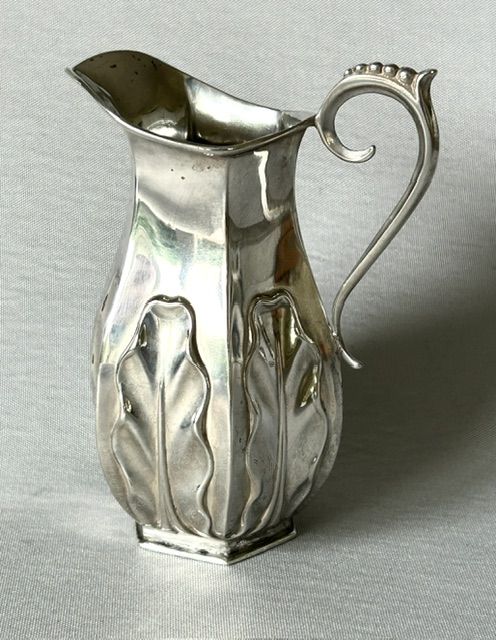
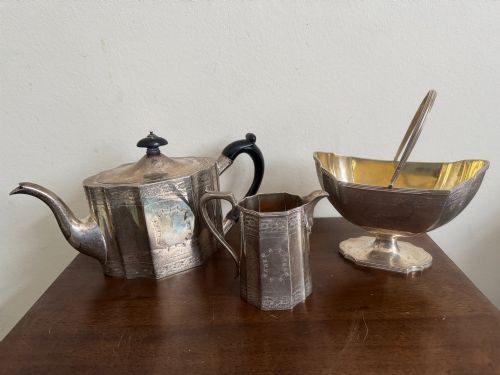
A victorian tea service jug is a dedicated vessel designed for serving cream or milk alongside tea, frequently appearing as an individual piece or as part of a larger matching set. The most common forms on this page are sterling silver and silver plated cream jugs, often accompanied by sugar bowls or complete tea sets spanning the nineteenth century.
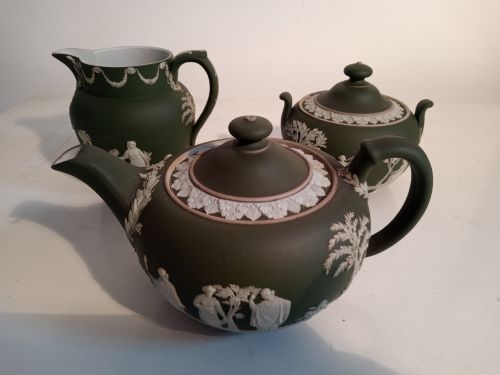
Makers produced these jugs in various configurations, ranging from pedestal forms and naturalist designs to larger hot water pots and spirit kettles. While some survive as single items bearing hallmarks from London or Glasgow, others belong to multi piece tea services made by notable potteries and silversmiths.
Materials and methods of construction
Silversmiths utilised sterling silver and electroplated nickel silver, shaping the metal through hammering, casting, and repousse work to create ornate decorative surfaces. These metal pieces often carry detailed hallmarks denoting the assay office, date letter, and maker.
Ceramic examples employ stoneware, ironstone china, and porcelain bodies, decorated with enamel, gold leaf, and hand painted motifs like Kakiemon patterns. Potters fired these wares at high temperatures to achieve durable finishes suitable for daily dining.
Listings feature items spanning the Victorian, Edwardian, and nineteenth century periods, utilising materials from sterling silver and stoneware to gold leaf.
Distinctions in quality and execution
Quality rests upon the crispness of the chasing, the weight and balance of the metal, and the clarity of hallmarks on silver pieces. Superior examples display deliberate hand engraving and well cast handles that integrate smoothly into the body of the jug.
In ceramic versions, quality shows in the precision of the enamel painting, the stability of the glaze, and the fineness of the porcelain body. Pieces bearing identifiable factory marks or silversmith stamps command attention for their documented heritage.
John Rawlings·George Fox
The Victorian Tea Service Jug Glossary
- Sterling silver
- An alloy containing ninety-two point five percent silver by mass, highly prized for its durability and bright lustre in Victorian tableware.
- Silver plate
- A base metal, such as nickel silver, coated with a thin layer of pure silver using electroplating techniques developed during the nineteenth century.
- Pedestal
- A raised foot or base supporting the body of a jug, lifting the vessel above the table surface for an elegant profile.
- Hallmark
- An official stamp applied by an assay office to precious metals, indicating purity, origin year, and maker identity.
- Ironstone china
- A patented type of heavy earthenware developed for durability, bridging the gap between fine porcelain and sturdy pottery.
Victorian Tea Service Jug: Frequently Asked Questions
What is a victorian tea service jug used for?
These jugs served to hold and pour milk or cream during formal afternoon tea gatherings in nineteenth century households.
They functioned both as practical tableware containers and as decorative items meant to complement matching teapots and sugar basins.
How do I clean an antique silver jug?
Clean sterling silver and silver plated items gently using a soft cloth and a specialised silver polish formulated to remove tarnish without scratching the metal.
Avoid harsh abrasives or soaking pieces in chemical dips, as these methods can damage delicate engravings and antique patinas.
How can I date a silver tea jug?
Examine the stamped hallmarks on the base or rim, which typically include a city mark, a standard mark, and a specific date letter corresponding to the assay office records.
Stylistic cues such as neoclassical shapes, naturalist motifs, or Victorian revival patterns also help narrow down the decade of production.
Can I use these jugs daily?
Silver and ceramic jugs remain structurally functional for serving beverages, provided they receive careful handling and hand washing rather than machine cleaning.
Many collectors prefer to use them occasionally for special dining occasions to preserve their condition and historical surface finish.