
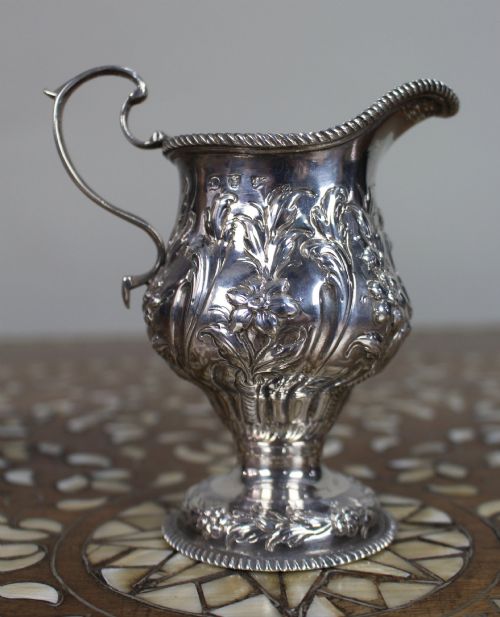
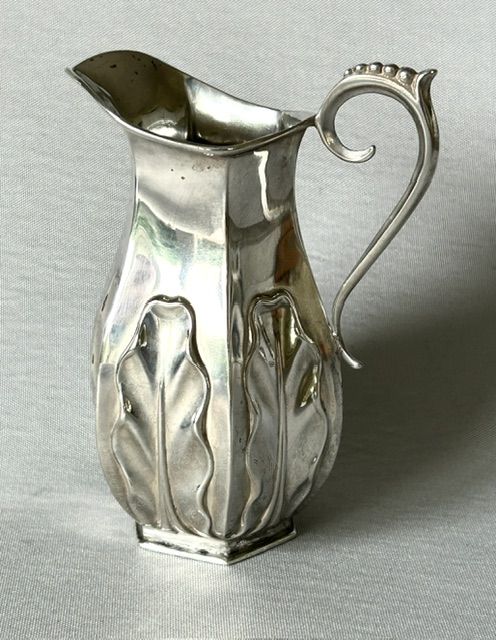


Repousse Silver Creamer
A repousse silver creamer brings tactile, chased ornamentation to the tea table, offering substantial weight and historic craft that collectors prize.
Repousse Silver Creamer
A repousse silver creamer is a small pouring vessel designed for milk or cream, distinguished by ornamental metalwork hammered from the reverse side to create raised relief designs on the outer surface. When you search for a repousse silver creamer, you encounter small jugs and pitchers originating from various periods including Georgian, Victorian, Edwardian, and later makers.
The pieces listed here span centuries of design, ranging from 18th century Georgian examples to late Victorian and Edwardian interpretations, alongside items produced around nineteen hundred. Forms vary from simple utilitarian cream jugs to elaborate Chinese export dragon jugs featuring bamboo handles and detailed surface ornamentation.
Victorian and Georgian examples dominate the selection, often showcasing revival styles such as Rococo curves or naturalistic motifs involving foliage and floral relief work. Alongside solid sterling silver, some offerings include silver plate or electroplated nickel silver, reflecting the diverse methods used to produce these table accessories across different eras.
Materials and methods of construction
Makers fashioned these vessels primarily from sterling silver or standard silver, utilising metal sheets shaped by raising or hammering over stakes to form the body of the jug. Handles were often cast separately and soldered securely to the main body, while specialised components like bamboo handles appear on specific regional imports such as Chinese export pieces.
The defining characteristic is the repousse technique, executed by hammering the reverse of the metal to push designs outward, frequently combined with chasing where tools refine the details from the front. Additional finishing touches sometimes included interior gilding, adding a contrasting golden layer inside the silver bowl to protect against acidic contents.
Materials represented include sterling silver, silver plate, electroplated nickel silver, and occasional interior gilt finishes.
Distinctions in craftsmanship and design
Quality in a repousse silver creamer rests upon the crispness and depth of the hammered relief work, where skilled hands achieved sharply defined motifs without thinning the metal wall excessively. Superior pieces display harmonious proportions between the spout, handle, and body, maintaining structural integrity alongside ornamental abundance.
The clarity of hallmarks and the weight of the silver further differentiate examples, reflecting the original workshop standards and the amount of precious metal employed. Finer creations exhibit careful smoothing and finishing of seams and soldered joints, whereas simpler items show more standardised commercial production methods.
Luen Hing
The Repousse Silver Creamer Glossary
- Repousse
- A metalworking technique where the artisan hammers the reverse side of a sheet of silver to form a raised design in relief on the front. This method allows for intricate floral, scroll, or figurative ornamentation.
- Chasing
- A complementary technique performed on the front side of the metal after repousse work, using punches to push back areas and sharpen surface details. It refines the texture and adds depth to the raised pattern.
- Hallmark
- An official stamp or series of marks applied to precious metals indicating the standard of purity, the maker or sponsor, and the year of assay. These marks provide definitive clues to an item's origin and age.
- Sterling silver
- An alloy of silver containing ninety-two point five percent silver by mass and seven point five percent other metals, usually copper. This standard composition balances durability with the lustrous appearance required for tableware.
- Gilt
- A thin layer of gold applied to the interior surface of a silver vessel, often used on cream jugs to prevent discoloration from dairy contents. It provides a striking visual contrast to the polished exterior.
Repousse Silver Creamer: Frequently Asked Questions
What is a repousse silver creamer?
A repousse silver creamer is a small jug used for serving milk or cream, featuring ornamental designs hammered into raised relief from the reverse side of the metal. These vessels were essential components of tea and coffee service sets.
They combine practical function with decorative artistry, showcasing the prevalent design styles of their respective periods, from Georgian elegance to Victorian elaboration.
How do I date an antique silver jug?
Dating an antique silver jug relies primarily on examining the hallmarks stamped into the metal, which indicate the assay office, date letter, and maker's mark. Style, form, and manufacturing techniques also offer strong contextual clues regarding the era of production.
For instance, Rococo revival motifs and heavy embossing are typical of Victorian manufacturing, while earlier Georgian pieces often display simpler, cleaner lines or distinct neoclassical forms.
How should I clean silver creamers?
Cleaning antique silver requires gentle handling using specialised silver polish and soft cloths to maintain the finish without wearing down the delicate high points of the repousse work. Abrasive cleaners and harsh scrubbing must be avoided to protect the chased details and any interior gilding.
Regular, careful dusting and minimal polishing preserve the natural patina that develops over decades of existence.