


Victorian Silver Condiment Bowls
Victorian silver condiment bowls are small table vessels for salt, jam, and sugar that bring refined nineteenth-century craftsmanship to the modern dining table.
Victorian Silver Condiment Bowls
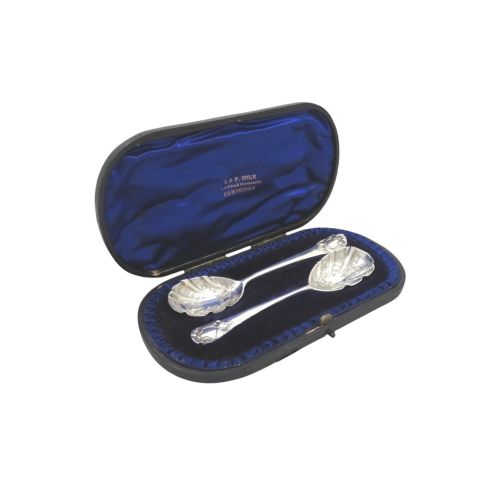
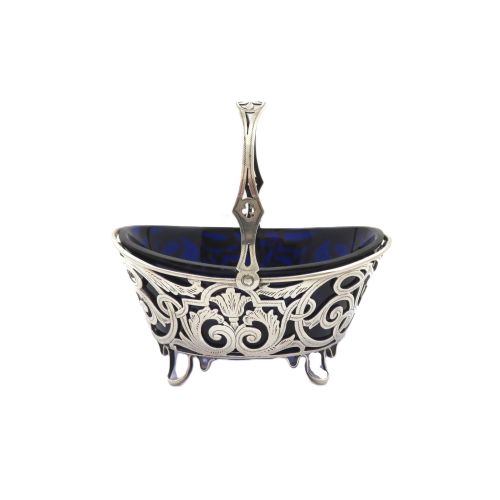
Victorian silver condiment bowls encompass a varied group of tableware including open salt cellars, preserve dishes, sugar baskets, and sweetmeat bowls. These pieces served functional roles on the dining table for holding seasonings, preserves, and sweeteners during formal meals.
The selections on this page span the Victorian and Edwardian eras, alongside related nineteenth-century examples and occasional Georgian pieces. Forms range from simple cauldron salts and lobed salt cellars to elaborate animal-themed designs shaped like swans, squirrels, and eagles.
Many examples are paired with coloured glass liners in cobalt blue, cranberry, or vaseline glass, held within pierced or solid silver frames. Other pieces take the form of complete strawberry sets complete with matching sugar bowls, cream jugs, and spoons.
Materials and construction
Makers utilised sterling silver and silver plate as the primary structural metals, often adding a gold wash known as vermeil to the interior of salt bowls to protect the metal from corrosive contents. Glass liners were blown and shaped to fit specific metal frames, utilising striking hues of cobalt blue and cranberry glass.
Techniques such as piercing, casting, and repoussé shaped the silver bodies into lobed bowls, baskets, and figural animal forms. Many open salts featured fitted interiors lined with materials like velvet and silk, or were accompanied by matching sterling silver spoons.
Dining tables of the era featured miniature silver squirrels and swans doubling as salt dishes, ready to hold seasonings with unwavering determination.
Craftsmanship and distinction
Quality rests upon the crispness of casting and the refinement of detail in figural or pierced work. Pieces shaped as animals or executed with intricate botanical motifs display superior sculptural ambition compared to plain utilitarian forms.
The presence of original matching components, such as blown glass liners that fit precisely and authentic matching spoons, elevates an example. Superior silver work involves heavier gauge metal and clear hallmarks that record the maker and assay office.
Roberts and Belk·George Fox·Vale Brothers and Sermon
The Victorian Silver Condiment Bowls Glossary
- Sterling silver
- A silver alloy containing 92.5 percent pure silver by mass, standard for quality British tableware. This material forms the body of many Victorian salts and baskets.
- Silver plate
- A base metal coated with a thin layer of silver, frequently utilised for larger serving dishes and decorative tableware. This technique allowed elaborate designs to be produced at a lower cost.
- Vermeil
- Sterling silver plated with a thin layer of gold on the interior surfaces. This finish protected the silver from the corrosive effects of salt and preserves.
- Cobalt glass
- A deep blue glass coloured by the addition of cobalt oxide, commonly used for the removable liners of open salt cellars. It provides a sharp visual contrast against polished silver frames.
- Cranberry glass
- A rich pinkish-red glass created by adding gold chloride to the molten batch, popular for preserve dishes and jam bowls during the late nineteenth century.
- Cauldron salt
- A small, round salt cellar shaped like a cooking pot, typically standing on three short feet. This traditional form was widely produced in sets for Victorian dining.
Victorian Silver Condiment Bowls: Frequently Asked Questions
How were salt cellars used on the Victorian table?
Open salt cellars sat upon the dining table to hold dry salt for individual guests, who used a small salt spoon or their fingers to season their food.
Unlike modern shakers, these open bowls required fitted glass liners to prevent the salt from corroding the metal body over time.
What is the difference between a salt cellar and a sugar basket?
Salt cellars are small vessels designed to hold seasoning and are frequently found in pairs or matched sets of four.
Sugar baskets are larger, deeper receptacles equipped with a swing handle, intended for serving loose sugar at tea or breakfast tables.
Why do some condiment bowls have coloured glass inserts?
Coloured glass liners in shades of cobalt blue, cranberry, or vaseline glass protected the silver from direct contact with acidic contents like fruit preserves and salt.
These removable inserts also added vibrant colour to the table setting while making the vessels easier to clean after use.
How do I identify a Victorian piece from an Edwardian one?
Victorian pieces date from the reign of Queen Victoria and often feature heavier, more ornate ornamentation reflecting historical revival styles. Edwardian items, made during the reign of King Edward VII, frequently exhibit lighter proportions and cleaner lines influenced by the Arts and Crafts movement.
Assay office marks and date letters stamped into the silver provide precise verification of the year of manufacture.