




Victorian Silver Card Box
A victorian silver card box is a refined desk accessory or pocket piece designed for social correspondence, carrying the crisp hallmarks and decorative weight of the nineteenth century.
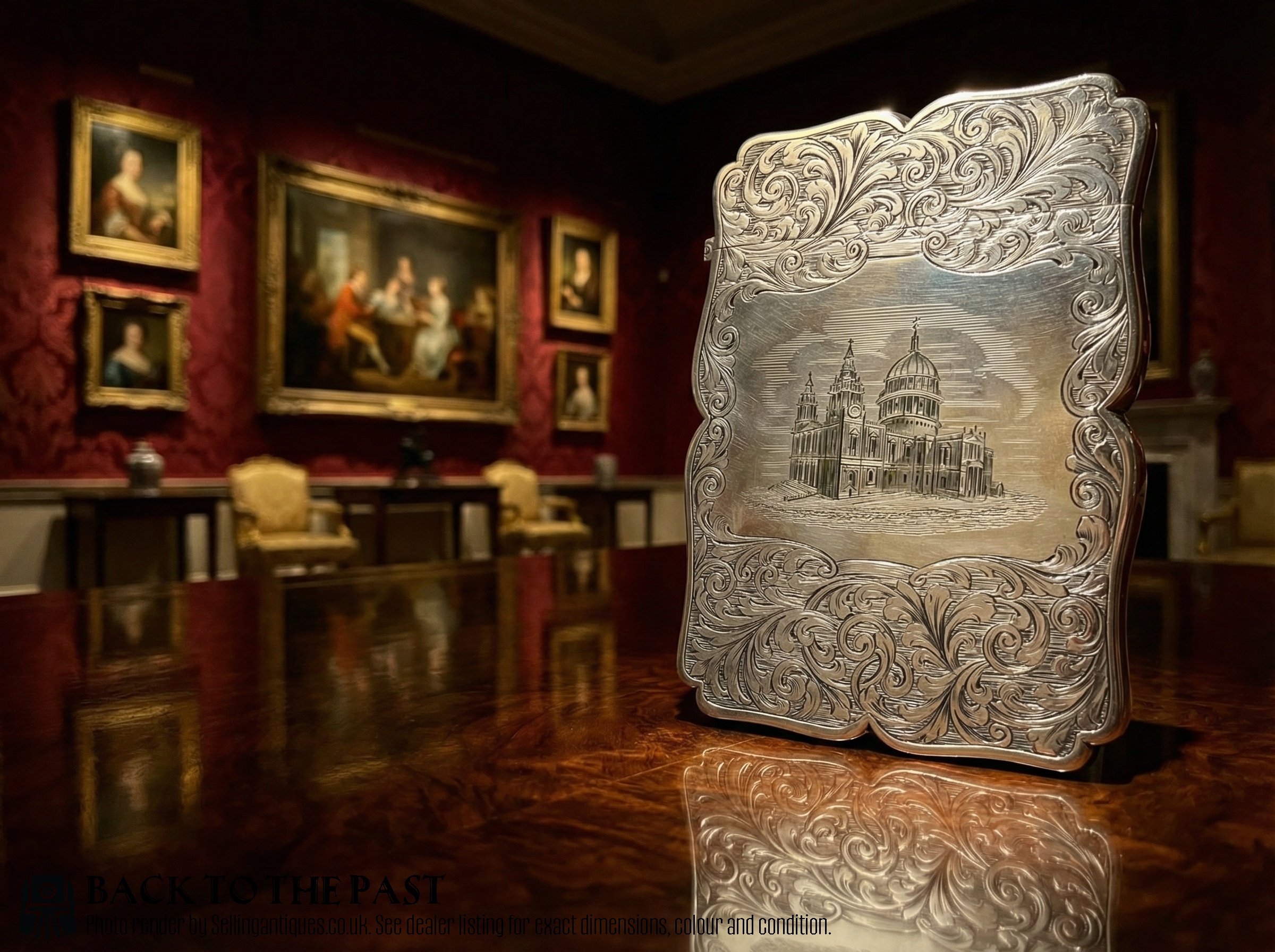
Victorian Silver Card Box
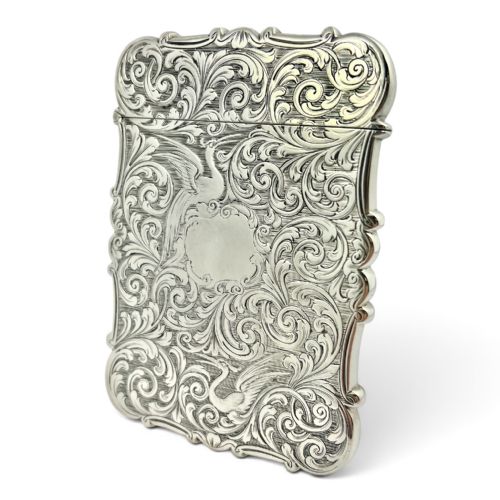
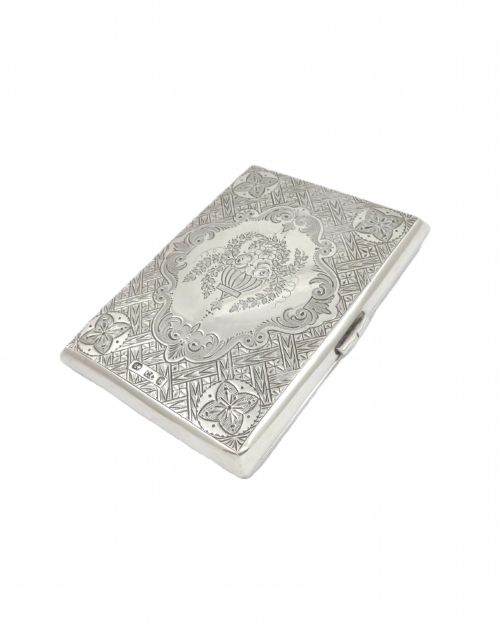
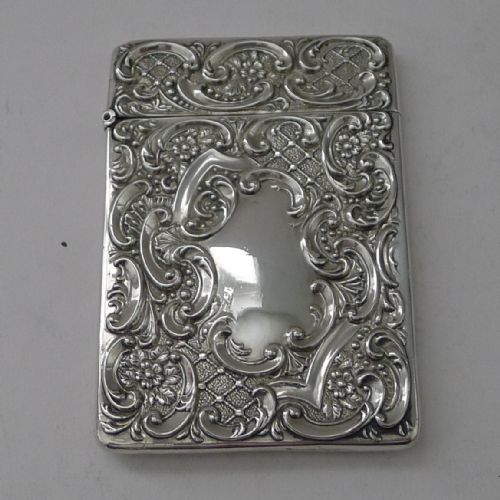
A victorian silver card box encompasses small rectangular containers, folding card cases, aide-memoires, and dedicated playing card or patience boxes intended for calling cards and parlour games. The pieces on this page span the Victorian and Edwardian eras, reaching back to mid-century forms alongside occasional Anglo-Indian and continental variants.
Most examples take the form of slim slip-cases or hinged boxes designed to protect heavy paper cards from bending in transit or on the drawing room table. Makers utilised internal compartments and velvet or gilt linings to keep delicate pasteboard immaculate.
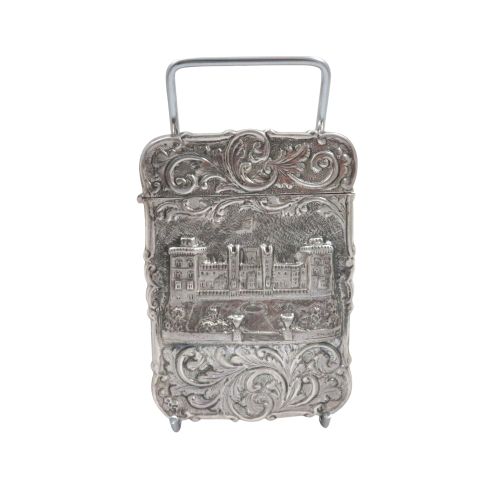
The assortment includes specialised boxes for patience, whist, and cribbage alongside flat calling card cases and decorative desk pieces. Buyers frequently encounter castle top engravings depicting landmarks such as Windsor Castle and St Paul's Cathedral.
Materials and Construction
Silversmiths constructed these boxes primarily in sterling silver, employing sheet metal formed over wooden or metallic frames, and finished them with hinged lids and secure clasps. Repoussé and chased decoration provided high-relief scenes of deities, animals, and architectural vistas.
Many items incorporate contrasting organic panels of tortoiseshell, mother of pearl, bone, and glass alongside engraved paper components. Hallmarks stamped directly into the silver reveal city assay offices such as Birmingham, London, and Chester alongside specific production dates.
Victorian Silver Card Box Retail Price Guide 2026
Typical asking prices for victorian silver card box among the pieces listed under this phrase on Sellingantiques today, from the lower quarter to the upper quarter. They describe what is for sale here now, not the wider market.
Listings feature sterling silver alongside organic materials such as tortoiseshell, mother of pearl, bone, and glass across Victorian and Edwardian periods.
Markers of Distinction
Quality rests heavily on the crispness of the chasing and the architectural precision of castle top scenes, where sharper detail on landmark buildings separates master silversmiths from standard production workshops. The depth of repoussé work and the integrity of applied crests or engraved monograms dictate visual weight.
The choice of secondary materials influences overall execution, particularly where tortoiseshell or mother of pearl tiles meet flush with the silver mounts without gaps. Smooth hinge action and well-preserved gilt interiors demonstrate superior original craftsmanship.
Nathaniel Mills·George Unite·Sampson Mordan·Samuel Jacob·Nathan & Hayes
The Victorian Silver Card Box Glossary
- Castle top
- A style of silver box lid featuring high-relief engravings of famous buildings, country houses, or cathedrals. These architectural scenes are characteristic of mid-nineteenth century manufacturing.
- Repoussé
- A metalworking technique where the silversmith hammers the design from the reverse side to form raised relief on the front. This method creates tactile ornamentation on panels and borders.
- Aide-memoire
- A small pocket notebook or card case fitted with internal paper leaves and a tiny pencil for recording social engagements. They combine silver covers with functional inner stationery.
- Patience box
- A small lidded container specifically built to hold miniature playing cards used for solo card games. They often retain their original printed paper cards inside the silver housing.
- Gilt interior
- A thin layer of gold applied to the inside surface of a silver box to prevent tarnishing from handling cards. This treatment adds a warm metallic contrast when the lid is lifted.
Victorian Silver Card Box: Frequently Asked Questions
How were playing card boxes used?
Playing card boxes sat on parlour tables to hold standard or miniature cards for evening games such as whist, cribbage, and patience.
Their sturdy silver walls protected the paper decks from moisture and wear between social gatherings.
What is the difference between a case and a box?
A card case is typically a flat, slim receptacle designed to be carried in a pocket or reticule for calling cards.
A card box is a deeper, rigid container intended to sit permanently on a desk or table to store larger quantities of cards.
How do I read silver hallmarks?
British hallmarks stamped on the metal indicate the assay office, the standard of silver purity, and a date letter corresponding to the year of manufacture.
Additional duty marks and maker's initials help trace the exact workshop responsible for the piece.