
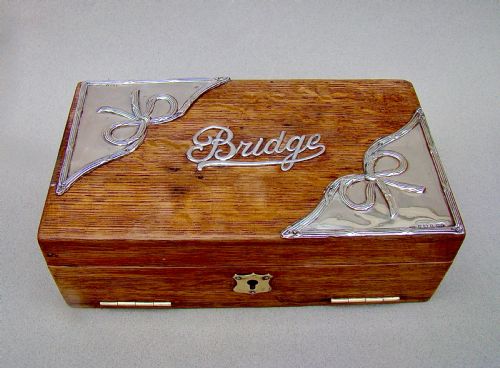


Silver Games Box
A silver games box brings refined leisure to a table, offering fitted storage for cards, counters or cribbage.
Silver Games Box
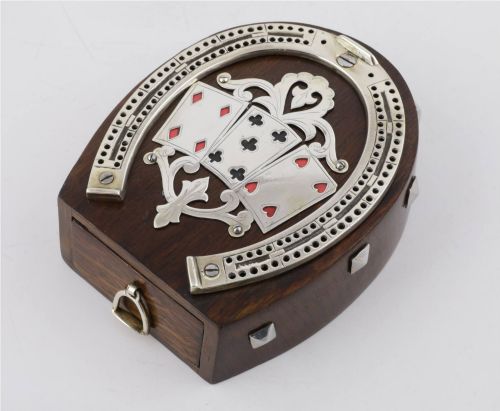
A silver games box brings together fitted containers for playing cards, bridge, patience, cribbage, and poker alongside distinct compartments for gaming pieces.
The selections span Victorian and Edwardian pieces, stretching from the late nineteenth century through Art Deco designs and mid-century Italian work.
Most examples combine sterling silver mounts, silver plate, or solid silver casing with substantial oak, walnut, amboyna, burr walnut, and leather bodies.
Materials and construction
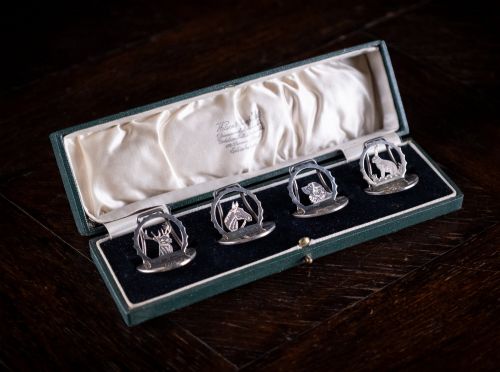
Silversmiths shaped heavy sterling silver or silver plate into hinged lids, corner mounts, shields, and interior trays, frequently hallmarked for specific assay offices and years.
Cabinetmakers constructed the underlying carcasses from blonde oak, walnut, amboyna, and burr walnut, often pairing the timber with tooled leather or cut glass interiors.
Listings feature Edwardian, Victorian, and Art Deco styles, employing sterling silver, silver plate, oak, walnut, amboyna, cut glass, and leather.
Distinctions in craftsmanship
Quality rests in the weight of the silver mounts and the precision of the interior fittings designed to hold cards, markers, and decanters securely.
Finer boxes display superior timber selection, intricate joinery, and fully intact enamel or lacquer work that withstands generations of use.
Levi & Salaman·Nelson and Drake·A. Wilcox
The Silver Games Box Glossary
- Compendium
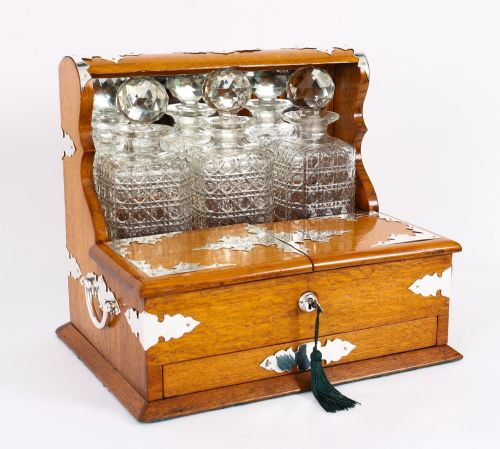
- A multi-purpose box containing various games, decanters, or barware within a single fitted case. These larger pieces often combine a tantalus with playing card compartments.
- Sterling silver
- An alloy consisting of pure silver and other metals, typically copper, meeting a specific fineness standard. Most British boxes carry hallmarks denoting this standard.
- Tantalus
- A locking beverage stand that displays decanters while preventing access without a key. They frequently appear built into larger games compendiums.
- Cribbage box
- A specialised container designed to hold cribbage boards, pegs, and playing cards. These pieces often feature sliding lids or fitted internal channels.
- Bridge box
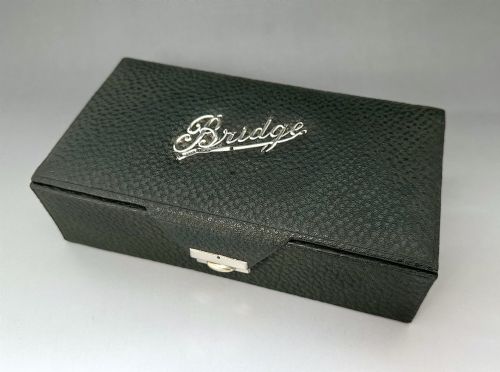
- A container specifically proportioned to hold two packs of playing cards and scoring equipment for bridge or patience. They often feature leather bodies with silver mounts.
Silver Games Box: Frequently Asked Questions
What is a silver games box?
A silver games box is a container specifically built to hold playing cards, counters, cribbage boards, and other tabletop pastimes. These containers use silver mounts or full silver plating to protect and decorate wooden or leather bodies.
Such boxes range from small single-purpose card cases to large compendiums holding decanters and multiple gaming accessories. They reflect the Victorian and Edwardian taste for structured domestic entertainment.
How were games boxes used?
Hosts kept these boxes in drawing rooms and libraries to entertain guests during evening gatherings. The fitted interiors kept cards crisp and markers organised between hands.
Larger compendiums combined card storage with dry bars and tantalus frames, serving both drinks and entertainment from a single piece of furniture.
How do I date a silver box?
Dating relies heavily upon the silver hallmarks stamped onto the mounts, which indicate the assay office, maker, and year of production. Stylistic clues such as Edwardian proportions or Art Deco geometric lines also help determine the period.
Timber choices and construction techniques further narrow down the era, distinguishing nineteenth-century oak compendiums from mid-century Italian lacquer work.
How do I care for a silver games box?
Keep wooden and leather bodies away from direct sunlight and extreme humidity to prevent warping or cracking. Clean the silver mounts gently with a soft cloth to avoid damaging adjacent materials.
Inspect hinges and locking mechanisms periodically, operating them with care to preserve the original internal fabric and wooden partitions.