
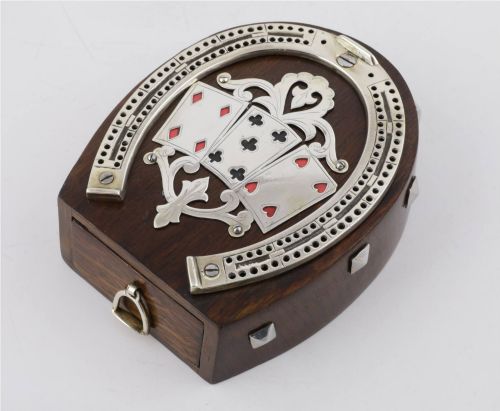
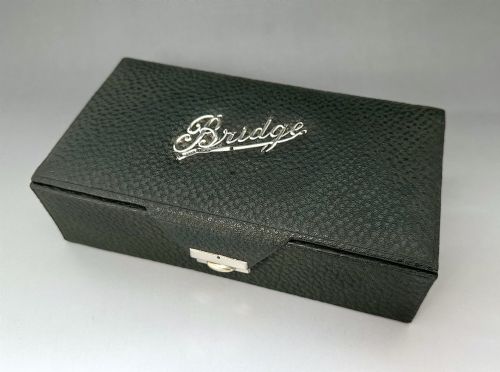
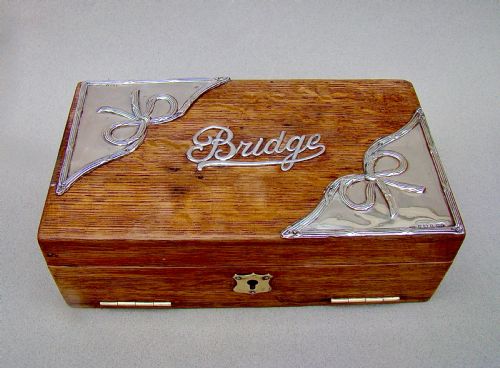


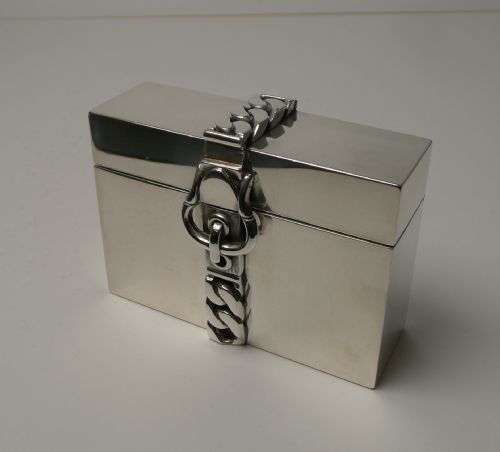


Silver Playing Card Box
A silver playing card box organises leisure with precious metal and clever internal engineering, offering a tactile piece of social history for the table.
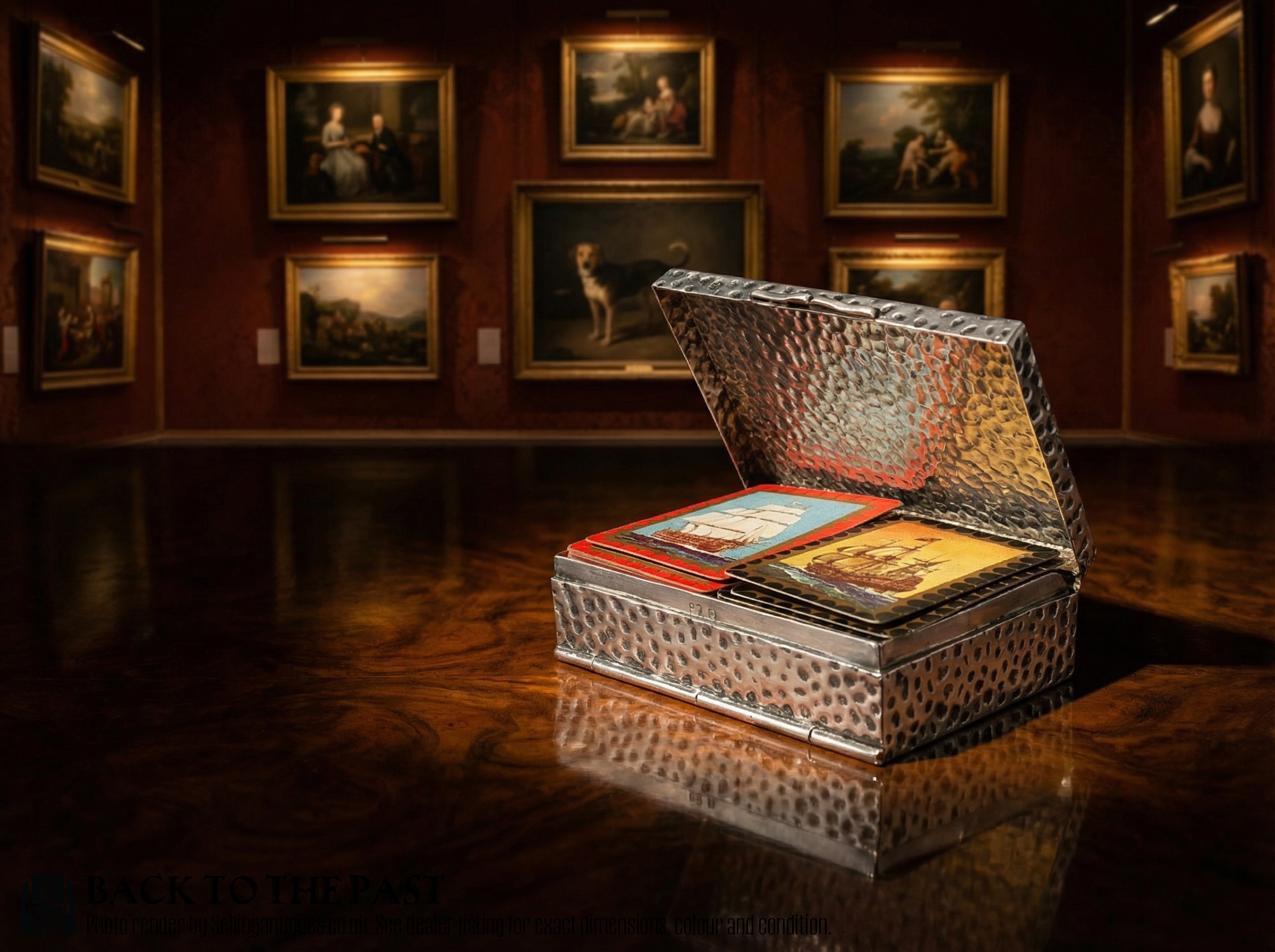
Silver Playing Card Box
A silver playing card box serves as a dedicated container for card games, appearing most frequently from the Edwardian and Victorian periods alongside later twentieth-century iterations. These pieces take the form of single or double card caskets, bridge boxes, and games boxes designed to hold paper cards securely.
The inventory ranges from small miniature cases to substantial caskets with hinged lids, rising card trays, and fitted interiors. Examples often combine precious metal with other materials, reflecting the changing social habits of card players across different decades.
How They Were Made
Silversmiths constructed these boxes using sterling silver, 800 silver, and silver plate, frequently mounting metal work onto wooden or leather foundations. Materials such as oak, burr maple, glass, enamel, and black lacquer appear in combination with the metal structure.
Craftsmen applied techniques like engine turning to decorate the metal surfaces, alongside hinge-fitting and internal lining to create functional compartments for cards and counters.
Silver Playing Card Box Retail Price Guide 2026
Typical asking prices for silver playing card box among the pieces listed under this phrase on Sellingantiques today, from the lower quarter to the upper quarter. They describe what is for sale here now, not the wider market.
Some Edwardian card boxes were built with internal rising trays so the deck politely presented itself the moment you opened the lid.
What Varies in Quality
The distinction between standard examples and finer pieces rests on the complexity of the internal mechanism, such as rising trays, and the integration of secondary materials like leather or exotic woods. Makers who incorporated engine-turning or detailed enamel work elevate the execution of the object.
Subtlety in proportion and the weight of the metal distinguish superior caskets from simpler mounted boxes, while complete original contents add a layer of integrity to the survival of the piece.
Levi & Salaman·Charles Penny Brown·William Comyns·Asprey & Co·Henry Matthews·William Hutton
The Silver Playing Card Box Glossary
- Sterling silver
- A silver alloy containing 92.5 percent pure silver and 7.5 percent other metals, typically copper. This standard provides the durability required for frequently handled games boxes.
- Bridge box
- A specialised container sized specifically for the card game bridge, often housing two packs of cards and sometimes scoring equipment. These frequently date from the Edwardian period onwards.
- Engine turning
- A mechanical decoration technique that etches intricate geometric patterns into metal surfaces. It appears on the lids and bodies of twentieth-century card boxes.
- Patience box
- A small container designed to hold a single deck of cards for playing solitaire games. Miniature versions of these boxes are particularly compact.
Silver Playing Card Box: Frequently Asked Questions
What is a bridge box?
A bridge box is a container specifically proportioned to hold the cards required for the game of bridge, often featuring compartments for two separate decks.
These pieces frequently date from the Edwardian era when bridge gained immense popularity in British parlours.
How do I date a silver box?
Dating relies heavily on the hallmarks stamped into the silver, which indicate the assay office, date letter, and maker's mark.
Stylistic cues such as Edwardian ornamentation or Art Deco geometry also help place the piece in its correct period.
Why are some boxes leather-mounted?
Makers combined leather and silver to create durable outer casings that protected the contents while offering a contrasting tactile surface.
These mounted boxes often lined the interior with velvet or satin to cushion the cards.
Can I use these boxes today?
These boxes function well for holding modern standard playing cards, provided the internal dimensions match contemporary card sizes.
Placing them on a coffee table or desk allows them to serve their original purpose as functional decorative objects.