
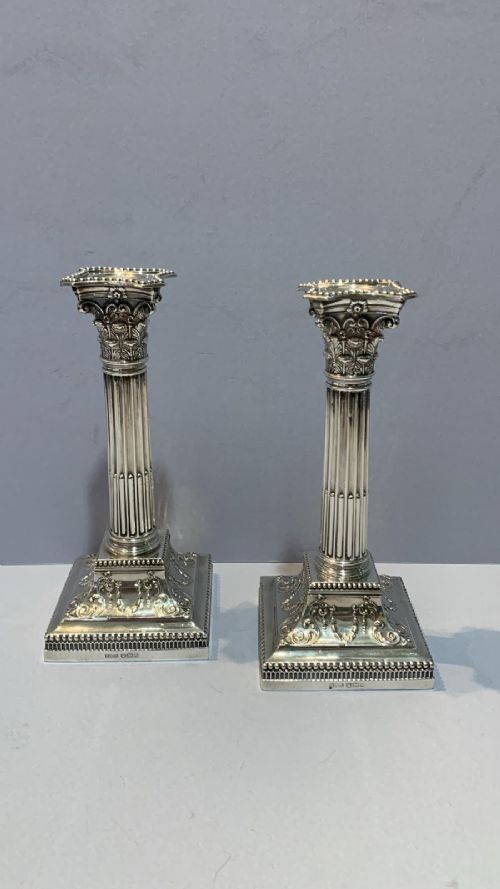


Victorian Silver Candelabrum
A victorian silver candelabrum brings unmistakable candlelight and formal presence to a dining table.
Victorian Silver Candelabrum
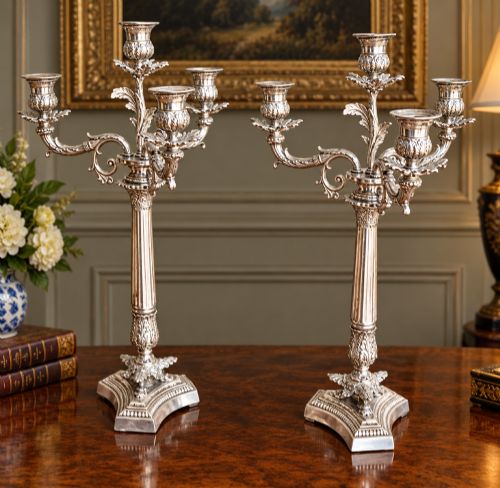
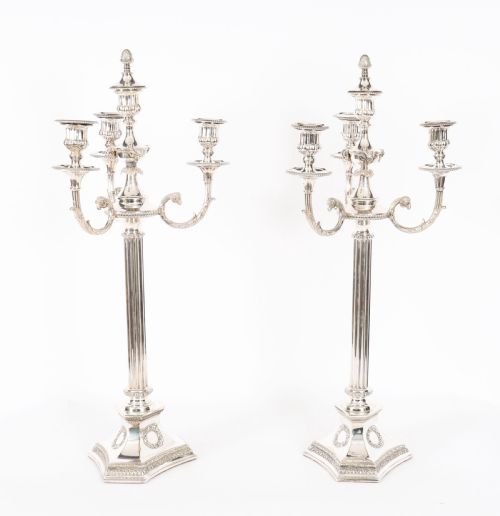
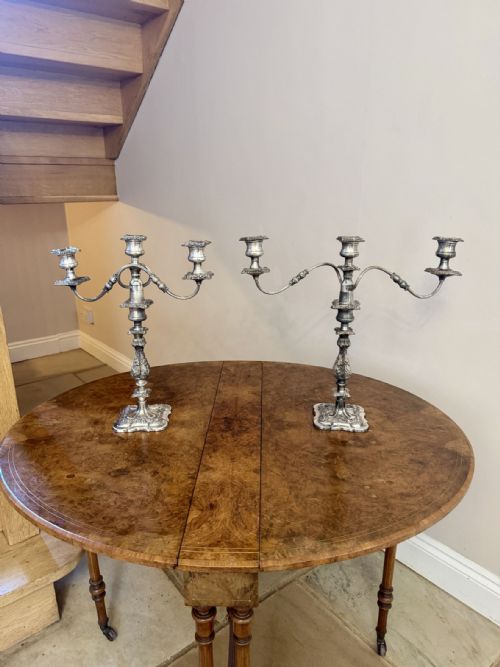
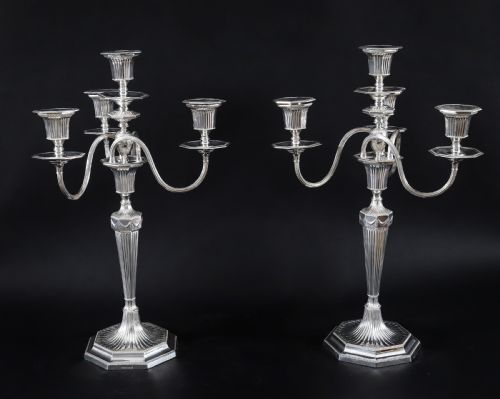
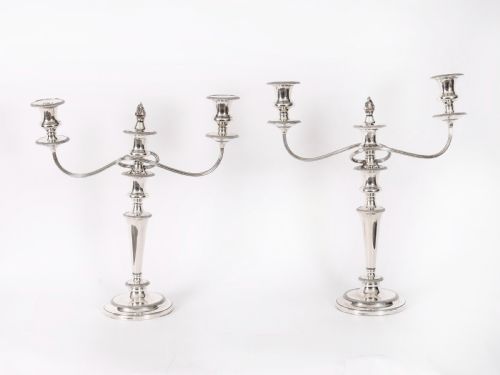
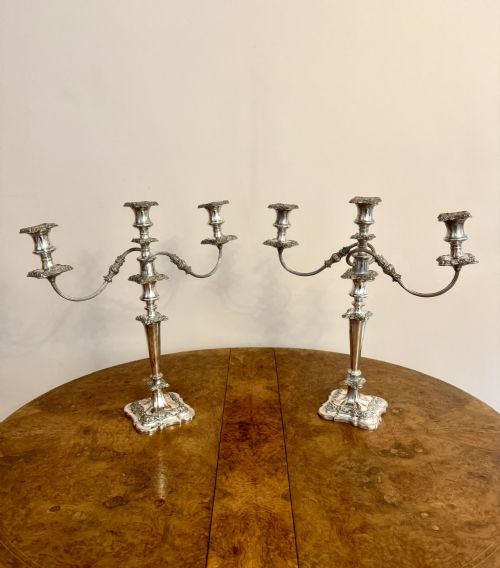
A victorian silver candelabrum provides branched illumination for dining tables and reception rooms, most frequently taking the form of silver plated pairs or larger single centrepieces. These pieces emerge across the nineteenth century, spanning decades from the eighteen-fifties through to the end of the Victorian era, alongside occasional Edwardian examples.
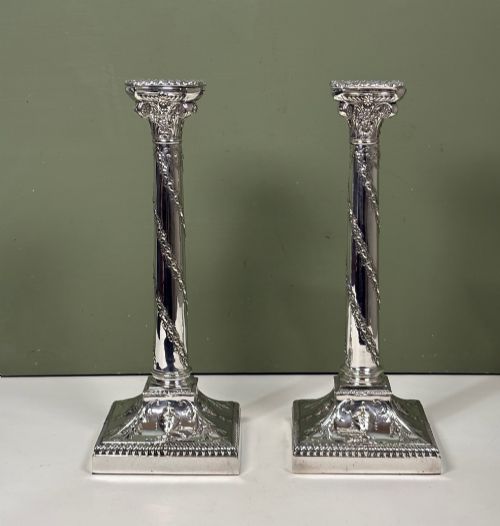
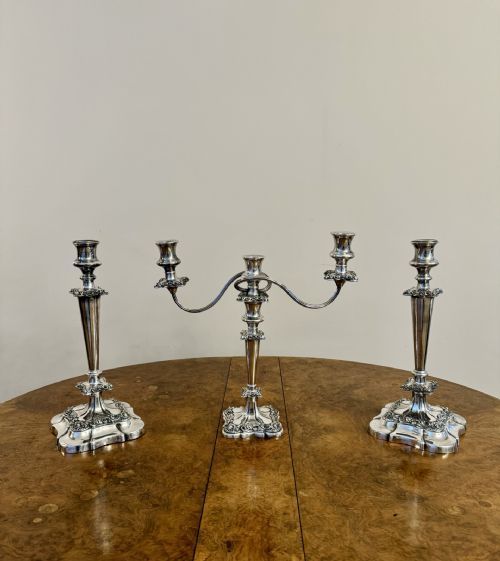
The objects combine multi-light branches with supportive candlesticks, often featuring detachable sconces to allow separate use as single candle holders. Forms range from three-light and four-light branches up to substantial five and six-light configurations, sometimes incorporating figural elements such as cherubs or palms.
Makers and workshops utilise styles rooted in neoclassical, rococo revival, and naturalistic design traditions. Buyers encounter varied formats including paired candelabras, convertible candlestick sets, and elaborate centrepieces designed for formal dining.
Materials and construction
Makers construct these pieces primarily using silver plate, electroplated nickel silver, and sterling silver over supportive base metals like copper, brass, and nickel. Electroplating techniques developed significantly during the nineteenth century, allowing firms to apply durable silver layers onto base metal cores.
Manufacturing methods involve casting detailed components such as branches, figural cherubs, and decorative bases, then assembling them securely. Detachable sconces and screw-in branch units provide practical adaptability for cleaning and alternative table arrangements.
Several pieces feature winged cherubs holding aloft candle branches, ready to supervise your dinner party.
Judging quality and execution
Quality rests upon the crispness of cast ornament, whether the design employs classical revival motifs, elaborate rococo scrolls, or naturalistic foliage. Heavier gauge metalwork and substantial proportions distinguish superior dining table centrepieces from lighter domestic alternatives.
The integrity of the silver plating and the precision with which detachable components fit together indicate workshop standard. Maker attribution to notable silversmiths and plating firms adds distinction to specific pieces.
Hawksworth Eyre·Garrard & Co·Smith & Sissons & Co·Clarke·Elkington
The Victorian Silver Candelabrum Glossary
- Sconce
- The small detachable cup at the top of a candlestick or branch that catches melting wax. These components are frequently removable for cleaning.
- Sheffield Plate
- An early method of fusing a thin sheet of sterling silver to a thicker copper core before rolling. This technique predates nineteenth-century electroplating.
- EPNS
- Electroplated nickel silver, a common base material used underneath a silver coating. This process became widespread across nineteenth-century manufacturing.
- Cricklite
- A proprietary brand of table lamp and candelabra system designed for small protective glassware. These pieces utilise specific miniature candle setups.
- Centrepiece
- A large decorative table ornament, often incorporating multiple candle branches and dishes. These objects form the visual focal point of formal dining displays.
Victorian Silver Candelabrum: Frequently Asked Questions
How do I clean my silver candelabrum?
Use a soft cloth and a gentle silver cleaner formulated specifically for plated or sterling surfaces. Avoid abrasive pads that can wear away thin silver layers.
Take care around detailed cast ornamentation and detachable sconces where polish can accumulate in crevices. Regular dusting helps preserve the surface without excessive chemical cleaning.
Can I use these candelabras for dining?
These pieces function well for dinner parties and ceremonial dining, provided the height allows guests to converse across the table. Many examples feature removable branches to convert into standard candlesticks.
Ensure wax drip cups and sconces are fitted securely before lighting candles. Using appropriately sized taper candles prevents dripping onto the metalwork.
How do I date a Victorian candelabrum?
Examine the style of decoration, such as neoclassical columns or rococo revival scrolls, alongside any stamped maker marks or registry numbers. Different plating techniques also indicate the manufacturing era.
Nineteenth-century pieces often reflect shifting design tastes from early Victorian revivalism through to late-century naturalism. Comparing construction methods helps narrow the decade of production.
What is the difference between plate and silver?
Silver plate and electroplated nickel silver consist of a thin coating of silver applied over a base metal such as copper or brass. Solid sterling silver pieces are composed of precious metal throughout.
Hallmarks and stamps generally indicate whether an object is solid silver or plated ware. Both categories share similar decorative styles across nineteenth-century production.