
Victorian Settle Bench
When you need a victorian settle bench, you are looking for solid timber seating that brings architectural presence and history into a hallway or fireside.
Victorian Settle Bench
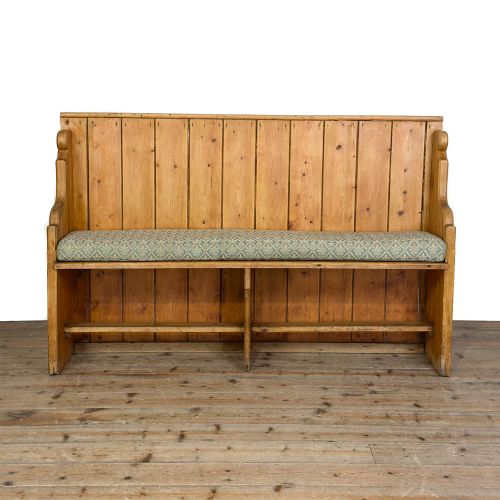
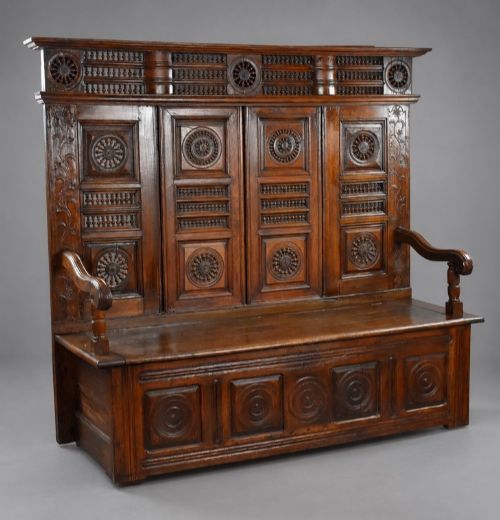
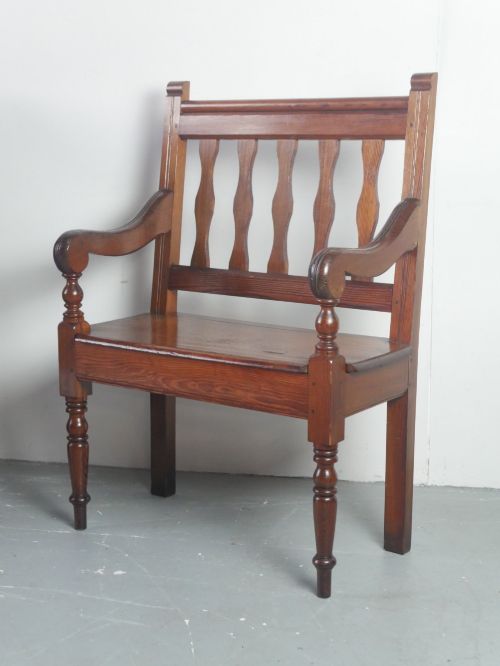
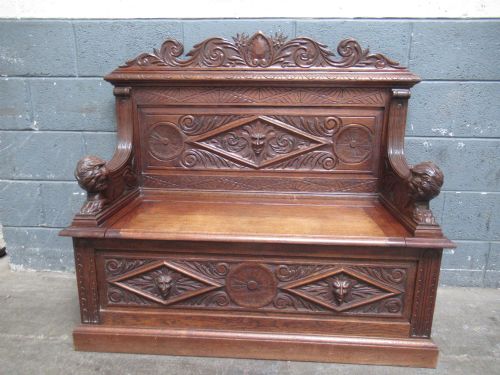
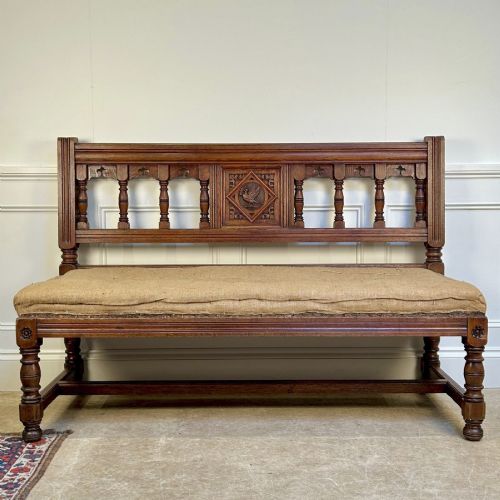
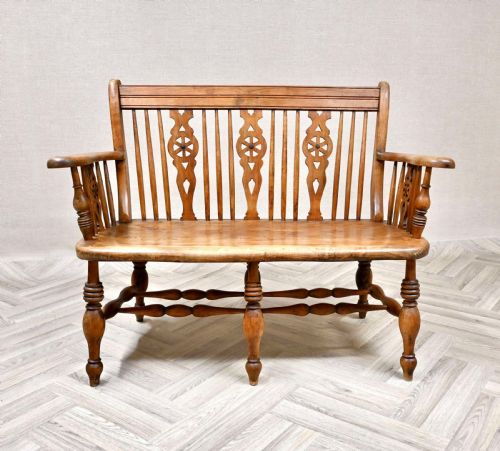
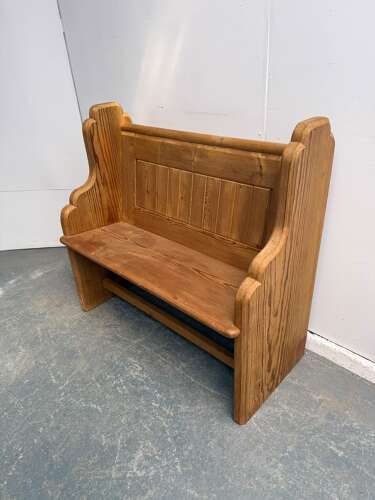
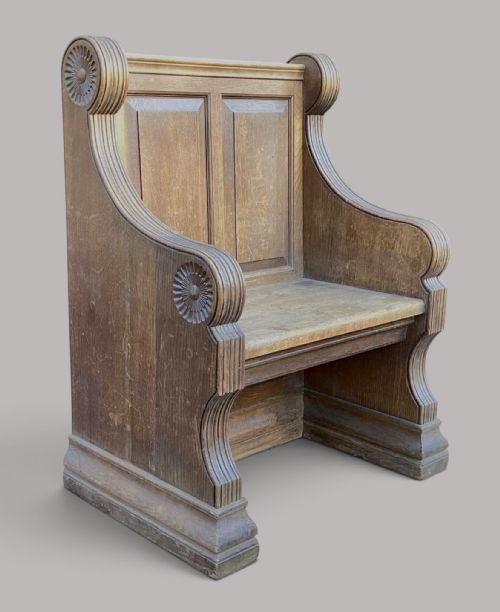
A victorian settle bench combines high backs and solid sides to block draughts in traditional hallways and domestic rooms. These items appear primarily in forms designated as settles, hall benches, church pews, and monks benches dating from the nineteenth century.
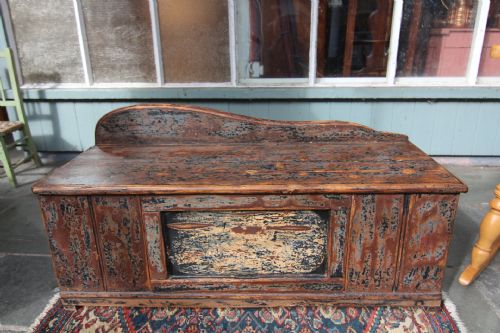
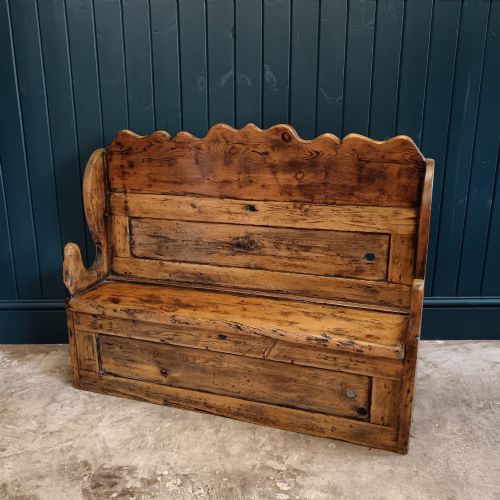
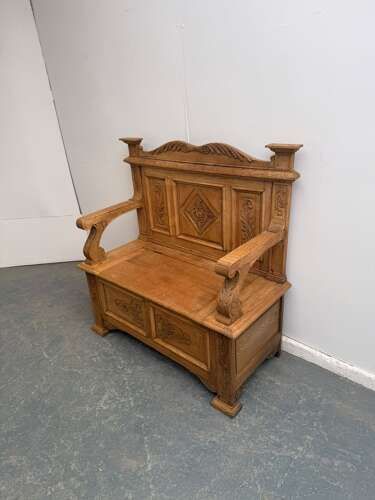
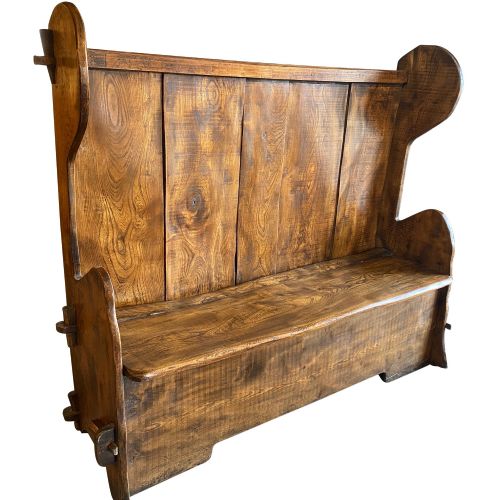
The selection ranges from tall, architectural carved oak designs to simpler country pine and elm pieces featuring lift-up storage boxes beneath the seat. Regional variations include painted Hungarian examples, Gothic revival chapel pews, and rustic farmhouse seats.
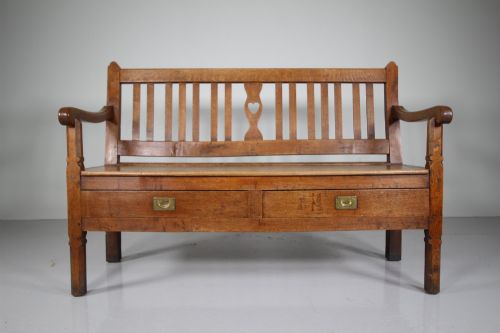
Makers and craftsmen built these forms to serve practical domestic and institutional functions, utilising timber framing to create durable seating that often doubled as a blanket chest or hall cupboard.
What varies in quality
The distinction between standard utility seating and finer examples rests upon timber selection and the ambition of the carpentry. Heavy, quarter-sawn oak with deeply carved relief panels represents a more sophisticated workshop output than plain plank construction.
Structural integrity and originality of the surface finish dictate the standing of a piece. Retaining an early or original painted skin or a rich, undisturbed wax patina elevates the character of the timber.
Listings feature oak, pine, elm, and walnut examples spanning the Victorian period, Edwardian era, and late nineteenth century.
GIllows
The Victorian Settle Bench Glossary
- Settle
- A wooden bench with a high back, solid arms, and often a box base intended to keep out cold draughts. They were traditional fixtures in farmhouse kitchens and tavern firesides.
- Monks bench
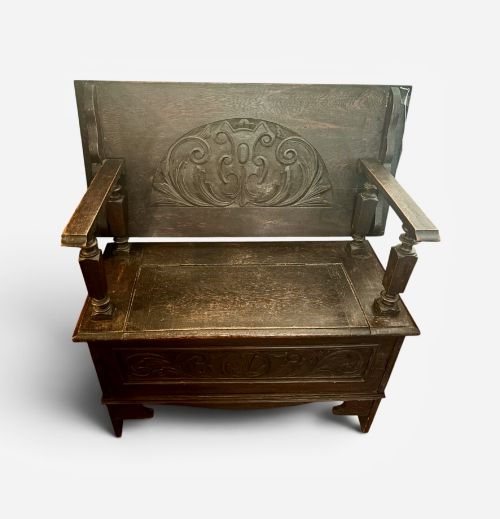
- A convertible piece of furniture featuring a hinged top that folds down to transform the high back into a table surface. These often incorporate enclosed storage beneath the seat.
- Box settle
- A form of bench incorporating a hinged seat lid that opens to reveal a deep storage compartment. This dual-purpose design served for storing blankets, boots, or household goods.
- Gothic Revival
- A nineteenth-century design style drawing inspiration from medieval architecture and ecclesiastical furnishings. Pieces in this manner frequently display pointed arches, tracery, and carved foliage.
Victorian Settle Bench: Frequently Asked Questions
Where should I place a settle bench?
These pieces suit narrow hallways, entrance passages, and large living rooms where their high backs create a distinct sense of enclosure. They also function well against long dining tables or as architectural focal points in open-plan spaces.
Because of their solid timber construction and considerable weight, ensure you measure the available floor space and clearance for any lift-up storage lids before positioning.
How do I maintain the wood finish?
Most nineteenth-century surfaces respond best to occasional applications of natural beeswax to nourish the dry timber and preserve the patina. Avoid placing them near direct heat sources or strong sunlight, which can cause the wood to warp or crack over time.
Dust regularly with a soft, dry cloth rather than using modern chemical sprays, which can degrade historic wax or painted finishes.
Did these benches serve storage purposes?
Many examples incorporate a lift-up seat that opens into a deep box base designed for household storage. Historic homes relied on these compartments to keep winter blankets, outer garments, and boots close to the entrance.
Porter and box settles were specifically engineered with enclosed lower sections to maximise utility in draughty hallways.
What is the difference between a pew and a settle?
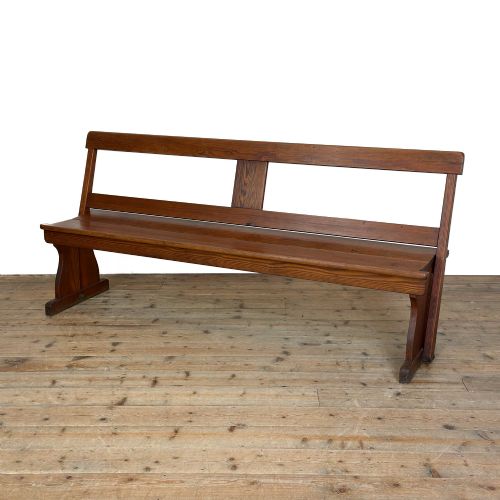
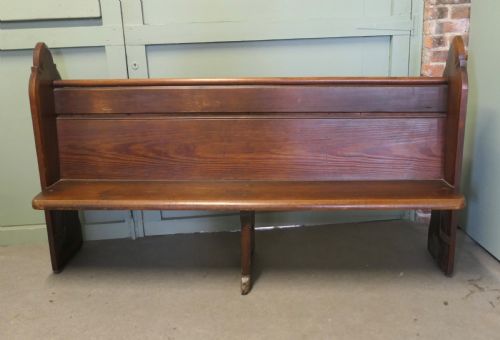
Pews generally feature open ends or simpler side supports, having originated as ecclesiastical seating for churches and chapels. Settles traditionally incorporate solid enclosed sides and high panelled backs specifically designed to deflect room draughts.
While church pews are often longer and built in rows, domestic settles were constructed as standalone items for everyday household use.