

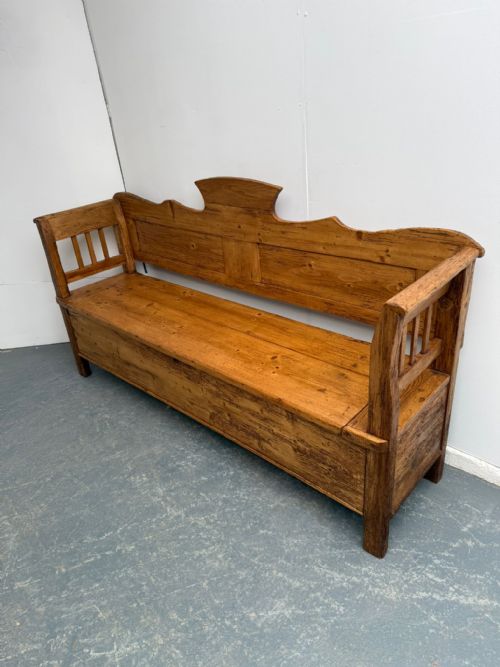
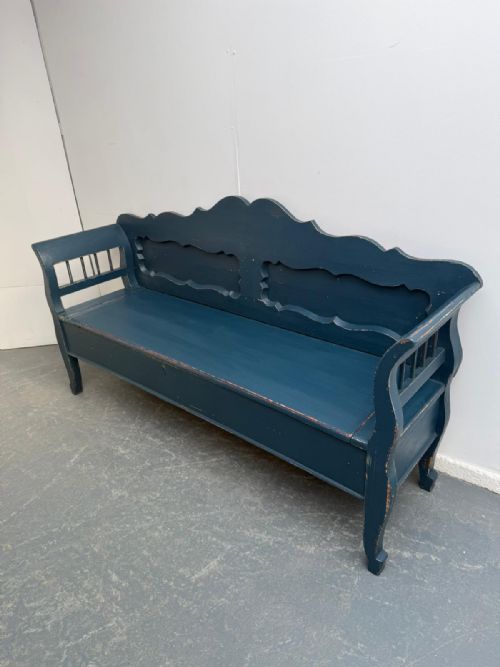
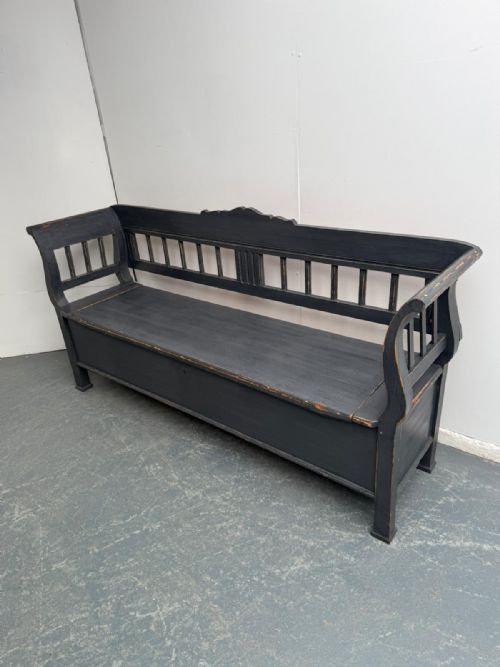
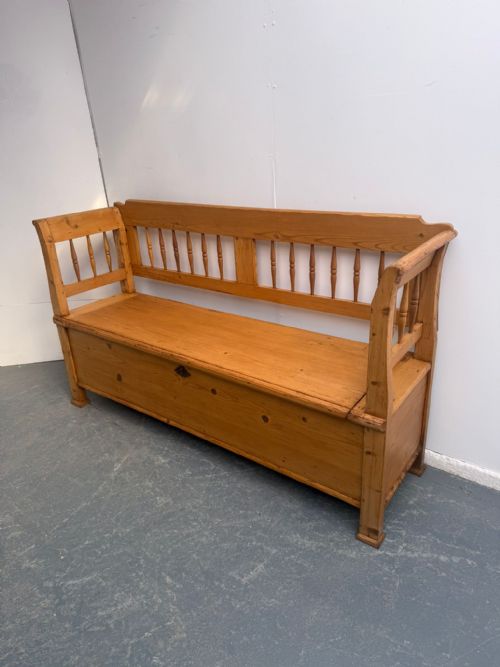

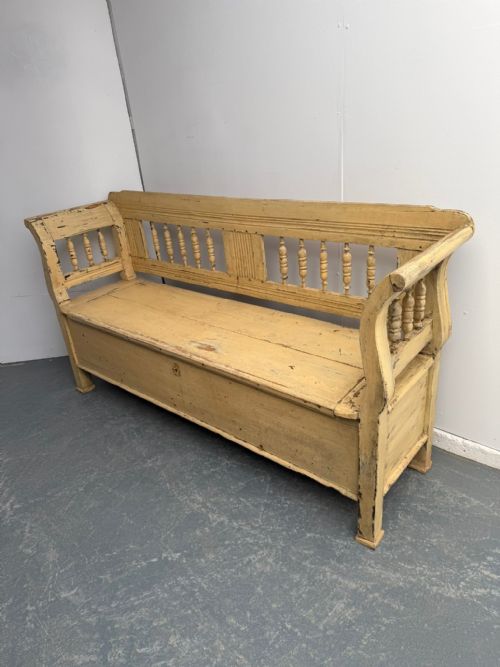
Hungarian Folk Bench
A Hungarian folk bench brings genuine warmth and country character to a hallway or kitchen with its sturdy pine build and traditional lines.
Hungarian Folk Bench
When you search for a Hungarian folk bench, you are looking at substantial country seating typically designed to seat three people. These pieces serve as practical hallway or kitchen furniture, combining daily utility with traditional European craftsmanship.
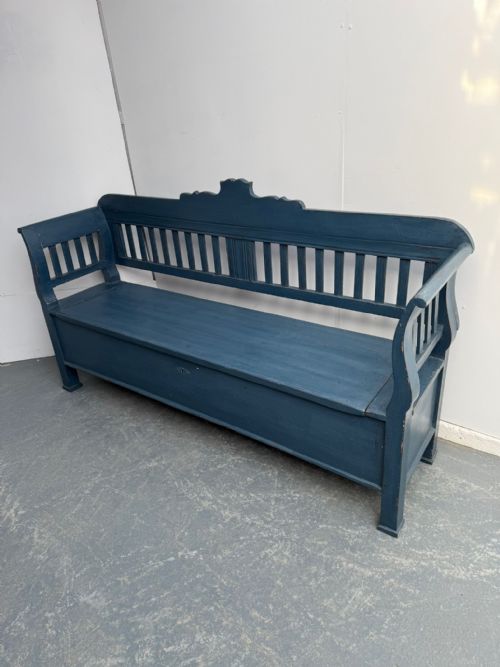
The versions you are most likely to meet on this page hail from the Victorian and Georgian periods. They appear primarily as standard open benches or enclosed box settles, offering functional storage alongside seating.
Materials and construction
These benches are constructed entirely from solid pine, providing a durable and heavy wooden framework designed for everyday use. Carpenters utilised straightforward timber joinery to build these robust country pieces.
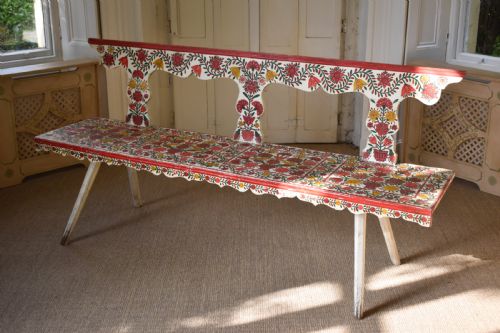
Many examples feature historical painted finishes in shades of blue, grey, cream, black, and green, while others are simply waxed to highlight the natural grain of the pine. Iron hardware often secures the structural joints and storage lids.
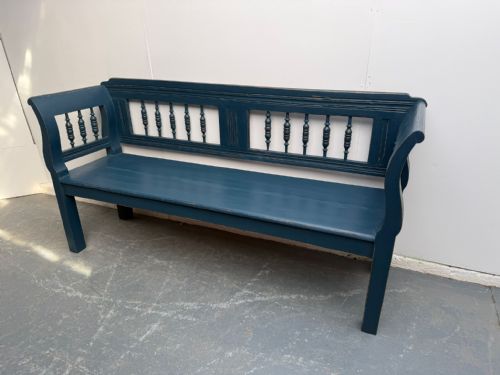
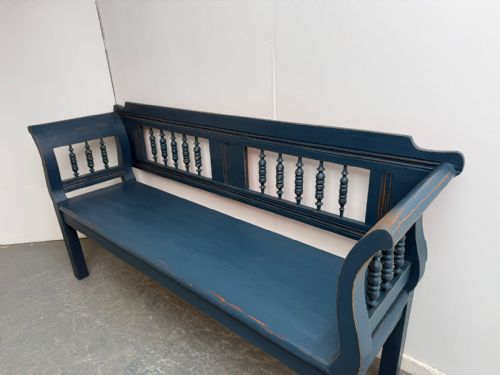
Several benches feature cheerful painted blue and cream finishes that clearly survived generations of kitchen life.
Assessing quality
Quality in these benches rests primarily on the survival of original painted surfaces and the integrity of the timber. Pieces that retain their early layers of pigment carry greater decorative presence than those stripped back to bare wood.
The presence of integrated storage compartments, such as those found on box settles, adds structural complexity and utility. Heavier spindled backrests and well-preserved structural proportions further distinguish the finer examples in this range.
The Hungarian Folk Bench Glossary
- Pine
- A softwood commonly used in European country furniture for its accessibility and workability. It takes paint and wax finishes readily.
- Box settle
- A high-backed wooden bench featuring a storage box beneath the seat. This form protected sitters from draughts in traditional farmhouses.
- Spindled
- A backrest design incorporating turned wooden vertical shafts or pillars. This style lightened the visual weight of heavy timber seating.
- Waxed
- A surface finish applied to nourish and protect the wood. It produces a soft sheen rather than a glossy coat.
Hungarian Folk Bench: Frequently Asked Questions
What is a Hungarian folk bench?
A Hungarian folk bench is a traditional three-seater pine seat originating from rural Hungary during the Georgian and Victorian eras. These pieces were built for everyday farmhouse use and often feature painted finishes or integrated storage boxes.
They reflect regional European woodworking traditions, combining practical utility with rustic charm. Today, they function well as hallway or dining seating.
How were these benches used originally?
In traditional rural homes, these benches provided essential communal seating around the household table. Box settle variants also served to keep household items or blankets tucked safely away beneath the seat.
The high backs on certain models helped block cold draughts in unheated farmhouses. Their robust pine construction ensured they could withstand decades of daily domestic life.
How do I style a Hungarian folk bench?
A Hungarian folk bench works naturally in a hallway, boot room, or kitchen dining space. Their linear three-seater proportions fit well against long walls or paired with rustic wooden tables.
Allowing the original painted or waxed pine finish to stand out keeps the focus on the historical character of the timber. Adding simple linen cushions can soften the seat without hiding the woodwork.
How do I tell Georgian from Victorian pieces?
Georgian examples in this range typically date from the earlier decades and exhibit simple country primitive styling. Their construction relies on heavier, older timber traditions.
Victorian pieces often showcase more defined regional details, such as spindled backrests or specific decorative paint schemes like cream, green, or blue. Examining the construction joints and wear patterns helps clarify the age of each piece.