




Victorian Serpentine Centre Table
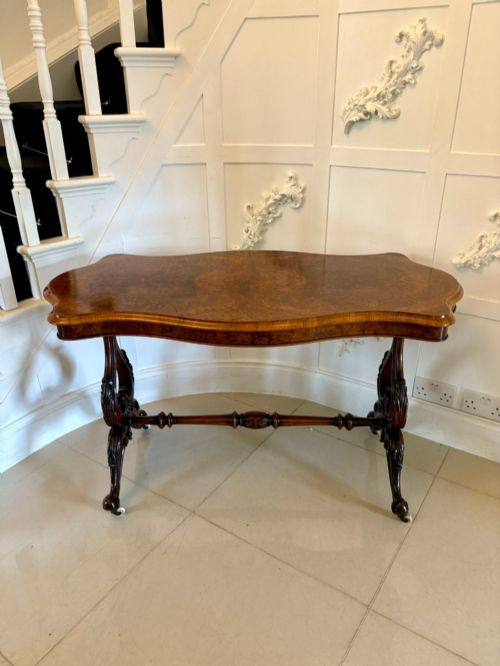
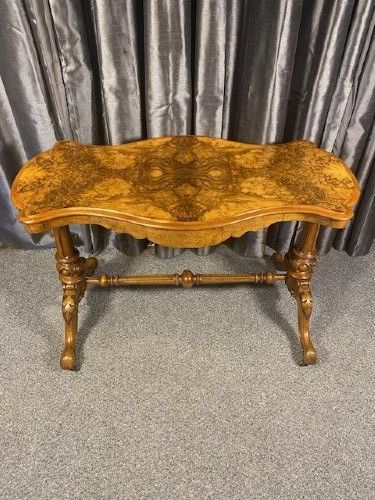
A victorian serpentine centre table commands the middle of a room with polished burr walnut or rosewood and flowing, curved lines.
Victorian Serpentine Centre Table
A victorian serpentine centre table is a freestanding piece designed to sit in the middle of a room rather than against a wall. These tables date predominantly from the mid to late nineteenth century, spanning the eighteen fifties to the eighteen nineties.
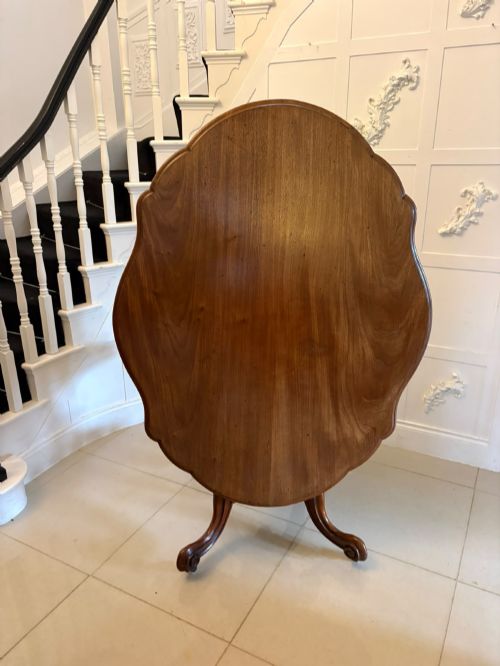
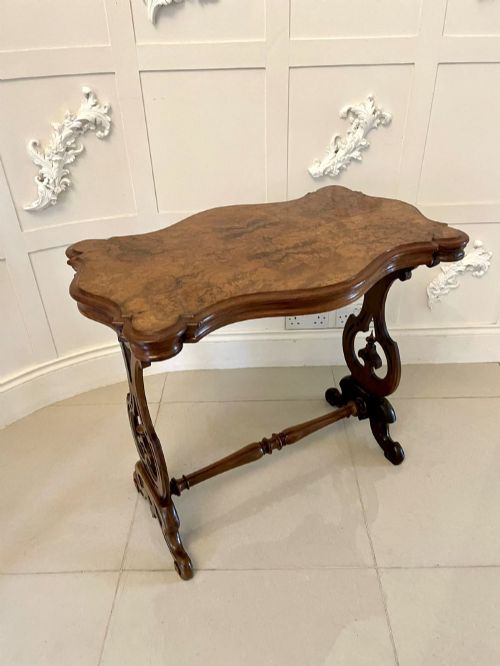
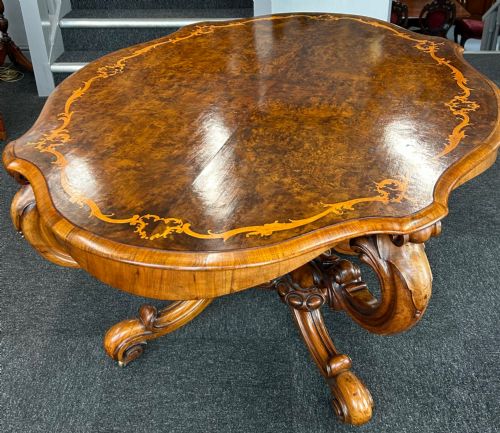
The form appears in several distinct guises on this page, including occasional tables, tilt-top loo tables, and large dining tables. Burr walnut and rosewood dominate the selection, often shaped with undulating serpentine edges.
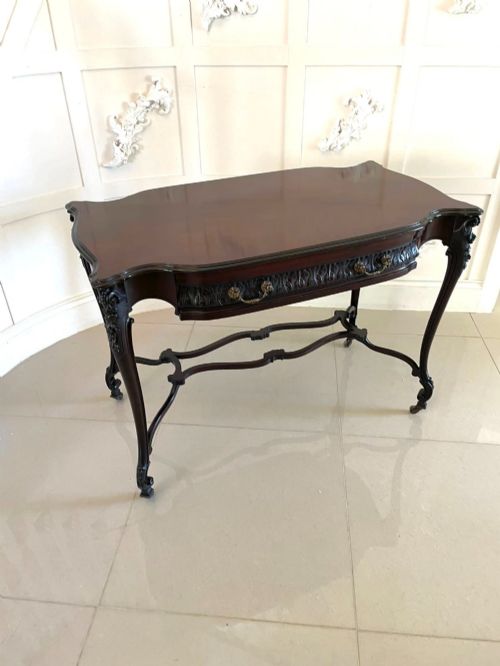
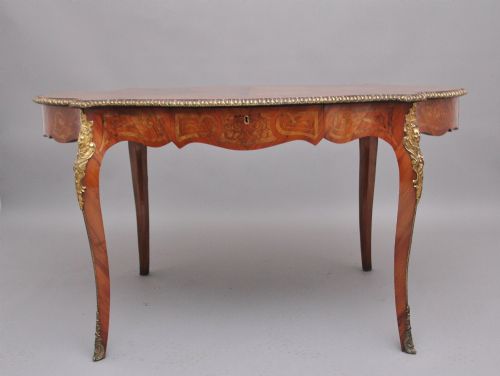
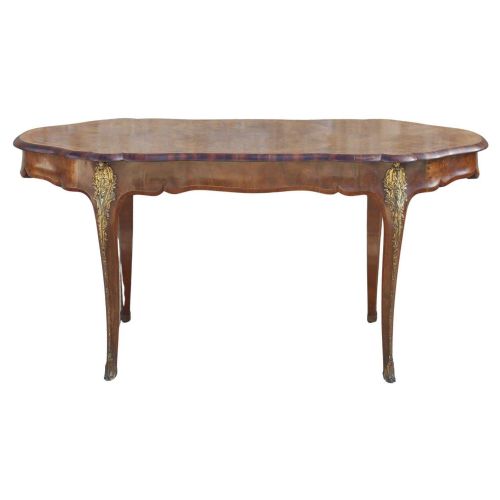
Makers and cabinet makers of the period drew upon French revival styles such as Louis the Fifteenth and Rococo, integrating marquetry, ormolu mounts, and cabriole legs into the design.
How they were made
Cabinet makers utilised solid woods like mahogany and rosewood for structural frames, while applying choice veneers of burr walnut, satinwood, and amboyna to tabletops to display rich grain patterns.
Curved serpentine edges required skilled hand-sawing and precise shaping of timber before application of polish. Ormolu mounts, brass details, and marquetry inlays were meticulously fitted by hand into the wood surface.
Table forms span occasional, dining, tilt-top, coffee, and writing tables equipped with cabriole or stretcher bases.
What varies in quality
The selection of veneer dictates much of the visual merit, with tightly figured burr walnut and symmetrical marquetry separating standard production from finer workshop output. Carved details on stretcher bases and cabriole legs show varying degrees of depth and crispness.
Freestanding capability relies on finished work to all four sides, which distinguishes pieces intended to sit centrally from simpler variants. Construction stability in the tilt-top and pedestal mechanisms also marks the division between ordinary and superior examples.
Edwards & Roberts·Gillows
The Victorian Serpentine Centre Table Glossary
- Serpentine
- A curved line that bends outward then inward, creating a wavy edge on the table top. This contour requires precise woodworking skills.
- Loo table
- A large round or oval table used for the nineteenth-century card game loo, often featuring a tilt-top mechanism for easy storage.
- Ormolu
- Gilt bronze mounts applied to furniture for decoration. It adds metallic contrast to the polished wooden surfaces.
- Marquetry
- Decorative veneer patterns formed from different coloured woods and materials assembled into pictorial designs. It creates elaborate geometric or floral motifs on the tabletop.
Victorian Serpentine Centre Table: Frequently Asked Questions
Where should a centre table go?
These tables are designed to stand away from walls, making them ideal for the middle of a principal reception room or a large entrance hall. Because the finishing extends to all sides, they look complete from any angle in the space.
Placement should allow room to walk entirely around the piece, as freestanding tables function visually as anchors for a room's layout.
What is a tilt-top mechanism used for?
The tilt-top allows the heavy wooden table surface to pivot upright on its base when not in use. This practical nineteenth-century feature saved valuable floor space in busy drawing rooms.
Most examples use a brass catch or wooden wedge to lock the top securely in the horizontal position during dining or daily use.
How do I care for burr walnut veneer?
Burr walnut surfaces require protection from direct sunlight and excessive heat sources to prevent the delicate veneer from drying or cracking. Regular dusting with a soft, dry cloth maintains the polished finish.
Avoid using modern silicone sprays or household polishes, which can build up a cloudy residue over the traditional French polish.
How do I date a nineteenth-century table?
Dating relies on examining the secondary timbers used beneath the surface, the construction of the pedestal or legs, and the style of carving. Mid-nineteenth-century pieces often favour rich burr walnut and heavier proportions.
Later Victorian examples from the eighteen eighties and nineties sometimes incorporate lighter satinwood or distinct revival influences like Louis the Fifteenth.