




Carved End Support Table
A carved end support table brings architectural presence and versatile surface space to a room, offering rich timbers and sturdy pedestal craftsmanship.
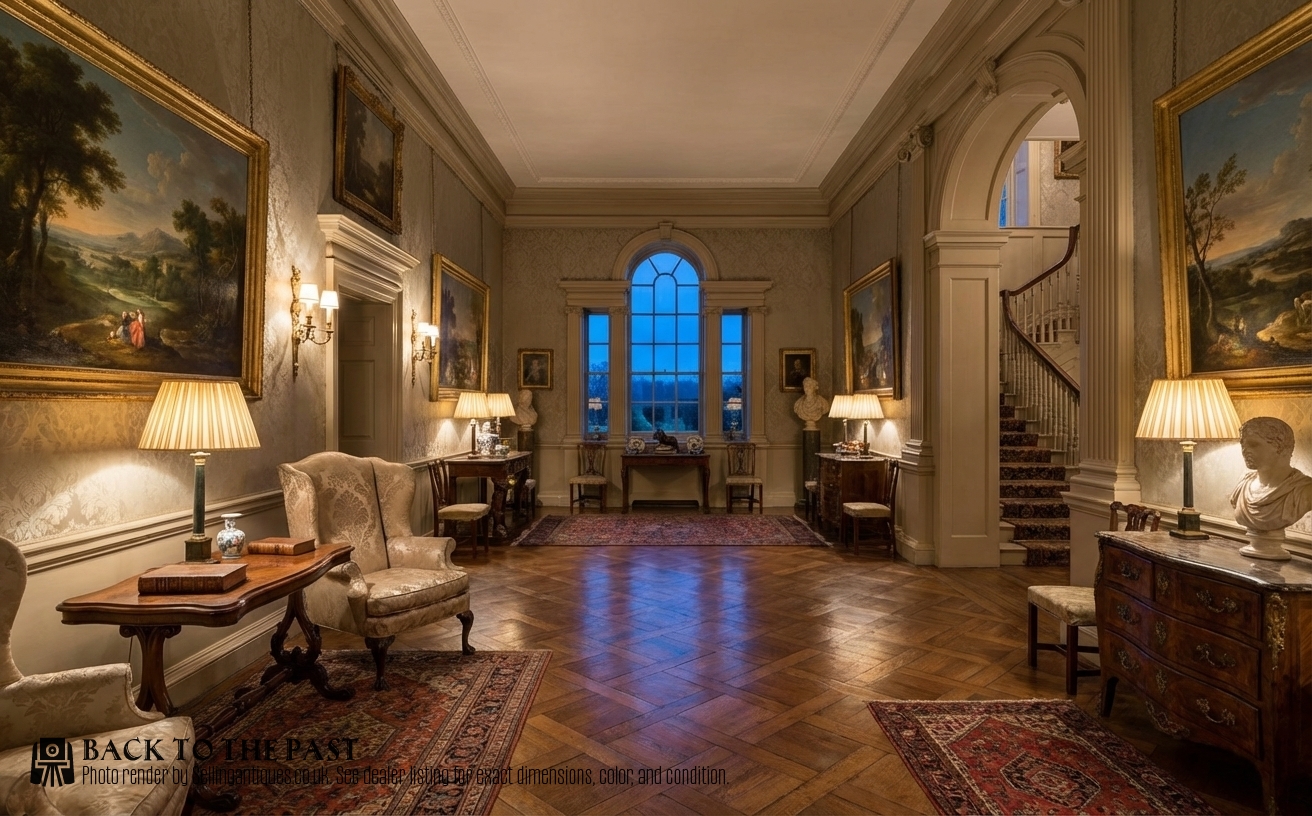
Carved End Support Table
When you search for a carved end support table, you encounter substantial freestanding furniture designed for studies, libraries and principal reception rooms. The selection spans the Regency, William IV and Victorian periods, alongside specific regional variants.
Centre tables and library tables dominate the offerings, frequently featuring solid timber construction and distinct structural pedestals. Walnut, mahogany and rosewood versions appear alongside unusual burr oak and specimen wood examples.
Victorian and mid-nineteenth century iterations form the majority of the current pieces, often retaining original brass castors and fitted drawers. These tables function equally well as writing desks or display surfaces in traditional and contemporary interiors.
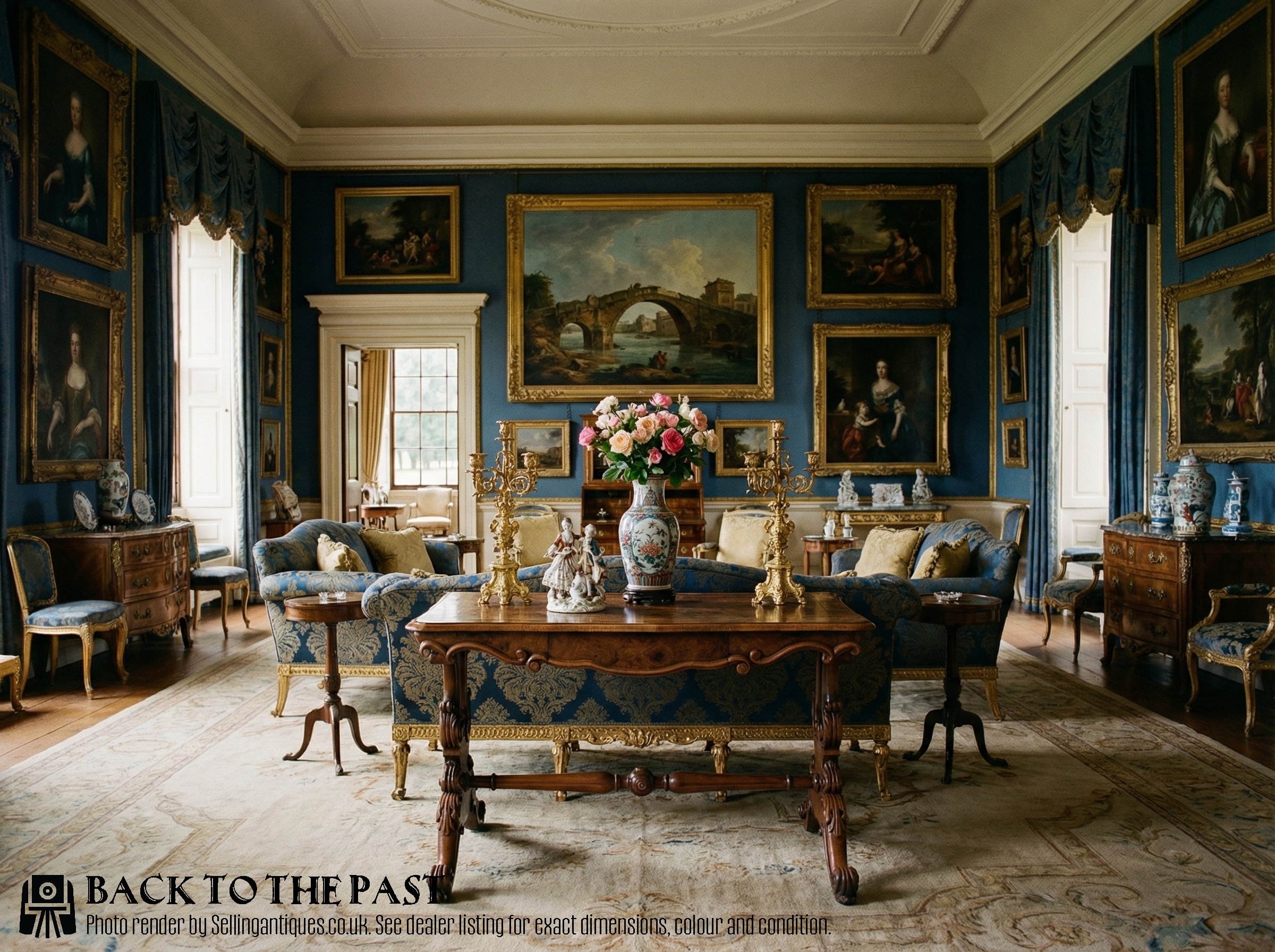
How they were made
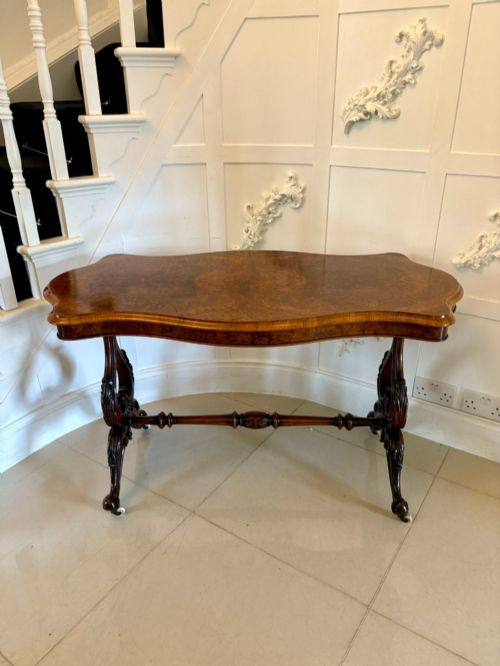
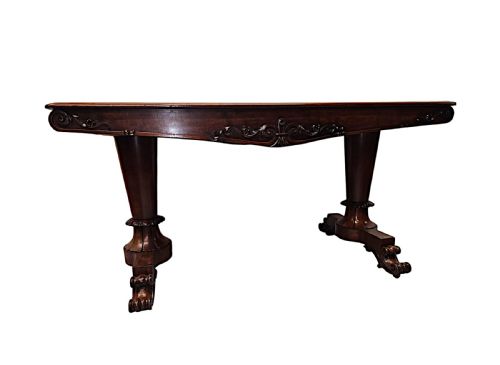
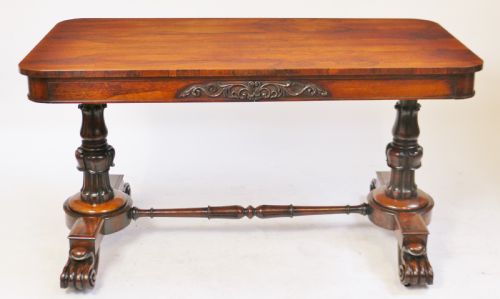
Cabinet makers utilised dense hardwoods such as mahogany, rosewood and walnut, frequently selecting burr veneers to create highly figured table tops. Supporting structures rely on robust central columns or twin end pillars fixed to plinth bases.
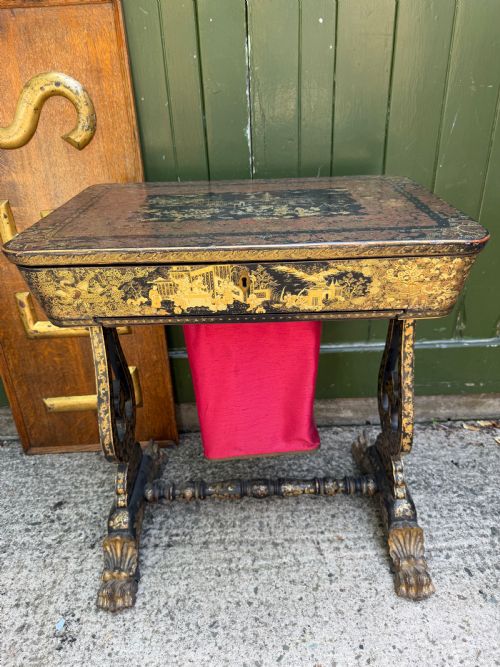
Decorative elements involve detailed hand carving on the wooden supports, complemented on specific pieces by gilded lacquer work or inlaid specimen woods. Brass castors integrated beneath the feet permit movement of these heavy items.
Carved End Support Table Retail Price Guide 2026
Typical asking prices for carved end support table among the pieces listed under this phrase on Sellingantiques today, from the lower quarter to the upper quarter. They describe what is for sale here now, not the wider market.
One Chinese Export lacquer model doubles as a ladies work-table for sewing.
What varies in quality
Excellence in these tables rests upon the choice of timber and the depth of the carving on the end supports. Highly figured burr walnut and rich rosewood distinguish superior examples from plain domestic oak pieces.
Construction methods and secondary details dictate the standing of a table. Superior specimens display crisp, deep hand carving, precise joint work and intact original hardware rather than replaced components.
Williams and Gibton
The Carved End Support Table Glossary
- Centre table
- A freestanding table finished on all sides intended to stand in the middle of a room rather than against a wall.
- Library table
- A large sturdy table designed for reading and writing, frequently equipped with frieze drawers.
- Burr walnut
- A prized timber harvested from walnut tree growths, displaying complex swirling grain patterns.
- End support
- A structural upright positioned at either end of a table base to carry the weight of the top.
- Regency
- An English stylistic period spanning the early nineteenth century, known for classical proportions.
Carved End Support Table: Frequently Asked Questions
What is a carved end support table?
A carved end support table is a freestanding piece featuring architectural pillars or pedestals at each end to hold the top.
These tables were built during the nineteenth century in styles ranging from Regency to Victorian.
Where were these tables placed?
They served as central furnishings in libraries, drawing rooms and studies for writing and display.
Their finished backs allowed them to stand away from walls in the middle of a room.
How do I identify the period?
Periods are identified through timber choices, carving styles and construction methods visible in the frame.
Regency examples show classical influence, while Victorian pieces often feature heavy burr walnut and bolder proportions.
What woods are used?
Cabinet makers employed dense hardwoods including mahogany, rosewood, walnut and oak.
Burr veneers and exotic specimen woods appear on finer decorative examples.