
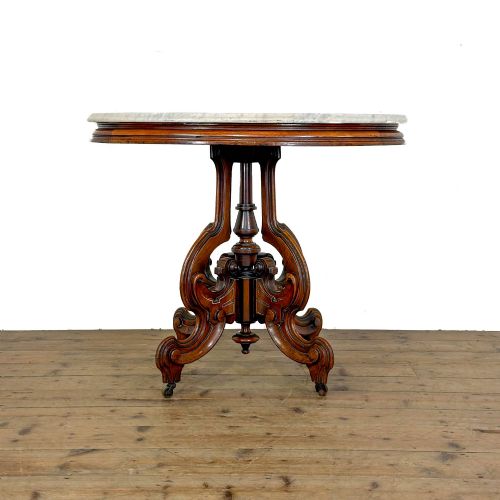
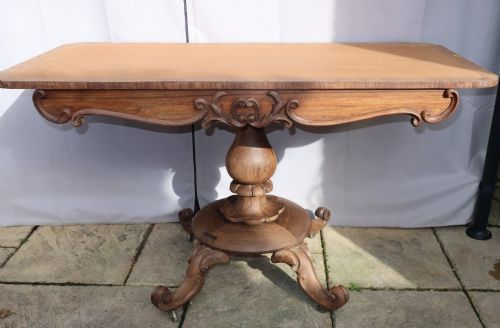
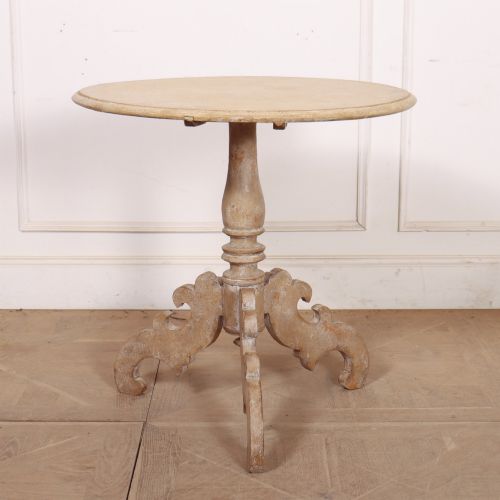
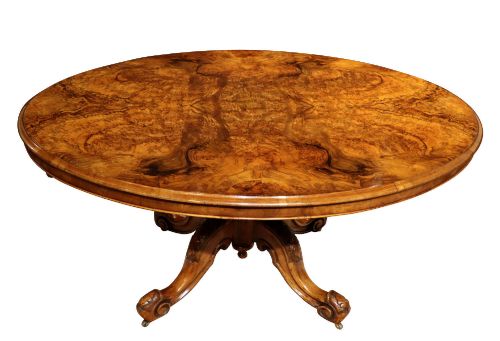


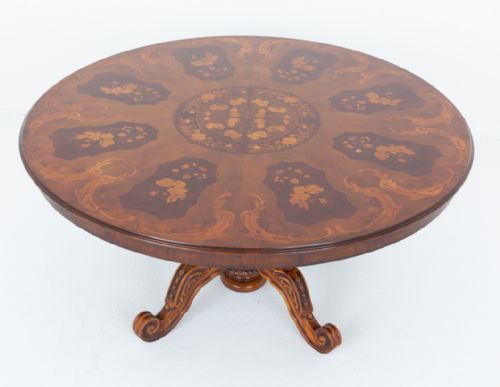
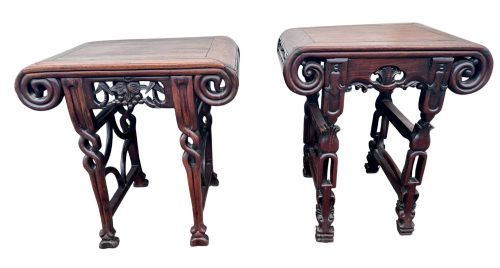


Carved Scroll Pedestal Table
A carved scroll pedestal table brings sculptural timber and steady central support to a room, drawing the eye with rich grain and classical curves.
Materials and construction methods
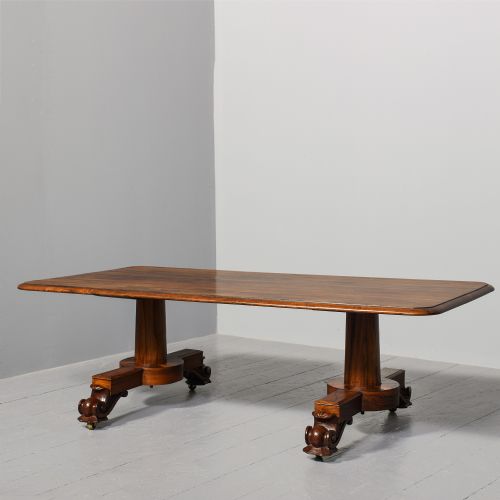
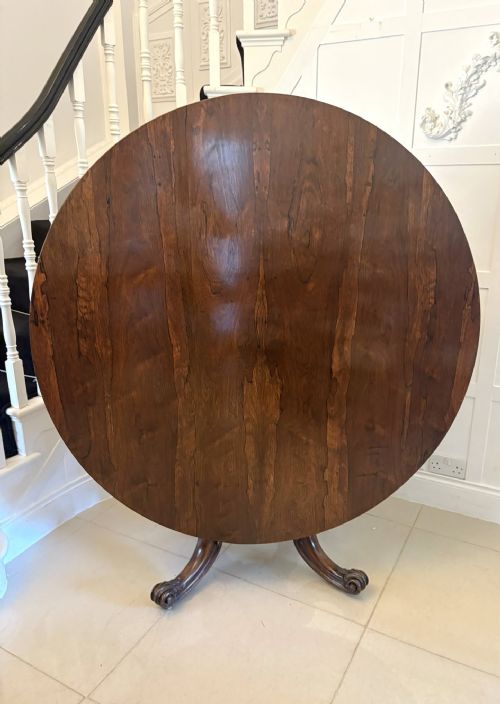
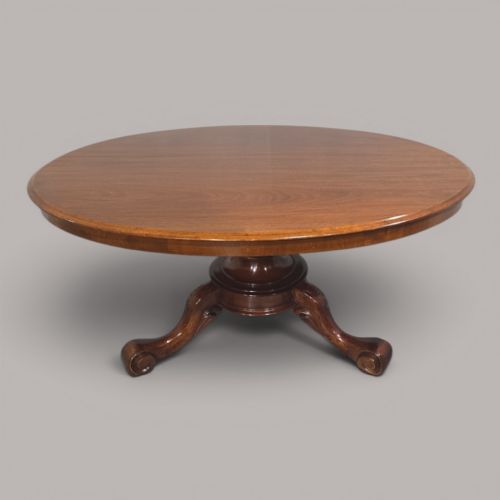
Cabinetmakers utilised dense timbers such as mahogany, rosewood, walnut, and burr walnut, often selecting figured veneers for table tops. Solid sections were hand-carved to form the characteristic scrolls of the pedestal and base.
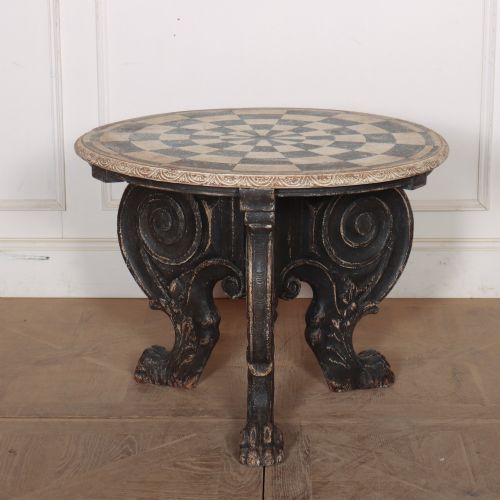
Secondary construction involved traditional joinery, with tilt-top mechanisms, quadrapod legs, and moulded edges appearing frequently across the inventory. Marble and specimen woods also surface as tabletop surfaces.
Evaluating craftsmanship and detail
Quality rests in the crispness of the hand-carving on the scrollwork and the selection of timber veneers on the top surface. Superior pieces exhibit tight joinery, well-figured grain, and stable, robust pedestal bases.
Lesser examples display simpler turned elements with minimal carving or heavier, less balanced proportions. The integration of secondary woods and the condition of the polish further distinguish the standard of manufacture.
The Carved Scroll Pedestal Table Glossary
- Pedestal table
- A table supported by a single central pillar or column rather than four corner legs. This design allows for easier seating arrangements around the perimeter.
- Tilt-top table
- A table featuring a mechanism that allows the top to pivot to a vertical position when not in use. This clever design saved floor space in period homes.
- Quadrapod base
- A heavy base supported by four projecting feet or scrolls radiating from the central column. It provides firm stability for large circular tabletops.
- Burr walnut
- Timber taken from the warted excrescence of a walnut tree, yielding complex, swirling grain patterns. Cabinetmakers prized this veneer for high-status furniture tops.
- Gueridon
- A small French occasional table, often round and supported by a central column. These tables frequently served as candle stands or decorative display pieces.
Carved Scroll Pedestal Table: Frequently Asked Questions
How do I use a pedestal table in a small room?
A round pedestal table fits efficiently into tight spaces because the central column eliminates corner legs that obstruct chairs. This layout maximises legroom and allows smooth movement around the perimeter.
Pair a compact lamp table or wine table beside a sofa or in an entryway to provide surface space without overwhelming the floor plan.
What is the difference between a breakfast table and a dining table?
Breakfast tables typically feature circular or oval tops mounted on a tilting mechanism supported by a heavy carved pillar and base. Historically, servants tilted the tops vertical to store the furniture against walls when morning dining concluded.
Dining tables are generally larger, fixed structures designed to seat multiple people for formal evening meals without the pivoting mechanism found on smaller breakfast pieces.
How do I care for nineteenth-century mahogany furniture?
Protect mahogany surfaces from direct sunlight and excessive heat sources to prevent the rich timber from fading or the finish from drying out. Use coasters and felt pads under objects to avoid moisture rings and scratches on the polish.
Apply a natural beeswax periodically and buff gently with a soft cloth to maintain the deep lustre of the wood without building up heavy chemical residues.
How can I tell a Victorian table from a Regency one?
Regency furniture, dating from the early nineteenth century, frequently exhibits classical restraint with neoclassical motifs, rosewood veneers, and precise brass inlays. Proportions tend to reflect strict architectural symmetry influenced by ancient Greek and Roman design.
Victorian pieces, produced from the mid-nineteenth century onward, often showcase heavier proportions, exuberant naturalistic carving, and rich burr walnut or mahogany timbers. Styles during this era frequently revived earlier baroque and rococo aesthetics with bolder relief work.