
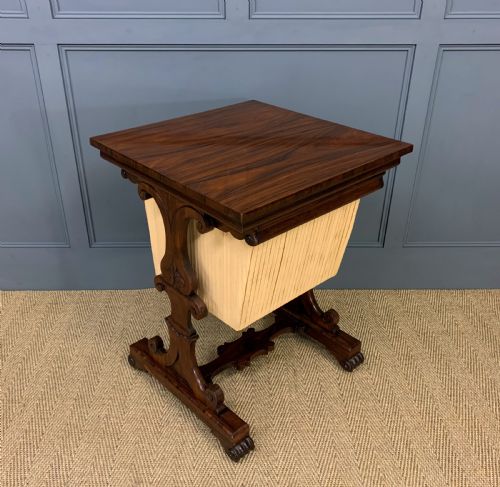


Antique Pleated Pouch Table
An antique pleated pouch table is a functional work or sewing table featuring a suspended fabric bag for needlework, offering both hidden storage and elegant room accent.
Antique Pleated Pouch Table
An antique pleated pouch table combines the surface utility of a small occasional table with a hanging textile basket designed for sewing and needlework supplies. The pleated pouch itself acts as a soft receptacle suspended beneath the main wooden top, which often lifts to reveal interior compartments.
Buyers browsing this selection will frequently encounter pieces spanning the Georgian, Regency, and Victorian eras, alongside specific forms from the 1890 period. These tables utilise timber frames paired with gathered fabrics such as silk, cotton, and satinwood or mahogany details.
The objects function equally well today as compact side tables or bedside units where small items can be tucked away out of sight. Their hybrid nature bridges the gap between formal cabinet work and practical domestic utility.
How they were made
Cabinet makers constructed the solid framework using timbers like mahogany, rosewood, walnut, pollard oak, and satinwood, often incorporating delicate inlay work or drop flaps. These woods provided a sturdy structural chassis capable of supporting the hanging drawer or textile receptacle.
The characteristic pouch is formed from fabrics including silk, cotton, and satinwood-associated textiles, gathered into neat pleats around a rigid frame. Brass fittings and hardware frequently secure the moving parts and decorative elements of the table.
Secretly designed for endless rolls of stray yarn, these tables gave nineteenth-century sewing baskets a permanent wooden upgrade.
What varies in quality
The refinement of the timber selection and the precision of the cabinet work separate finer examples from standard production pieces. Figured veneers, sophisticated inlay patterns, and well-chosen pollard oak or rosewood elevate the visual presence of the furniture.
The execution of the pleated pouch and the integrity of its internal compartments dictate the success of the textile integration. A well-preserved original fabric assembly or a sympathetic historical restoration maintains the intended balance between wood and cloth.
The Antique Pleated Pouch Table Glossary
- Work table
- A multi-purpose piece of furniture designed for sewing, needlework, and writing, often featuring internal compartments and a fabric bag. These tables became popular domestic items during the Georgian and Regency periods.
- Regency
- A style period dating roughly from the early nineteenth century, characterised by classical motifs, elegant proportions, and exotic timbers like rosewood. Pieces from this era often display restrained lines and fine brass details.
- Drop flap
- A hinged leaf on the side of a table that can be raised to extend the surface area or lowered when space is restricted. This mechanism adds versatility to compact sewing and occasional tables.
- Pollard oak
- Oak timber taken from trees that have been pollarded, producing a distinctive, highly figured grain pattern. Cabinet makers valued this wood for its decorative surface qualities on nineteenth-century furniture.
Antique Pleated Pouch Table: Frequently Asked Questions
What is a pleated pouch table?
It is a small nineteenth-century work or sewing table that incorporates a gathered fabric bag beneath the wooden top.
The suspended pouch was traditionally used to hold yarn, fabric scraps, and needlework projects while keeping them neatly contained.
How were these tables used?
They served as dedicated stations for domestic handiwork, allowing women to keep their sewing implements close at hand in the parlour.
The top surface provided a stable place for candle lighting or reading, while the interior compartments organised smaller tools like thimbles and spools.
How do I live with one?
These compact tables fit easily beside a sofa or armchair, functioning as a practical surface for drinks or books.
The lower pouch can store modern items like charging cables, notebooks, or knitting projects out of sight.
How do I identify a Regency example?
Regency pieces often feature dark exotic woods like rosewood and mahogany, combined with classical proportions and understated brass mounts.
They date from the early part of the nineteenth century and reflect a refined, architecturally inspired aesthetic.