

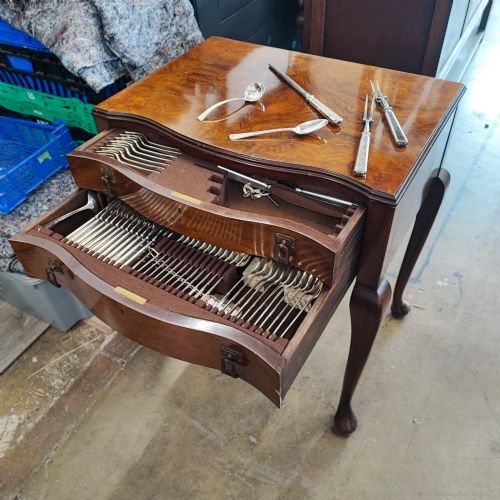
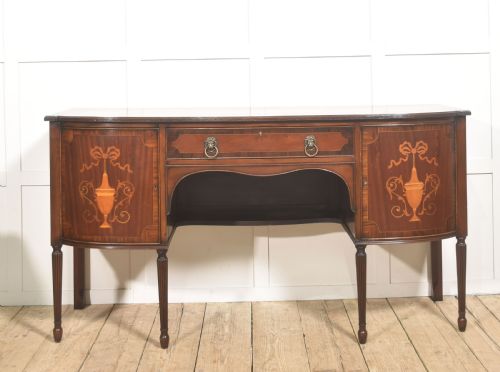


Serpentine Dining Table
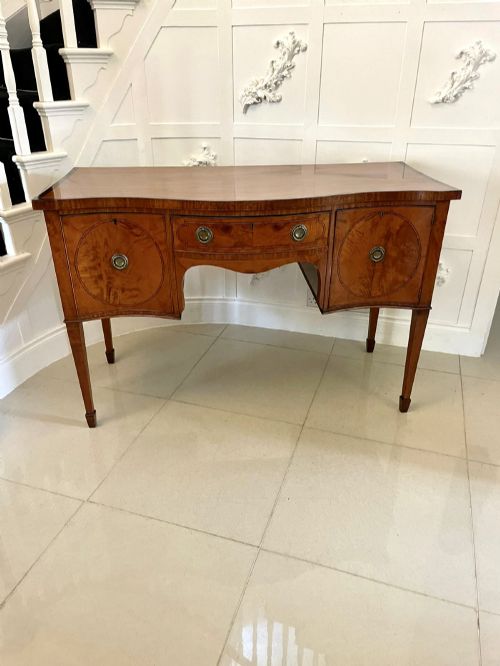
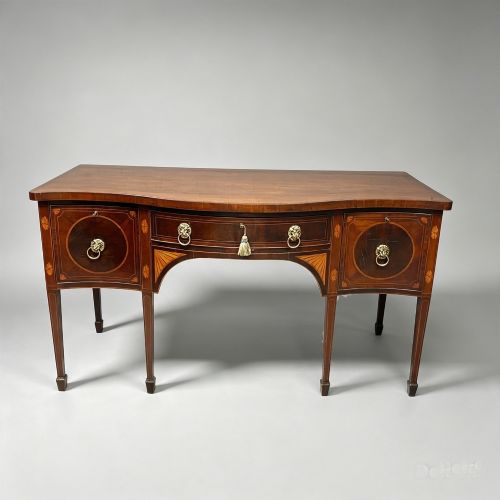
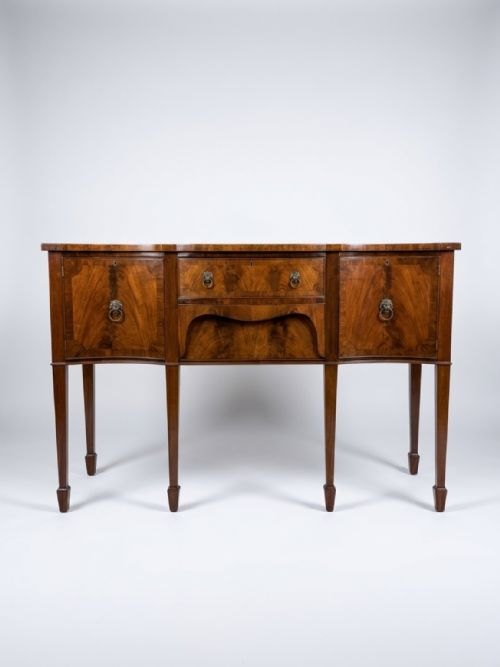
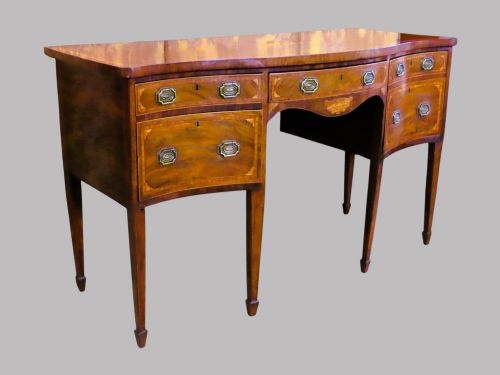
A serpentine dining table brings a flowing, undulating outline to a room, offering the warmth of mahogany or walnut combined with exceptional cabinetwork.
Serpentine Dining Table
When searching for a serpentine dining table, a buyer encounters pieces from the Georgian, Victorian, Regency, and Edwardian periods featuring curved fronts and edges.
The evidence shows these forms appearing primarily in large dining tables, centre tables, and sideboards shaped with gentle undulating lines rather than rigid straight borders.
Most examples originate from the 18th and 19th centuries, utilising rich timbers such as mahogany, rosewood, and burr walnut to emphasise the rhythmic curves.
Materials and construction
Cabinetmakers constructed these tables using solid timbers and fine veneers of mahogany, rosewood, and burr walnut, frequently embellished with satinwood inlay and boxwood stringing.
Shaping the curved front required precise carpentry to bend or cut solid wood and lay veneers smoothly across undulating surfaces without splitting.
Listings feature woods including mahogany, rosewood, burr walnut, and satinwood across Georgian, Victorian, and Edwardian periods.
What separates the finest examples
The distinction between ordinary and exceptional pieces lies in the fluidity of the curve and the grain selection of the timber across the top and front.
Superior execution shows in crisp inlay work, well-figured wood matching seamlessly along the undulating edges, and solid structural integrity beneath the decorative surface.
Gillow
The Serpentine Dining Table Glossary
- Serpentine
- A curved shape featuring a convex centre flanked by concave ends, creating an undulating line. This contour defines the aesthetic of the pieces found in this category.
- Inlay
- Pieces of contrasting timber or other materials fitted into depressions in the wood base to form decorative patterns. Satinwood and boxwood are frequently utilised for this purpose.
- Tilt-top
- A table mechanism allowing the top to hinge vertically for storage when not in use. This construction is common among the centre and breakfast tables in the evidence.
- Veneer
- A thin layer of figured wood applied over a secondary timber base to create a decorative surface. Burr walnut and mahogany veneers enhance the visual texture of these tables.
Serpentine Dining Table: Frequently Asked Questions
How do I identify a Georgian serpentine table?
Georgian examples display hand-cut joinery, dense mahogany timbers, and proportions dictated by period design principles rather than mass production.
Examine the underside and drawer linings for traditional construction methods characteristic of the 18th century.
What is the difference between a centre table and a dining table?
Centre tables are typically smaller, designed to stand freestanding in the middle of a room, and often feature tilt-top mechanisms.
Dining tables are built larger to accommodate seating and daily meals while sharing the same decorative serpentine outlines.
How should I care for a mahogany or walnut top?
Maintain the wood by applying appropriate natural waxes periodically and avoiding direct exposure to strong sunlight or moisture.
Gentle dusting with a soft cloth preserves the finish and natural grain without harming the antique surface.
Are these tables suitable for everyday dining?
These tables were built from durable hardwoods like mahogany and rosewood, designed for regular use in period homes.
Using protective mats and handling the surfaces with care ensures they withstand daily modern dining routines.