




Exotic Wood Pedestal Table
An exotic wood pedestal table brings rich timber grain and distinctive regional carving into a room, offering both practical surface space and striking character.
Exotic Wood Pedestal Table
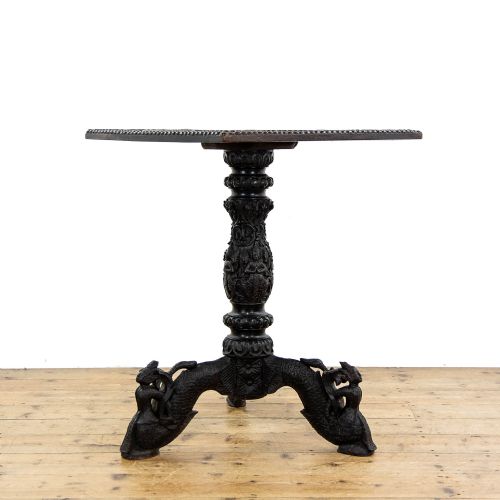
An exotic wood pedestal table encompasses a variety of occasional, centre, and dining forms spanning the nineteenth century, including Victorian, William IV, and Regency examples. Buyers seeking an exotic wood pedestal table encounter diverse regional traditions such as Chinese Export, Anglo-Indian Colonial, and Anglo-Burmese designs.
How they were made
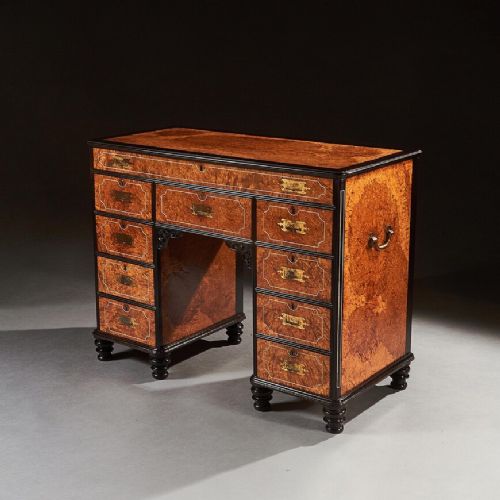
Cabinet makers utilised dense hardwoods such as mahogany, rosewood, ebony, ambouya, palm wood, and albuera wood over solid carcases, often combining contrasting timbers for decorative effect. Many pieces incorporate intricate hand carving, particularly those originating from colonial workshops in India, Burma, and Ceylon.
Structural stability relied on robust pedestal construction, sometimes augmented with brass mounts, castors, or turned columns to support heavy timber tops.
Some nineteenth century makers tucked hidden compartments inside games tables to store missing pieces away from visiting guests.
What varies in quality
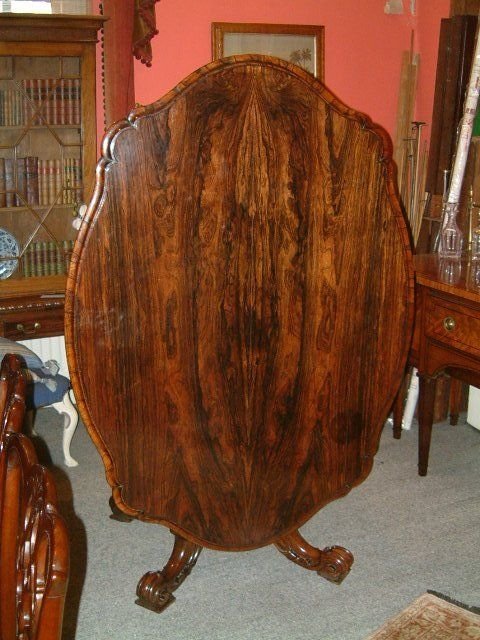
Quality rests upon the choice of timber and the precision of the grain matching, where figured specimen woods create deliberate visual depth across the top. The depth and crispness of the hand carving distinguish regional workshop production, separating fluent sculptural work from simpler execution.
Construction integrity in the pedestal base and joinery determines how well the table bears weight and resists seasonal movement in the timber over generations.
Gillows
The Exotic Wood Pedestal Table Glossary
- Pedestal table
- A table supported by a single central pillar or column resting on a base. This form allows maximum legroom around the perimeter.
- Specimen wood
- Timber selected for its unusual grain, colour, or variety, often arranged in geometric patterns or mosaics. Makers used these to demonstrate cabinet-making skill.
- Centre table
- A freestanding table designed to be viewed from all sides rather than pushed against a wall. These frequently stand in the middle of principal rooms.
- Campaign desk
- A portable desk made for travel, often featuring fitted interiors and brass binding. These pieces split or fold for transport by officers.
- Serpentine
- A curved line with a convex centre flanked by concave sides, creating an undulating edge. This shape requires precise woodworking skill to execute.
Exotic Wood Pedestal Table: Frequently Asked Questions
Where did these tables originate?
The pieces originate from British workshops as well as colonial centres including India, Burma, and Ceylon, reflecting global trade networks of the nineteenth century.
Local cabinet makers utilised native exotic hardwoods and applied distinct regional carving traditions to forms destined for both export and domestic use.
How do I care for exotic wood?
Protect the timber from direct sunlight and sudden humidity changes to prevent the natural wood from drying out or splitting over time.
Dust regularly with a soft, dry cloth and avoid silicone-based polishes that can build up a residue on the polished surface.
Are these tables suitable for daily use?
Many forms, such as side tables and occasional tables, function well for holding lamps or decorative objects in contemporary spaces.
Heavily carved or antique surfaces benefit from coasters and protective pads to prevent moisture rings and scratches on the historic polish.
How do I identify a Regency table?
Regency pieces typically display classical restraint, clean architectural lines, and dark tropical hardwoods inspired by ancient Roman and Greek forms.
They often feature subtle brass inlays, reeded columns, and substantial pedestal bases without the heavier ornamentation seen later in the Victorian era.